Can I keep going to the gym with a disc bulge?
A scan report that says “disc bulge” can make you scared to pick up a dumbbell again. For most people the gym is part of the cure, not the problem, as long as you train smart for a few weeks.
★★★★★ 4.9 from 1,400+ Google reviews across our 13 clinics

Quick answer: Yes. Most people with a disc bulge can and should keep training. Disc bulges show up on MRI in about 30% of pain-free 20-year-olds and 84% of pain-free 80-year-olds and roughly two thirds of disc herniations shrink on their own. Swap the lifts that flare your pain for a few weeks, keep moving and build back gradually. Stop and get checked if you have leg weakness, numbness or bladder changes.
Is a disc bulge as serious as it sounds?
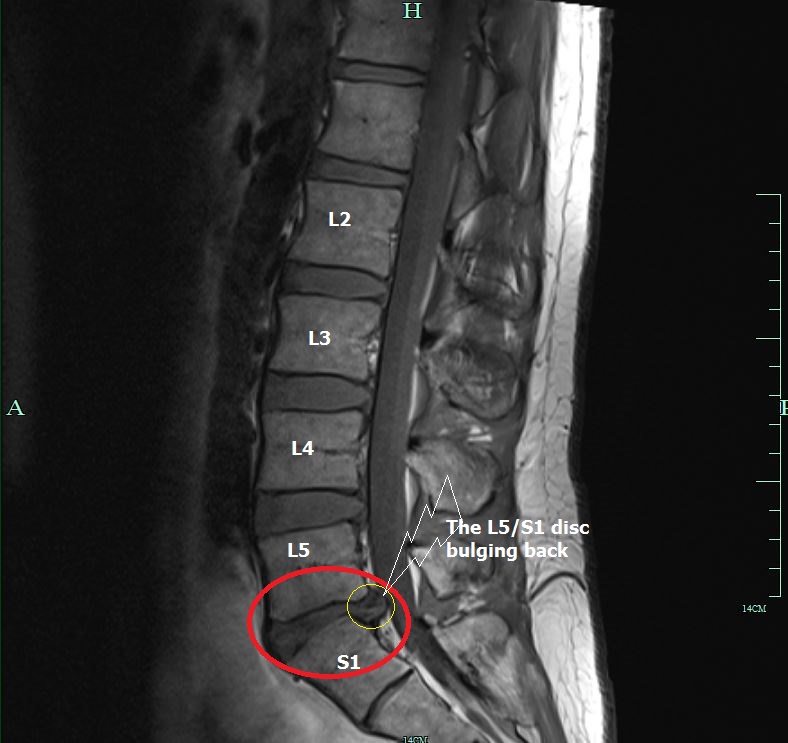
Usually not. A disc bulge simply means the disc between two vertebrae is pushing out a little beyond its normal edge. It is one of the most common findings on a back scan and it is very often found in people with no pain at all.
30%
of pain-free 20-year-olds have a disc bulge on MRI
Brinjikji et al, AJNR 2015
84%
of pain-free 80-year-olds have one
Brinjikji et al, AJNR 2015
~2/3
of disc herniations shrink without surgery
Chiu et al, Clin Rehabil 2015
How common are disc bulges in people with NO back pain?
Source: Brinjikji et al, AJNR 2015 (MRI findings in pain-free people)
That is why NICE’s back pain guideline (NG59) does not recommend routine scans for low back pain. What matters far more than the picture is how your back behaves: what eases it, what flares it and whether any nerve symptoms are changing. You can read more in our guide Do I need an MRI scan for back pain?
Bulge, herniation or sciatica: what’s the difference?
Scan reports use words that sound alarming and people often use them to mean the same thing. They aren’t quite the same and knowing the difference helps you make sense of what your back is telling you.
| Term | What it means | What you might feel |
|---|---|---|
| Disc bulge | The disc spreads a little beyond its normal edge, usually evenly | Often nothing at all. Sometimes stiffness or a deep ache in the low back |
| Disc herniation (“slipped disc”) | Some of the soft centre of the disc pushes out through the outer layer | Back pain, sometimes with leg pain if it irritates a nerve |
| Sciatica | Irritation of a nerve root that runs into the leg | Pain, tingling or numbness below the knee, often worse than the back pain |
| Nerve compression with weakness | A nerve is pressed enough to affect how it works | Foot or leg weakness, reduced reflexes. Needs prompt assessment |
Nothing on the scan, on its own, tells you whether you can train. How your symptoms behave does. If your leg pain is easing and moving back up towards your spine, that is a good sign, even if the scan still looks the same.
Worried about lifting with your back?
WhatsApp us your question, call 020 8201 7788 or book online at any of our 13 clinics across North London and Hertfordshire, often the same day.
Why is the gym usually good for a disc bulge?
Rest feels like the safe option, but the research says otherwise. NICE NG59 recommends staying active and doing exercise as the first line treatment for low back pain, with or without sciatica. Long periods of rest tend to make backs stiffer, weaker and more sensitive.
- Movement calms pain: gentle loading reduces sensitivity in irritated tissues and nerves
- Strength protects: stronger hips, legs and trunk share the load your spine takes
- Confidence matters: fear of moving is linked to slower recovery and the gym is a great place to rebuild trust in your back
Your back is not fragile. It needs the right dose of load, not no load at all.
Which exercises should I change for now?
Think traffic lights rather than banned lists. A little discomfort during training (up to about 3 out of 10) that settles by the next morning is usually fine. Pain that spreads further down your leg, or is worse the next day, means you have overdone it.
Usually fine
Walking, cycling, cross trainer, leg press with a comfortable range, glute bridges, side planks, machine rows.
Adapt for now
Deadlifts (try a trap bar or raise the bar on blocks), back squats (try goblet squats), heavy overhead pressing.
Pause for a few weeks
Very heavy spinal loading, sit-ups and anything that sends pain further down your leg.
Many people with a flared disc find bending forward and sitting the worst, while standing and walking feel easier. Others are the opposite. A physio assessment tells you which pattern you have, so you know which movements to lean on.
How do I get back to heavy lifting?
Build up over weeks, not days. Most people can return to their normal training within about 6 to 12 weeks of a flare, often sooner. A simple rule is to increase weight or volume by around 10% a week while your symptoms stay steady.
| Weeks 1 to 2 | Walk daily, gentle mobility, pain-free core and hip work. Keep the gym habit going with machines and cardio. |
|---|---|
| Weeks 2 to 6 | Reintroduce hinges and squats with lighter loads and a comfortable range. Focus on technique. |
| Weeks 6 to 12 | Progress towards your usual lifts. Test heavier sets when symptoms have been steady for 2 weeks. |
Our lifting technique guide covers how to brace and hinge well and our slipped disc and sciatica page explains how we treat more stubborn cases.
How we help you train through a disc bulge at BOOST PHYSIO
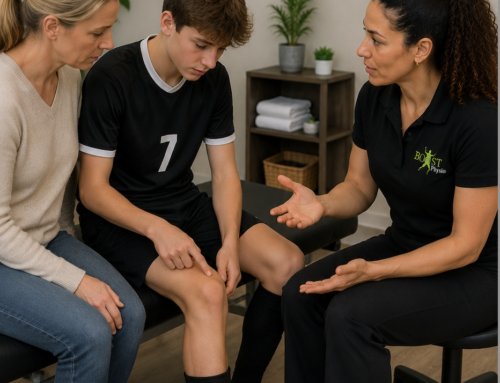
Many of the people we see with a disc bulge have already been told to stop lifting, or have stopped themselves because they’re worried about making it worse. Usually they don’t need to stop. They need a clear plan for what to change and for how long.
At your first appointment we ask what eases and what flares your pain, because most backs have a pattern. Some feel worse bending forward and sitting, others when arching back or standing for long. We check the nerves in your legs (sensation, reflexes and strength) and test how far you can lift your straight leg before symptoms start. If you train, we’ll often watch you squat or hinge, or look at a video of your lifts.
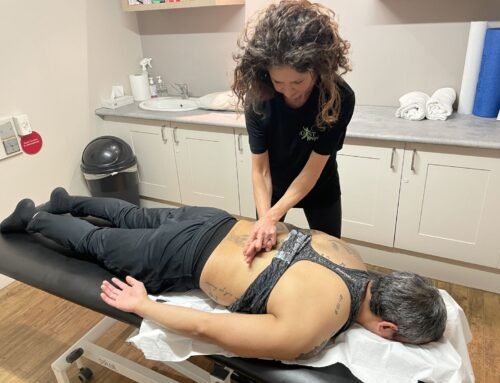
- Settle the pain: hands-on treatment such as joint mobilisation and soft tissue work to ease pain and stiffness, so you can move more freely
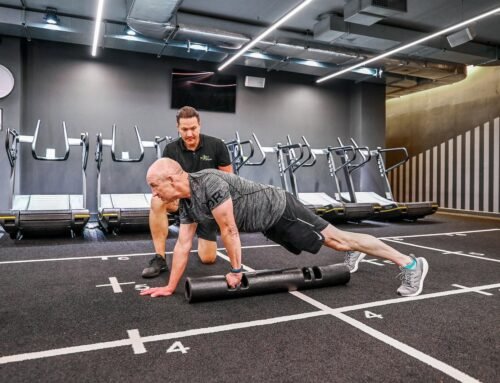
- Keep training: a modified programme that keeps your gym habit going, using the lifts and ranges your back tolerates now
- Reload step by step: we rebuild towards your usual lifts and review progress every visit
- Measure what matters: leg symptoms easing, longer sitting before pain and the weight you can lift comfortably
On average our patients reach their goals in around five sessions, although a disc flare with strong leg symptoms can take longer. Your physio will tell you at your first visit roughly what to expect.
When should I stop and get checked?
When to get urgent help
- Numbness around your bottom or genitals, or new problems controlling your bladder or bowels: go to A&E straight away
- Weakness in your leg or foot that is getting worse, such as your foot slapping or catching
- Back pain with fever, unexplained weight loss or a history of cancer
- Pain that is severe at night and not eased by any position
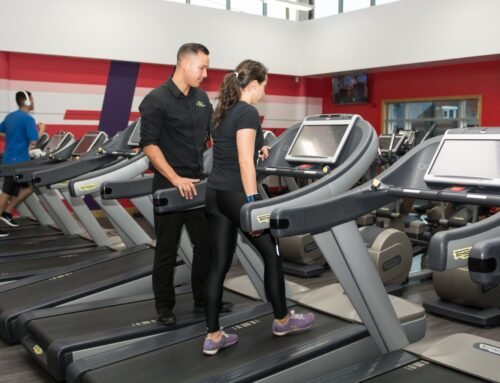
If your symptoms haven’t started to settle after 2 to 3 weeks of sensible changes, or you’re not sure which movements to lean on and which to back off, get assessed rather than guessing. You can see us at any of our 13 clinics, often the same day, with no GP referral needed. Our Mill Hill clinic is inside Anytime Fitness, so there we can go straight from the treatment room onto the gym floor and rework your programme together.
What our patients say
★★★★★
“Although it will be a long process, I now have a much greater range of movement in my arms and Rebecca has recently started to also work on improving my muscle strength so that I can get back to doing…”
★★★★★
“I have had four sessions with Otis for lower back pain and cannot recommend him highly enough.”
★★★★★
“His deep understanding of biomechanics helped me elongate my quad muscles, open up my hips, and strengthen my back, leading to significant improvements in my posture and overall performance.”
Watch: back exercises our physios use
Short videos showing exercises we use with back pain patients.

Advanced Core Exercises To Protect Spine and Back?

Core Exercises to prevent back pain

Crouch End Physio Shows exercise to prevent back pain
Got a question about your own pain or injury? Send it to our physios.
Get help at your nearest BOOST PHYSIO clinic
We help people with this at all 13 of our clinics across North London and Hertfordshire. Choose your nearest clinic to see the team, opening times and how to find us, or book straight in.
Get back to training with confidence
WhatsApp us your question, call 020 8201 7788 or book online at any of our 13 clinics across North London and Hertfordshire, often the same day.
Related reading
 Slipped disc and sciatica physio
 Do I need an MRI scan for back pain?
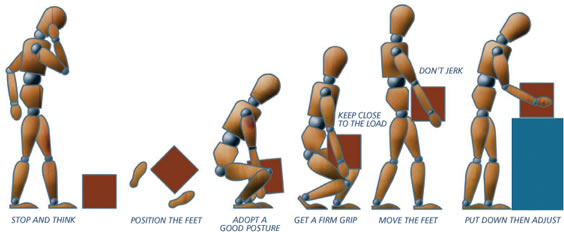 How to lift without hurting your back
Your questions answered
Can a disc bulge heal on its own?
Yes. Studies suggest around two thirds of disc herniations shrink over time without surgery and many bulges never cause pain at all. Staying active and building strength helps your symptoms settle while that happens.
Should I stop deadlifting with a disc bulge?
Not forever. Most people reduce the load or switch to a trap bar or raised deadlift for a few weeks, then build back up as symptoms settle. If deadlifts send pain further down your leg, pause them and get assessed.
Is it OK to train if my back hurts a bit?
Usually, yes. Mild discomfort up to about 3 out of 10 that settles by the next morning is generally fine. Pain that spreads down your leg or is worse the next day means you should drop the load.
Do I need a scan before going back to the gym?
Usually not. NICE does not recommend routine scans for low back pain. A scan is considered if you have worsening nerve symptoms or if surgery is being thought about.
Can I see a physio without a GP referral?
Yes. You can book with BOOST PHYSIO directly, often the same day and our physios are recognised by Bupa, AXA Health, Vitality, WPA and Aviva.

Written and clinically reviewed by Steven Berkman, BSc Physiotherapy (University of Cape Town), HCPC-registered chartered physiotherapist, MCSP, founder of BOOST PHYSIO in 2008, with Finlay McDonald and Martin Sarembock at BOOST PHYSIO Crouch End. Last reviewed 12 November 2026.
References
- Brinjikji W, et al. Systematic literature review of imaging features of spinal degeneration in asymptomatic populations. AJNR Am J Neuroradiol. 2015;36(4):811-816.
- Chiu CC, et al. The probability of spontaneous regression of lumbar herniated disc: a systematic review. Clin Rehabil. 2015;29(2):184-195.
- National Institute for Health and Care Excellence. Low back pain and sciatica in over 16s: assessment and management (NG59). 2016, updated 2020.
- NHS. Cauda equina syndrome. nhs.uk.