Is walking good for back pain?
Walking is free, easy and you can do it from your front door. It turns out it’s also one of the best things you can do for your back.
★★★★★ 4.9 from 1,400+ Google reviews across our 13 clinics

Quick answer: Yes. Walking is one of the best things you can do for back pain. In the WalkBack trial (Lancet 2024), people who followed a walking programme with education stayed free of back pain for a median of 208 days, compared with 112 days without it. Start with short walks of 10 to 15 minutes, build up to about 30 minutes most days and keep going after your pain eases.
What does the research say about walking and back pain?
The WalkBack trial in Australia followed 701 adults who had recently recovered from low back pain. Half were given a personalised walking programme with education sessions from a physio over 6 months. They went nearly twice as long before their back pain came back.
208 days
median time to back pain returning with walking
Pocovi et al, Lancet 2024
112 days
without the walking programme
Pocovi et al, Lancet 2024
Stay active
is the first line advice for low back pain
NICE NG59
Median days before back pain returned (WalkBack trial)
Source: Pocovi et al, Lancet 2024 (701 adults)
This fits with NICE guidance (NG59), which recommends staying active and exercise for low back pain and a Cochrane review (Dahm 2010) that found staying active slightly better than bed rest.
Why does walking help your back?
- It keeps the spine moving: gentle, rhythmic movement eases stiffness
- It’s low impact: lighter on your back than running or heavy lifting
- It builds tolerance: regular walking gets your back used to load again
- It’s good for your mood and sleep: both affect how much pain you feel
- It’s easy to stick with: the best exercise is the one you keep doing
Your back is built to move. Walking reminds it how.
Back pain stopping your walks?
WhatsApp us your question, call 020 8201 7788 or book online at any of our 13 clinics across North London and Hertfordshire, often the same day.
How far and how often should I walk?
| Week 1 | 10 to 15 minutes, once or twice a day, at a comfortable pace |
|---|---|
| Weeks 2 to 4 | Build to 20 to 30 minutes most days |
| Week 5 onwards | 30 minutes or more, 5 days a week, adding some brisk sections or gentle hills |
| During a flare | Shorter, more frequent walks rather than stopping completely |
In the WalkBack trial, people built up to around 30 minutes, 5 times a week. Some discomfort while walking is OK if it settles afterwards and isn’t worse the next day.
If you have sciatica, start with shorter walks on flat ground and see how your leg responds over the next day. If leg pain spreads further down or lasts into the next morning, drop back to the last time that felt fine.
Walking, running, swimming or cycling: which is best for back pain?
The best exercise for back pain is the one you’ll keep doing. Walking has the strongest recent evidence for preventing flare-ups and needs no equipment, but the others all have a place.
| Activity | Good for | Watch out for |
|---|---|---|
| Walking | Most people, including during a flare. Easy to build up | Very long walks too early; uncomfortable shoes |
| Cycling | People whose pain eases when sitting or bending forward | Stays in one flexed position, so add other movement too |
| Swimming | Gentle whole-body movement, low impact | Strokes that strain your neck or back if technique is poor |
| Running | People returning to fitness once a flare has settled | Building mileage too quickly |
| Strength training | Building lasting resilience in your back and hips | Heavy loads before you’re ready; build up gradually |
How can I make walking more comfortable?
- Wear supportive, cushioned shoes
- Walk tall with relaxed shoulders and let your arms swing
- Split walks into shorter chunks if longer ones flare your pain
- If walking hurts but sitting eases it, try a slightly slower pace, a short rest on a bench or a walk with a gentle forward lean such as up a slope and mention it to your physio
- Combine walking with our low back stretch routine
If your back pain spreads into your leg, our sciatica page explains how we help and our back pain page covers the wider plan.
How we use walking in back pain rehab at BOOST PHYSIO
When people are in pain, the natural instinct is to stop and rest. With backs, that usually makes things stiffer and slower to recover. One of the first things we do with most back pain patients is agree a walking plan they can manage today, however small.
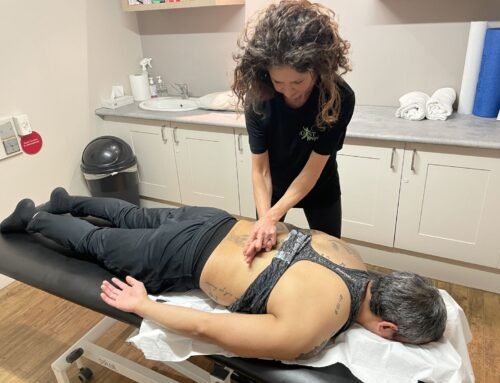
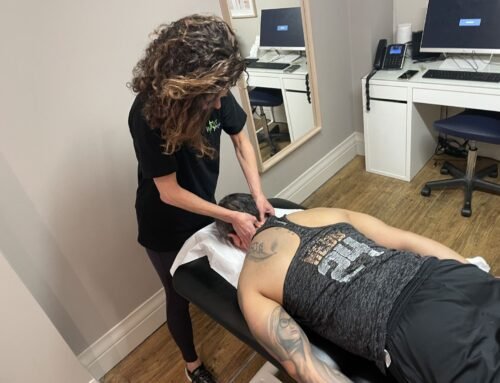
We start by finding your comfortable walking time, the point before pain starts to build. Then we build from there, usually adding a few minutes every few days. Alongside walking we treat what is stopping you moving well, using hands-on treatment to ease pain and stiffness and exercises for your trunk, hips and legs.
- Your starting point: a walking time you can manage without a flare
- Steady progress: small, regular increases rather than big jumps
- Hands-on treatment to ease stiffness and make walking more comfortable
- Strength work so your back copes with more of what you love doing
On average our patients reach their goals in around five sessions and walking is often the habit that keeps their back well after they finish.
When should I see a physio?
Book an assessment if your back pain isn’t easing after a couple of weeks, keeps coming back or stops you walking as far as you’d like. A physio can build a walking and strength plan around you.
Get urgent help if
- Numbness around your bottom or genitals, or bladder or bowel changes: go to A&E
- Weakness in your legs that is getting worse
- Back pain with fever or unexplained weight loss
You don’t need a GP referral and you can be seen at any of our 13 clinics across North London and Hertfordshire, often the same day.
What our patients say
★★★★★
“Nimal was a true delight and did a grand job of working on my back… which now feels soooo much better!”
★★★★★
“Dan helped me recover from a running injury that was causing persistent back pain.”
Watch: back exercises from our physios
Short videos with simple back exercises to go with your walks.

How to improve walking endurance? Physio in NW3 recommends strengthening exercises

Core Exercises to prevent back pain

Back Pain Exercises- recommended by #physiotherapist
Got a question about your own pain or injury? Send it to our physios.
Get help at your nearest BOOST PHYSIO clinic
We help people with this at all 13 of our clinics across North London and Hertfordshire. Choose your nearest clinic to see the team, opening times and how to find us, or book straight in.
Get moving again
WhatsApp us your question, call 020 8201 7788 or book online at any of our 13 clinics across North London and Hertfordshire, often the same day.
Related reading
Your questions answered
Is walking good for lower back pain?
Yes. A 2024 Lancet trial found a walking programme with education nearly doubled the time before back pain came back and NICE recommends staying active.
How long should I walk for back pain?
Start with 10 to 15 minutes and build to about 30 minutes most days. Shorter, more frequent walks work well during a flare.
Should I walk if my back hurts?
Usually yes. Some discomfort is fine if it settles afterwards and isn’t worse the next day. Stop and get advice if pain spreads down your leg with numbness or weakness.
Is walking better than resting for back pain?
Yes. Research shows staying active is better than bed rest for low back pain and long rest tends to make backs stiffer.
Can walking help sciatica?
Often, yes. Gentle walking keeps you moving and can ease nerve pain. Build up gradually and get assessed if symptoms are worsening.

Written and clinically reviewed by Steven Berkman, BSc Physiotherapy (University of Cape Town), HCPC-registered chartered physiotherapist, MCSP, founder of BOOST PHYSIO in 2008, with Finlay McDonald and Martin Sarembock at BOOST PHYSIO Crouch End. Last reviewed 12 November 2026.
References
- Pocovi NC, et al. Effectiveness and cost-effectiveness of an individualised, progressive walking and education intervention for the prevention of low back pain recurrence in Australia (WalkBack): a randomised controlled trial. Lancet. 2024;404(10448):134-144.
- National Institute for Health and Care Excellence. Low back pain and sciatica in over 16s (NG59). 2016, updated 2020.
- Dahm KT, et al. Advice to rest in bed versus advice to stay active for acute low-back pain and sciatica. Cochrane Database Syst Rev. 2010;(6):CD007612.