How long does sciatica last?
Sciatica can be frightening. The pain shoots down your leg, sleep goes out of the window and you start to wonder if it will ever settle. The good news is that for most people it does. There is plenty you can do to help it along.
★★★★★ 4.9 from 1,400+ Google reviews across our 13 clinics
Quick answer: Most sciatica gets much better within 4 to 6 weeks, although some people have symptoms for 3 months or longer. Staying gently active, the right exercises and hands-on treatment help most people recover without surgery. Get urgent help straight away if you have numbness around your bottom or genitals, or new bladder or bowel problems.
How long does sciatica usually last?
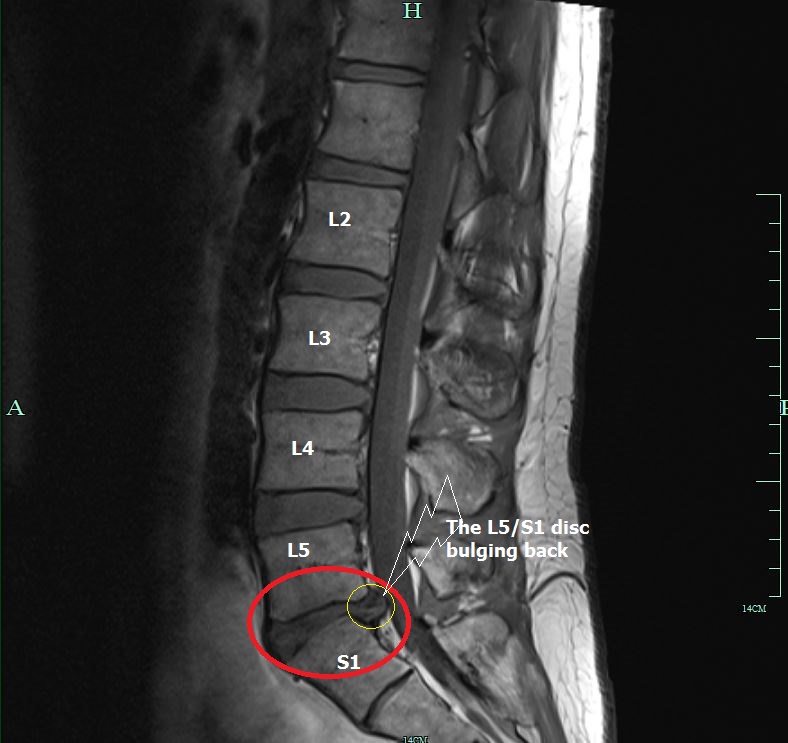
Sciatica is pain that travels along the sciatic nerve, from your lower back or buttock down the back of your leg, sometimes into your foot. It usually happens when a disc bulge or narrowing in the spine irritates a nerve root. The NHS says sciatica usually gets better in 4 to 6 weeks, but it can last longer.
In our experience the leg pain often eases first, then the pins and needles, then any numbness. Numbness can be the last thing to settle and can take a few months, which is normal and not a sign that things are going wrong.
Typical sciatica recovery timeline (weeks)
Source: NHS sciatica guidance and BOOST PHYSIO clinical experience
| Typical recovery | 4 to 6 weeks for most people (NHS) |
|---|---|
| Longer cases | Symptoms can last 3 months or more |
| Surgery | Needed by a small minority, usually when severe pain or weakness does not improve |
| Scans | Not needed routinely (NICE NG59) unless the result would change treatment |
| Bed rest | Not recommended. Staying active helps recovery |
What helps sciatica get better faster?
NICE guideline NG59 on low back pain and sciatica recommends staying active, exercise and, alongside exercise, hands-on manual therapy. It advises against paracetamol on its own for low back pain and against routine scans. A Cochrane review (Dahm 2010) found advice to stay active is slightly better than bed rest for sciatica.
Keep moving
Short, regular walks and changing position often keep the nerve moving and stop you stiffening up.
The right exercises
Gentle nerve glides, back and hip mobility and core strength, progressed as the pain settles.
Hands-on treatment
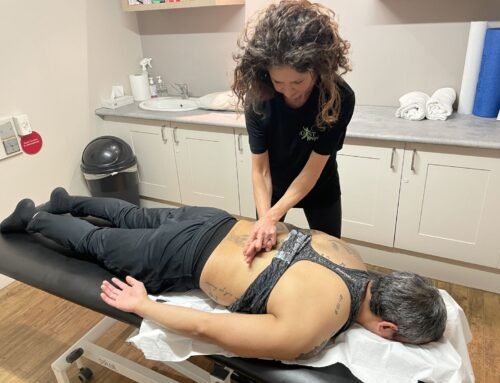
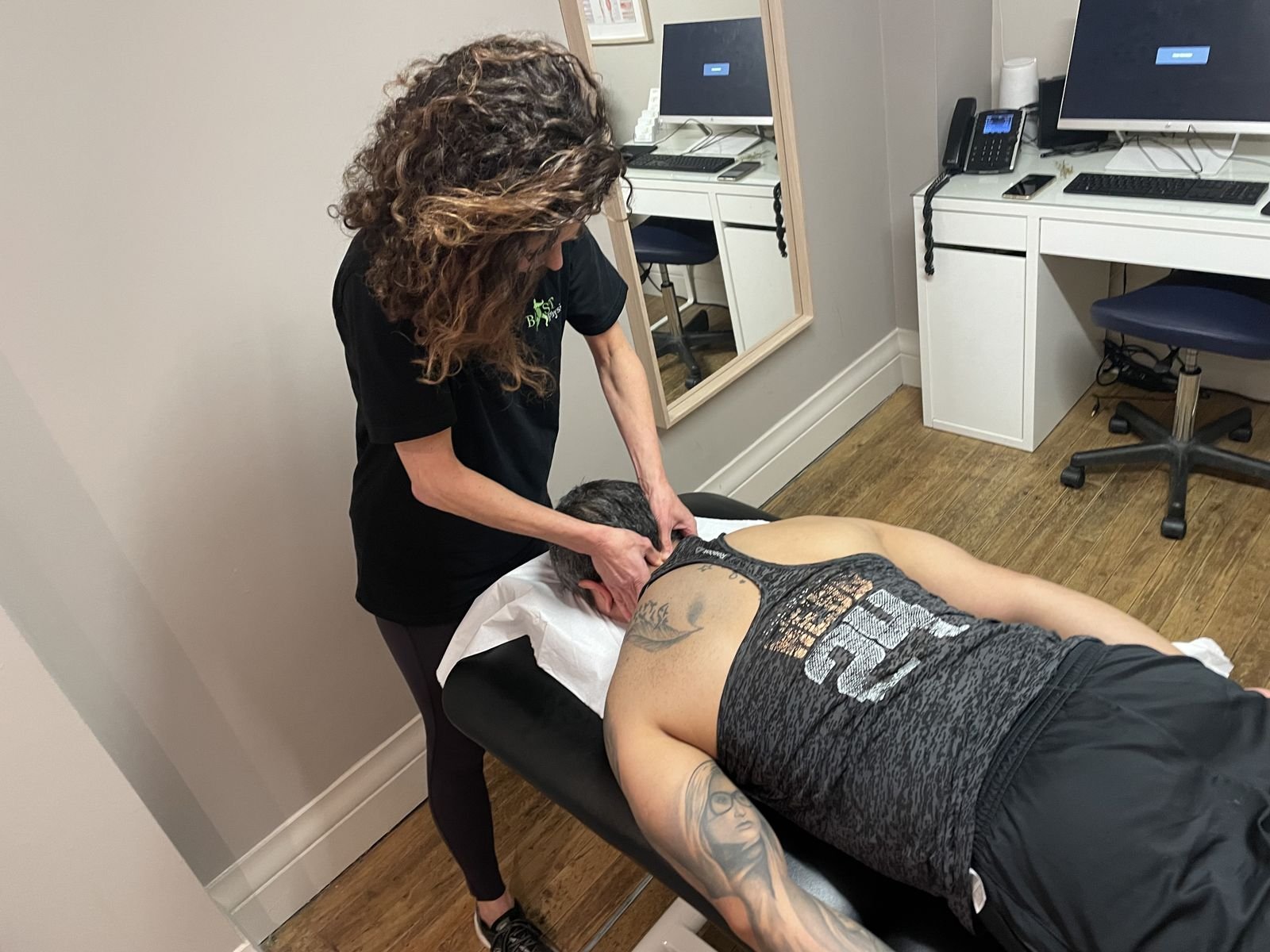
Joint mobilisation and soft tissue work can ease pain enough to let you exercise.
Sleep and stress
Poor sleep and worry turn up pain. A pillow between your knees on your side often helps.
Work matters too. If you sit all day, set a reminder to stand and walk for a couple of minutes every half hour. If your job is physical, lighter duties for a week or two are usually better than time off completely. Driving is often one of the most aggravating things, so break longer journeys every 30 to 45 minutes and use a small cushion or rolled towel behind your lower back.
Painkillers are worth discussing with your GP or pharmacist. NICE suggests anti-inflammatories can help some people with back pain, but they are not right for everyone.
Sciatica stopping you sleeping?
WhatsApp us your question, call or book online at any of our 13 clinics, often the same day.
Why does my sciatica last longer than other people’s?
| Factor | Often quicker | Often slower |
|---|---|---|
| Cause | Disc bulge in a younger, active person | Narrowing of the spine (stenosis) in older age |
| Pain pattern | Mostly back and buttock | Pain below the knee with numbness |
| Activity | Keeps moving within comfort | Long periods in bed or sitting |
| Work | Can adapt or take short breaks | Heavy lifting or long drives with no breaks |
| Sleep and stress | Sleeping reasonably well | Poor sleep, high stress and worry |
None of these means you won’t get better. They simply help us explain your likely timeline and what to focus on first. Read more about sciatica and slipped disc treatment.
How we help you recover at BOOST PHYSIO
At your first appointment we listen to your story, then check how your back moves, test your nerve with a straight leg raise and slump test and check the strength, sensation and reflexes in your legs. That tells us which nerve is irritated, how sensitive it is and whether anything needs a medical opinion first.
Your plan usually combines hands-on treatment to calm the pain, a small number of exercises you can actually do at home or at work and clear advice on sitting, sleeping and driving. We review it every visit and build up towards the things you want to get back to, whether that’s the school run, golf or the gym.
4-6 weeks
is how long most sciatica takes to get much better
NHS
Stay active
is better than bed rest
Dahm 2010, Cochrane
Around 5
sessions on average for our patients to reach their goals
BOOST PHYSIO
We also look at the bigger picture. Sciatica that keeps coming back is often linked to weak hips and trunk, long hours sitting or a sudden jump in training. Fixing those is how we help you stay better, not just get better.
Sciatica feels scary, but most people get back to normal life with the right plan and a little patience.
When should I get urgent help for sciatica?
Call 999 or go to A&E straight away if you have
- Numbness or tingling around your bottom, genitals or inner thighs
- New difficulty peeing, or wetting yourself
- Loss of bowel control
- Sciatica in both legs
- Weakness in your legs that is getting worse
These can be signs of cauda equina syndrome, which is rare but needs emergency treatment. For everything else, physio is a good first step and you don’t need a GP referral. If you’re not sure, see our guide to GP or physio first.
What our patients say
★★★★★
“Dan helped me recover from a running injury that was causing persistent back pain.”
★★★★★
“Excellent and remarkably patient, well pitched exercise advice for back pain, helping me rebuild confidence after a particularly stressful phase of life that interrupted regular exercise habits and calls…”
★★★★★
“Had the pleasure of being seen by Zoe Katz for my leg and back rehabilitation following a 15 week post op lumbar micro discectamy.”
Watch: exercises our physios use for sciatica and back pain
Short videos from our physios showing the exercises we use in clinic.

Physio recommended exercises to help relieve pain from slipped disc and sciatica

How to relieve sciatica? 3 Physio recommended moves

Three Physio recommended Exercises to help relieve Sciatica pain travelling down the leg
Got a question about your own pain or injury? Send it to our physios.
Get help at your nearest BOOST PHYSIO clinic
We help people with this at all 13 of our clinics across North London and Hertfordshire. Choose your nearest clinic to see the team, opening times and how to find us, or book straight in.
Get your sciatica properly assessed
Same day appointments, no GP referral needed, at 13 clinics across North London and Hertfordshire.
Related reading
 Sciatica and slipped disc physioIs walking good for back pain?
 Do I need an MRI scan for back pain?What hands-on treatments help back pain?
Your questions answered
Can sciatica last for years?
It can, but this is uncommon. Most people improve within weeks or a few months. If yours has lasted more than 3 months, a fresh assessment often finds things that can still be changed, such as strength, sleep or how you are loading your back.
Is walking good for sciatica?
Usually yes. Short, regular walks keep the nerve and spine moving. Start with what you can manage comfortably, perhaps 5 to 10 minutes. Then build up. See is walking good for back pain?
Should I stretch when I have sciatica?
Gentle movement helps, but hard hamstring stretches can irritate an angry nerve. Nerve glides and gentle mobility are usually better early on. Your physio will show you which suit you.
Do I need an MRI scan for sciatica?
Most people don’t. NICE advises scans only when the result would change treatment, for example if surgery is being considered or there are red flags. Read do I need an MRI scan for back pain?
How many physio sessions will I need for sciatica?
It depends on how irritated the nerve is and how long you’ve had it. On average our patients reach their goals in around 5 sessions. Your physio will give you an estimate at your first appointment.

Written and clinically reviewed by Steven Berkman, BSc Physiotherapy (University of Cape Town), HCPC-registered chartered physiotherapist, MCSP, founder of BOOST PHYSIO in 2008, with Finlay McDonald and Martin Sarembock at BOOST PHYSIO Crouch End. Last reviewed 12 November 2026.
References
- NHS. Sciatica. nhs.uk.
- National Institute for Health and Care Excellence. Low back pain and sciatica in over 16s: assessment and management (NG59). 2016, updated 2020.
- Dahm KT, Brurberg KG, Jamtvedt G, Hagen KB. Advice to rest in bed versus advice to stay active for acute low-back pain and sciatica. Cochrane Database Syst Rev. 2010;(6):CD007612.