
Women’s health physio
Feel strong, confident and comfortable in your body again
Leaking when you laugh or run, pelvic pain in pregnancy or recovering after birth? Our specialist women’s health physios are here to help, with care, privacy and real expertise.
★★★★★ Over 1,000 five-star Google reviews · 38,000+ people helped
Quick answer: pelvic health physiotherapy helps with bladder leaks, pelvic organ prolapse, pelvic floor weakness or tension, pain in pregnancy and recovery after birth. Supervised pelvic floor muscle training is the first treatment NICE recommends for stress incontinence and research shows it works. At BOOST PHYSIO you’ll see a women’s health physio trained to assess the pelvic floor fully, at our Hampstead NW3 or Elstree WD6 clinics.
In this guide · 4 min read
01 · We understand
Common doesn’t mean you have to live with it
Leaking a little when you sneeze, jump or run. A heavy, dragging feeling by the end of the day. Pain during sex, or a pelvis that hurts every time you turn over in bed late in pregnancy.
So many women tell us they’ve put up with these things for years, thinking they’re just part of having children or getting older. Around 1 in 3 women experience bladder leakage at some point. It’s common. But it’s also very treatable.
We know these can be hard things to talk about. Our women’s health physios will listen, explain everything clearly and never rush you.
02 · How we can help
Problems we help women with
Bladder leakage
Stress and urge incontinence
Leaking with coughs, sneezes, exercise or a sudden urge to go. Pelvic floor training is first-line treatment.
Pelvic organ prolapse
Heaviness or bulging
A dragging feeling or bulge, often worse at the end of the day. Targeted training and advice can ease symptoms.
Pregnancy aches
Pelvic girdle and back pain
Pain at the front or back of the pelvis, turning in bed or on stairs. Safe treatment for you and your baby.
After birth
Postnatal recovery and the Mummy MOT
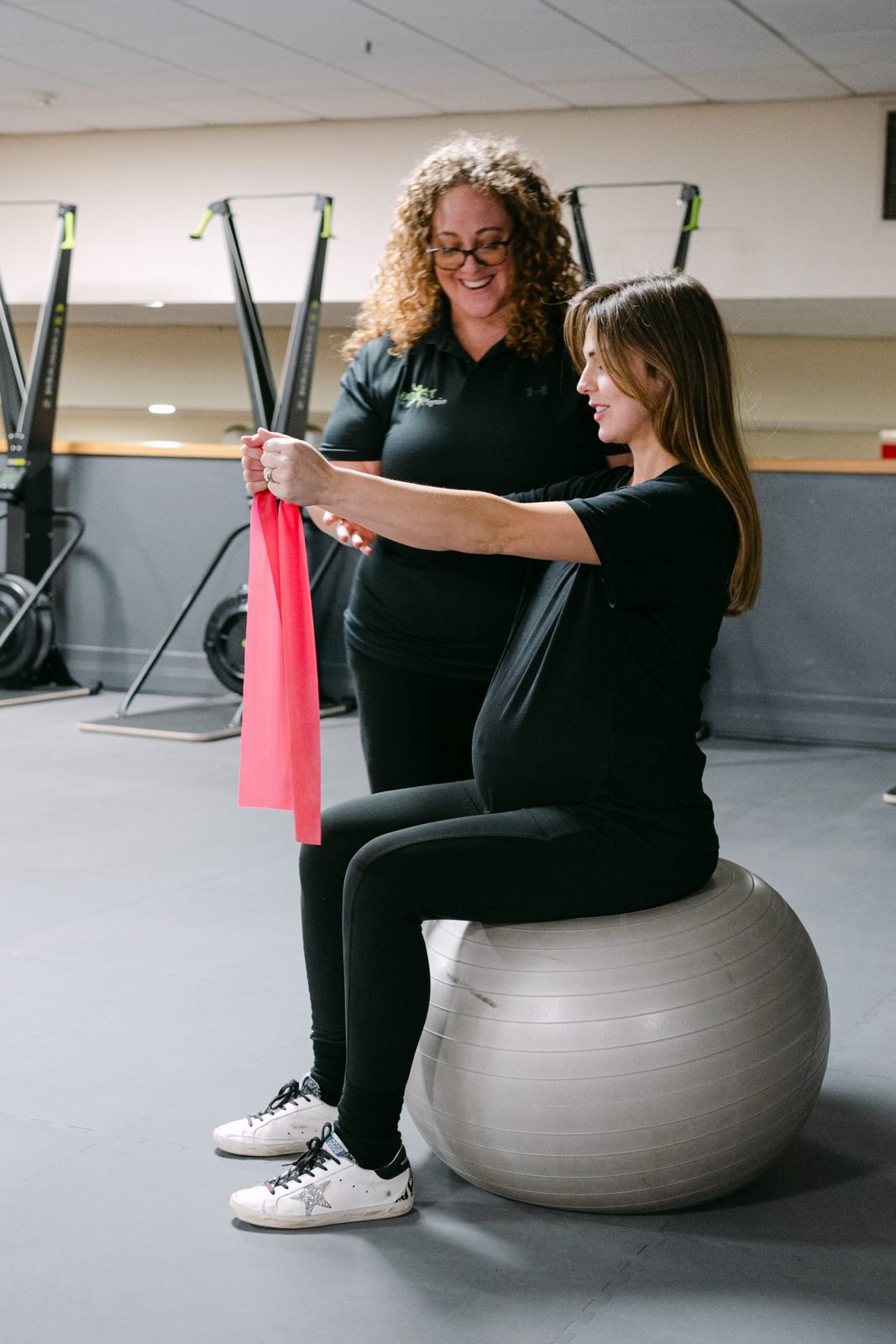
A full check of your pelvic floor, tummy muscles and posture before you return to exercise.
Tummy separation
Diastasis recti
A gap or doming in the tummy muscles after pregnancy. We’ll guide you back to strength.
Tight or painful pelvic floor
Pelvic floor overactivity
Not every pelvic floor is weak. Some are too tight and need to learn to relax, which needs a different approach.
Women with stress urinary incontinence who did pelvic floor muscle training were around eight times more likely to report being cured than those who had no treatment, in a Cochrane review.
Dumoulin et al, Cochrane Database of Systematic Reviews 2018
03 · Your specialists
Meet our women’s health physios

Madeleine Paterson
Senior Physiotherapist with a special interest in women’s health, Hampstead NW3
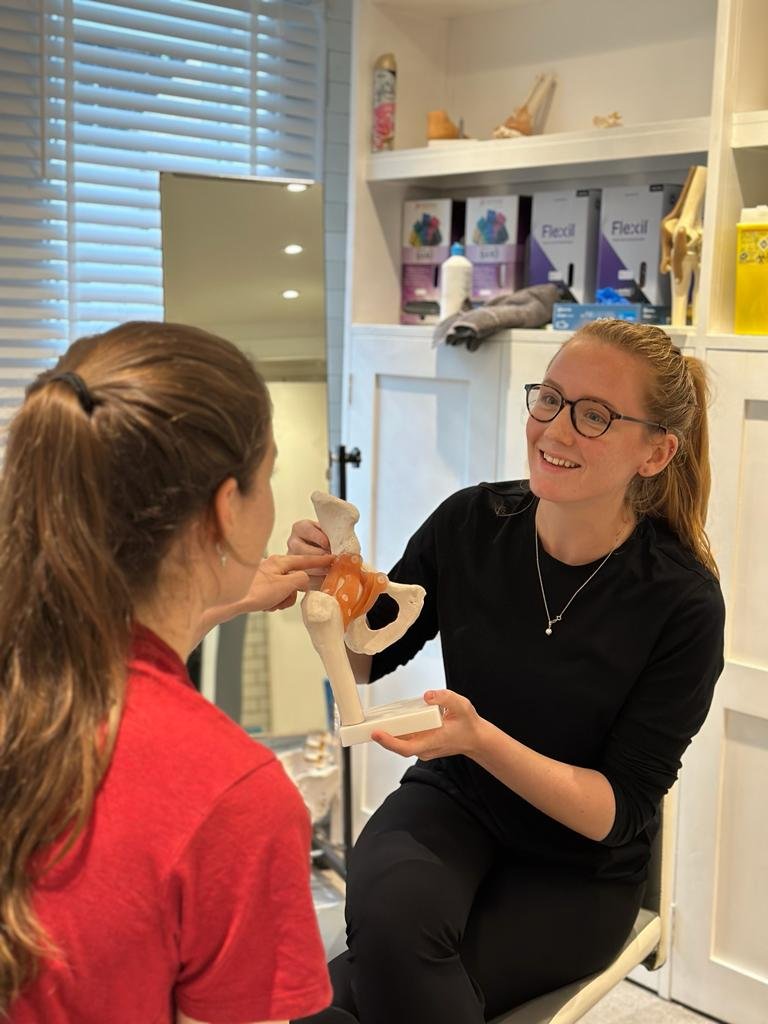
Madeleine is a Mummy MOT® trained women’s health physiotherapist who carries out full internal pelvic floor assessments. She also has years of experience treating back, hip and pregnancy-related pain, so you get one physio who sees the whole picture.
So many women think leaking or pelvic pain is just something they have to put up with. It isn’t. Once you understand what your pelvic floor is doing, we can train it to work for you again.
Madeleine Paterson

Catriona Benson
Senior Physiotherapist, pregnancy and pelvic health, Elstree WD6
Catriona holds a BSc in Sports Therapy and an MSc in Physiotherapy and has a special interest in pregnancy-related conditions and pelvic health. She is Mummy MOT® trained and sees women at our Elstree clinic, with easy parking in Hertfordshire.
Whether you’re pregnant, newly postnatal or years down the line, it’s never too late to get your pelvic floor checked. Small, consistent changes make a big difference.
Catriona Benson
04 · Your appointment
What happens at your first appointment
We listen
A private, unhurried conversation about your symptoms, pregnancy and birth history, bladder, bowel and goals.
We assess
A check of your posture, tummy muscles and back. With your consent, an internal pelvic floor assessment gives the most accurate picture. It’s always your choice.
We plan
A clear explanation and a personalised plan, from pelvic floor training to getting you back to running, the gym or simply laughing without worry.
NICE recommends at least three months of supervised pelvic floor muscle training as the first treatment for stress incontinence. Having a physio check your technique matters, because many women who think they’re doing their exercises correctly aren’t quite activating the right muscles.

Is your pelvic floor really too weak? Our Hampstead physio explains

Common pelvic floor symptoms physios can help with

Pregnant with pelvic pain turning in bed? Try this

What happens at a Mummy MOT®
★★★★★
“I cannot recommend Madeleine more for pregnancy physio. She completely sorted my upper back pain with treatment and exercises and also helped with pelvic pain.”
Dana H, Hampstead, Google review
★★★★★
“Rebecca has helped me to run again following postpartum pelvic pain. Her guidance has completely changed the course of the recovery. Highly recommend.”
Natalie S, Muswell Hill, Google review
05 · After birth
The Mummy MOT®: a check-up for you
Your baby gets plenty of check-ups. You deserve one too. A Mummy MOT® is a specialist postnatal assessment of your pelvic floor, tummy muscles and posture, usually from around six weeks after birth. You’ll leave knowing how your body is recovering and exactly how to get back to the exercise you enjoy, safely.
When to see a doctor
See your GP or midwife promptly if you have blood in your urine, pain passing urine, a fever, unexpected bleeding, or new numbness around your genitals or bottom. In pregnancy, contact your maternity unit straight away if you have heavy bleeding, severe pain, reduced baby movements or signs of labour before 37 weeks.
Why BOOST PHYSIO
Specialist care, close to home
- Mummy MOT® trained women’s health physios at Hampstead NW3 and Elstree WD6
- Private treatment rooms and appointments that fit around family life
- No GP referral needed
- Joined-up care with our wider team for back, hip and sports injuries
- Recognised by Bupa, AXA Health, Vitality, Aviva and WPA, or self-pay
Ready to feel like yourself again?
Book with one of our women’s health physios in Hampstead or Elstree. Your Best Recovery, Guaranteed.
Related reading
Keep reading
Your questions
Your questions answered
What does a pelvic health physio do?
A pelvic health physio assesses and treats problems with the pelvic floor, bladder, bowel and pelvis, such as leaking, prolapse, pelvic pain and recovery after childbirth, using exercise, education and hands-on treatment.
Is an internal examination necessary?
It gives the most accurate assessment of your pelvic floor, but it’s always your choice. We’ll explain why it helps and you can say no or stop at any time. We can still help without it.
Can pelvic floor exercises really stop leaking?
For many women, yes. Supervised pelvic floor muscle training is the first treatment NICE recommends for stress incontinence and research shows women who do it are around eight times more likely to report being cured.
How long does pelvic floor training take to work?
Most women notice improvement within a few weeks. NICE recommends at least three months of supervised training to get the full benefit.
When should I have a Mummy MOT®?
Usually from around six weeks after birth, once you’ve had your GP check. It’s never too late though. We see women years after having children.
Can you help with pelvic pain in pregnancy?
Yes. Pelvic girdle pain is common and treatable. We use safe hands-on treatment, exercises and advice on sleeping, stairs and getting dressed to ease it.
Can I return to running after having a baby?
Yes, when your body is ready. A postnatal assessment helps us build a gradual plan so you return safely without leaking or pain. Many guidelines suggest waiting at least 12 weeks before running.
Which clinics offer women’s health physiotherapy?
Our Mummy MOT® trained women’s health physios see patients at our Hampstead NW3 clinic (Madeleine Paterson) and Elstree WD6 clinic (Catriona Benson).
Do I need a GP referral?
No. You can book directly online or by phone.
Can I use my health insurance?
Yes. Our physios are recognised by Bupa, AXA Health, Vitality, Aviva and WPA. Please check your policy covers pelvic health physiotherapy.
Written by Steven Berkman, Chartered Physiotherapist and founder of BOOST PHYSIO, with the BOOST PHYSIO clinical team. Reviewed October 2026. This guide is general information and not a substitute for an individual assessment by a physiotherapist or doctor.
References
- Dumoulin C, Cacciari LP, Hay-Smith EJC. Pelvic floor muscle training versus no treatment, or inactive control treatments, for urinary incontinence in women. Cochrane Database of Systematic Reviews 2018;10:CD005654.
- National Institute for Health and Care Excellence. Urinary incontinence and pelvic organ prolapse in women: management (NG123). 2019.
