

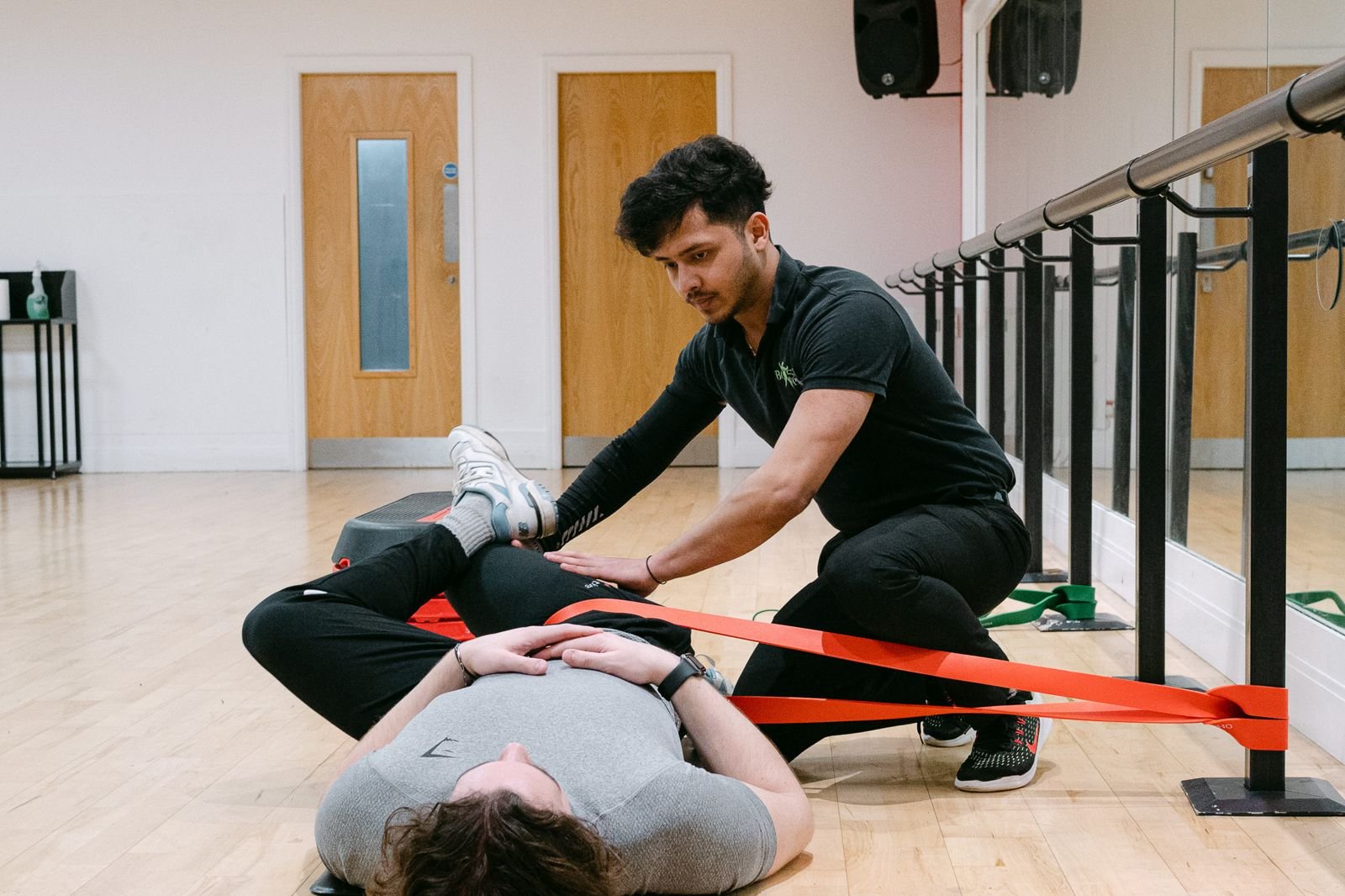
Hip pain physio
Walk, sleep and stay active without hip pain
Aching on the outside of your hip at night, a stiff arthritic hip or a sharp pinch in the groin? Find out what’s really going on and get a plan to move freely again.
★★★★★ Over 1,000 five-star Google reviews · 38,000+ people helped
Quick answer: the most common causes of hip pain are irritated tendons on the outside of the hip (gluteal tendinopathy), hip osteoarthritis and hip impingement, plus pain referred from the lower back. Most improve with physiotherapy: a clear diagnosis, advice on what to change, hands-on treatment to ease pain and progressive strengthening of the hip and buttock muscles.
In this guide · 4 min read
01 · We understand
When your hip hurts, life gets smaller
Hip pain has a way of shrinking your world. You walk less, skip the stairs, turn down the weekend walk and lie awake because you can’t get comfortable on either side.
We see hip pain in runners and footballers, in busy parents and in people in their 60s, 70s and 80s who simply want to keep doing what they love. Whatever your age, there’s usually a great deal we can do.
The first step is working out where the pain is really coming from. The hip, the tendons around it and the lower back can all cause pain in the same area.
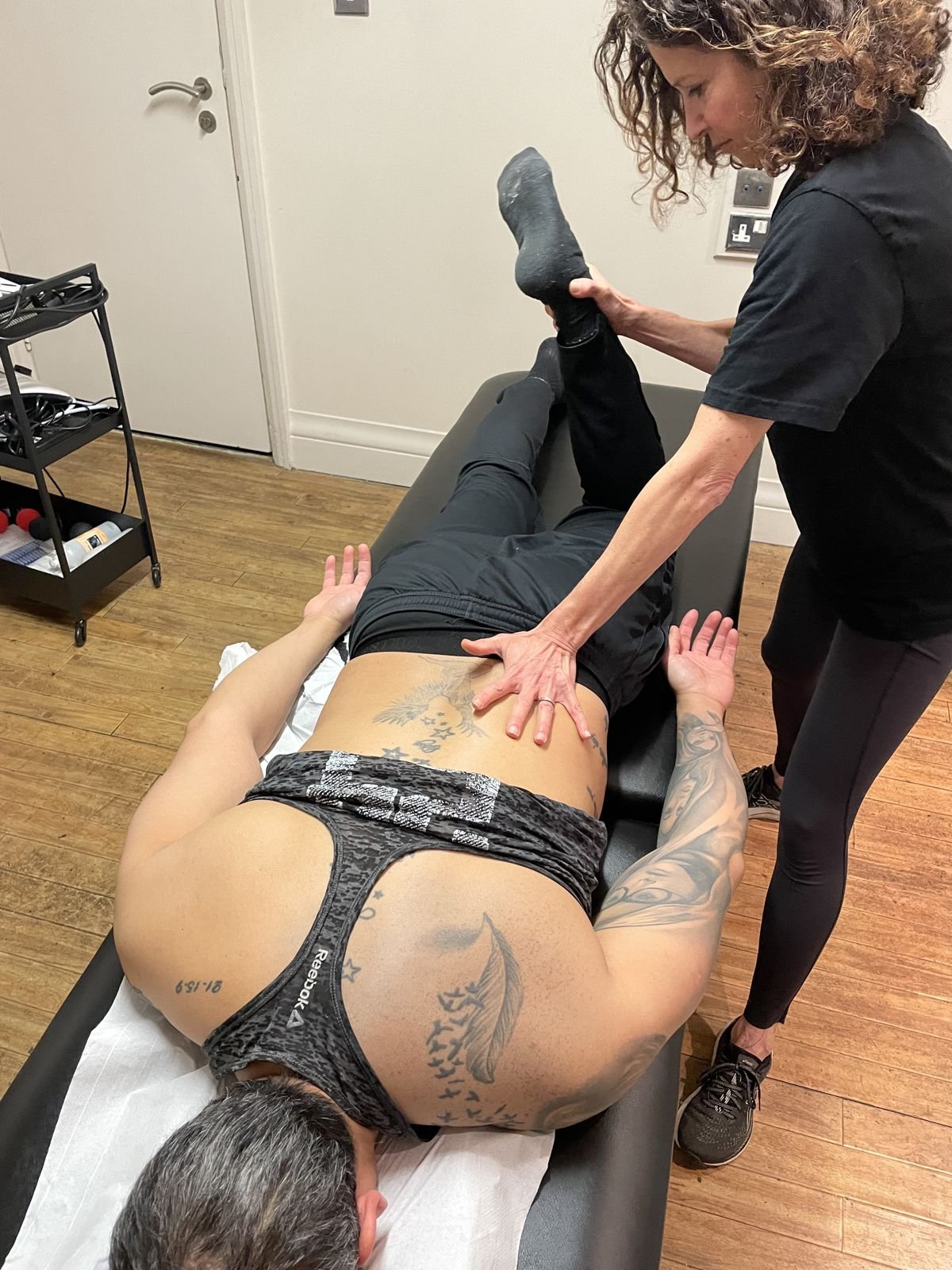
02 · What could it be?
Common causes of hip pain
Pain on the outside of the hip
Gluteal tendinopathy, trochanteric bursitis
Aching over the bony point of the hip, worse lying on that side, climbing stairs or standing on one leg. Very common in women over 40.
Hip arthritis
Osteoarthritis
Stiffness and groin pain, especially getting going in the morning or putting on socks. Exercise is the core treatment.
Hip impingement
FAI and labral irritation
A pinching pain in the front of the hip when you squat, sit low or kick. Common in active younger adults.
Groin strains
Adductor and hip flexor injuries
Sudden pain in sport, often with sprinting, kicking or changing direction.
Pain from your back
Referred pain
Your lower back can refer pain into the buttock and hip. We always check it.
Before and after hip replacement
Prehab and rehab
Getting strong before surgery and recovering well after it, working with your surgeon’s guidance.
In the LEAP trial, people with outer hip pain who had education plus exercise did better at 8 weeks and a year later than those who had a steroid injection. Understanding the problem and loading the tendon properly wins in the long run.
Mellor et al, BMJ 2018
03 · How we help
How our physios treat hip pain
- A thorough assessment of your hip, lower back and the way you walk, stand and move
- Clear advice on what’s aggravating it, such as crossing your legs, sleeping position or hanging on one hip
- Hands-on treatment to ease pain and stiffness and get the joint moving
- Progressive strengthening for your glutes, hips and core, building towards the activities you love
- Shockwave therapy for stubborn tendon pain at Hendon, Hampstead, Swiss Cottage and Borehamwood
- Rapid access to leading hip surgeons if a scan, injection or surgical opinion would help

Outer hip pain? Exercises from our Muswell Hill physio

Why your gluteus medius matters for hip pain

A 30-second stretch for tight hips

Ready for more? Advanced hip strengthening
★★★★★
“Came to see Tyrone for lower back and hip pain in pregnancy. He’s always on time, very easy to book, professional and treatment has been great! Each session I walk away feeling a little bit lighter.”
Fiona T, Borehamwood, Google review
★★★★★
“Having been to an endless number of physios and orthopedic specialists, Tyrone is the best physio I’ve ever been to.”
Richard L, Muswell Hill, Google review

Rebecca Mulvey
Chartered Physiotherapist, Hampstead Garden Suburb NW11 and Muswell Hill N10
Rebecca trained in Sports Rehabilitation and Athletic Therapy in Ireland before completing her Masters in Physiotherapy in London. She has years of pitch-side experience in Gaelic football, hurling and rugby and loves helping people get back to everything they enjoy with a mix of hands-on treatment and exercise.
With hip pain, the small changes often matter as much as the exercises. How you sleep, how you stand, how you climb the stairs. Get those right, build strength steadily and most hips calm down really nicely.
Rebecca Mulvey
04 · Hip arthritis
Hip arthritis: exercise is medicine
If you’ve been told you have arthritis in your hip, it’s easy to think it’ll only get worse. It doesn’t have to. Many people with hip osteoarthritis keep active for years with the right strength and movement work.
NICE guidance recommends therapeutic exercise as a core treatment for osteoarthritis for everyone, alongside weight management where needed. We’ll build a programme that eases pain, keeps the joint moving and gives you confidence in your hip again.
If a hip replacement becomes the right choice, we’ll help you get strong beforehand and guide your recovery afterwards. Read our hip replacement rehab guide.
05 · Your recovery
What your recovery looks like
Find the cause
We pinpoint whether the pain is from the joint, tendons or your back and explain it clearly.
Calm it down
Simple changes, hands-on treatment and the right early exercises settle pain, including at night.
Build it up
Progressive strength work gets you walking further, climbing stairs and back to sport.
When hip pain needs urgent attention
Go to A&E if you’ve had a fall and can’t put weight through your leg, especially if you’re older or have osteoporosis.
See a doctor promptly if your hip is hot and swollen with a fever, if you have unexplained weight loss or a history of cancer, or if a child or teenager develops a limp or hip pain.
Why BOOST PHYSIO
Every tool for your best recovery
We believe your best recovery comes from having every tool available, not relying on just one. So you’ll get hands-on treatment to ease pain and get you moving, exercise rehab that’s built around your life and a clear plan that changes as you improve.
Here’s something our patients don’t always realise. Behind every BOOST physio is the whole team. We train together twice a month and every physio has a dedicated mentor who reviews cases with them. If your problem is unusual or stubborn, it gets talked through by people who have seen it many times before.
- Same day appointments, 8am to 9pm, seven days a week at most clinics
- No GP referral needed
- On average our patients reach their goals in around 5 sessions
- Close links with leading orthopaedic surgeons and sports doctors if you need a scan or an opinion
- Recognised by Bupa, AXA Health, Vitality, Aviva and WPA, or simply self-pay
06 · Near you
Hip pain physio near you
See a BOOST PHYSIO physio for hip pain at any of our clinics across North London and Hertfordshire.
Ready to walk further with less pain?
See an experienced physio today and leave with a clear plan. Your Best Recovery, Guaranteed.
Related reading
Keep reading
Your questions
Your questions answered
Can a physio help hip pain?
Yes. Physiotherapy is a first-line treatment for most hip pain, including gluteal tendinopathy, hip arthritis and hip impingement. It combines a clear diagnosis, advice, hands-on treatment and progressive strengthening.
Why does the outside of my hip hurt at night?
Pain on the outside of the hip that’s worse lying on your side is very often gluteal tendinopathy. Lying on the painful side squashes the tendon. Lying on the other side with your top knee dropped across stretches it. A pillow between your knees usually helps.
Is it trochanteric bursitis or gluteal tendinopathy?
They often occur together and the tendon is usually the main source of pain. The treatment is similar: reduce compression on the tendon and strengthen it gradually.
Should I have a steroid injection for hip pain?
An injection can give short-term relief for some people, but research shows education plus exercise gives better results over a year for outer hip pain. We’ll talk through all the options with you honestly.
Can exercise help hip arthritis?
Yes. Exercise is a core treatment for hip osteoarthritis recommended by NICE. Strengthening and movement work reduce pain, improve function and help you stay active.
How long does hip pain take to get better?
It depends on the cause. Many people notice improvement within a few weeks, while tendon problems usually need 8 to 12 weeks of steady strengthening. On average our patients reach their goals in around 5 sessions.
Do I need a scan for my hip?
Not usually. A thorough examination often gives the diagnosis. If we suspect a labral tear, significant arthritis or something that needs ruling out, we can arrange an X-ray, MRI or consultant opinion quickly.
Can my hip pain be coming from my back?
Yes. The lower back can refer pain into the buttock, hip and thigh. We always examine your back as part of a hip assessment.
Should I stop running with hip pain?
Not always. Many runners can keep running at a reduced level while they strengthen. We’ll help you adjust your training so you keep fit while it settles.
Do I need a GP referral?
No. You can book directly with us online or by phone.
Do you accept health insurance?
Yes. Our physios are recognised by Bupa, AXA Health, Vitality, Aviva and WPA. Self-pay packages are also available.
Where can I see a physio for hip pain near me?
We have clinics in Hendon, Hampstead, Swiss Cottage, West Hampstead, Kentish Town, Hampstead Garden Suburb, East Finchley, Muswell Hill, Crouch End, Mill Hill, Kensington, Borehamwood and Elstree.
Written by Steven Berkman, Chartered Physiotherapist and founder of BOOST PHYSIO, with the BOOST PHYSIO clinical team. Reviewed October 2026. This guide is general information and not a substitute for an individual assessment by a physiotherapist or doctor.
References
- Mellor R, Bennell K, Grimaldi A et al. Education plus exercise versus corticosteroid injection use versus a wait and see approach on global outcome and pain from gluteal tendinopathy: prospective, single blinded, randomised clinical trial. BMJ 2018;361:k1662.
- National Institute for Health and Care Excellence. Osteoarthritis in over 16s: diagnosis and management (NG226). 2022.
