

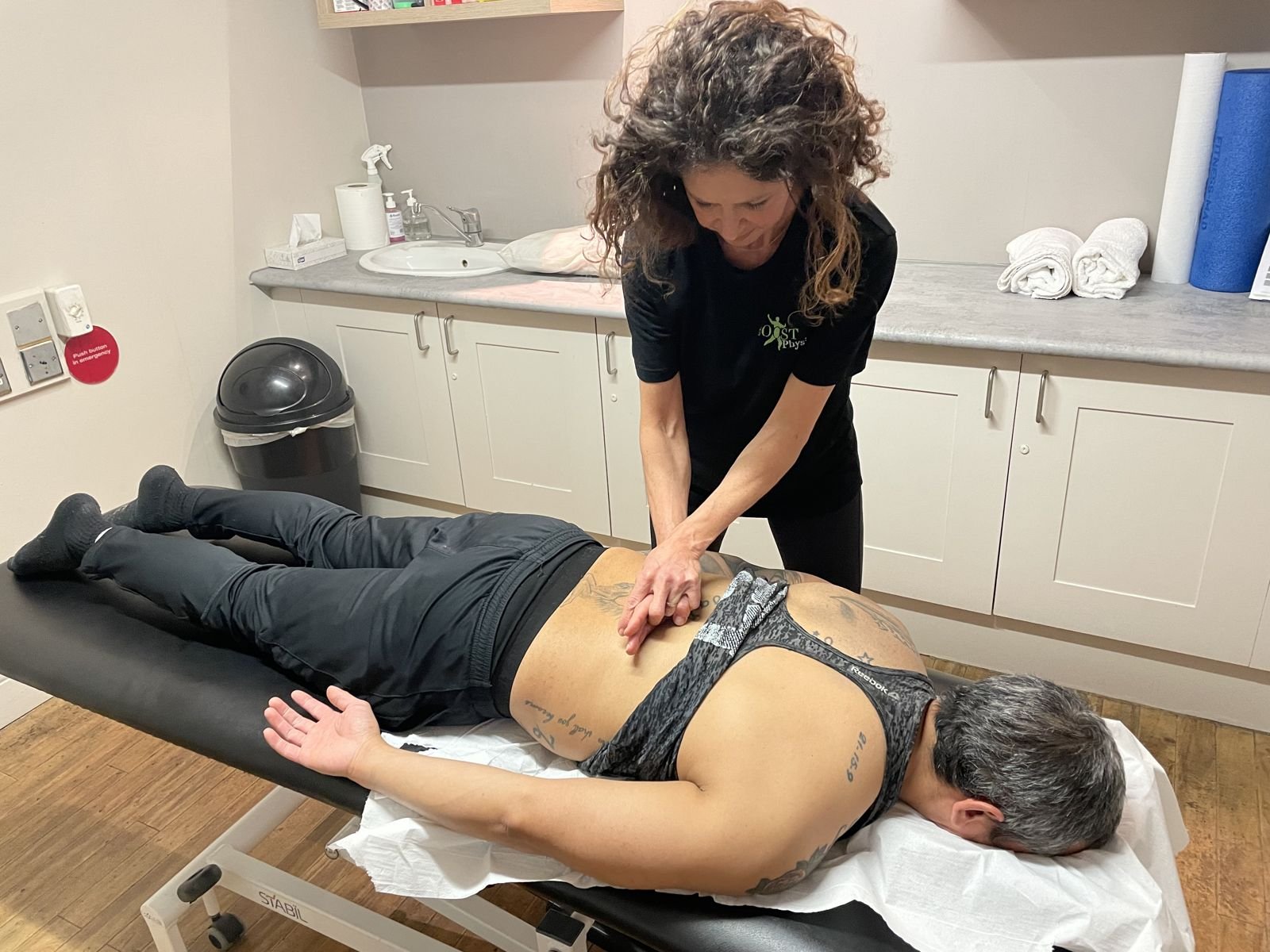
Back pain physio
Get back to moving, working and sleeping without back pain
Whether your back went suddenly or it’s been nagging for months, we’ll find the cause, ease the pain and give you the confidence to move freely again.
★★★★★ Over 1,000 five-star Google reviews · 38,000+ people helped
Quick answer: most back pain isn’t caused by serious damage and usually improves with the right care. Staying gently active, hands-on treatment to ease pain and stiffness and a progressive exercise plan are the most effective approach. Scans are rarely needed. A physio can tell you what’s going on, what to avoid for now and how to stop it coming back.
In this guide · 4 min read
01 · We understand
Back pain can be frightening. It doesn’t have to be
When your back goes, it can stop you in your tracks. Getting out of bed, putting on your shoes, sitting through a meeting or picking up your child. And it’s natural to worry that something is badly wrong.
Here’s what we tell our patients every day: the vast majority of back pain is not dangerous and the spine is strong. Pain is a sign that your back is sensitive and irritated, not that it’s broken.
Low back pain is the leading cause of disability worldwide, so if it’s happened to you, you’re in very good company. It’s also one of the problems we help people overcome most often.
of pain-free 80-year-olds have a disc bulge on MRI, as do around 30% of pain-free 20-year-olds. Scan findings like these are often normal changes, which is why we treat you, not your scan.
Brinjikji et al, American Journal of Neuroradiology 2015
02 · What could it be?
Common types of back pain we treat
Sudden low back pain
Acute back pain or spasm
Often after bending, lifting or for no obvious reason. Painful and scary but usually settles well with the right approach.
Persistent back pain
Pain for more than three months
Back pain that keeps coming back or never quite goes. Building strength and confidence is the key.
Disc-related pain and sciatica
Slipped disc, trapped nerve
Pain running down the leg, sometimes with pins and needles. Most people get better without surgery. Read our sciatica guide.
Stiff, achy back
Desk work and long commutes
Hours of sitting and little movement leave the back stiff and sore by the end of the day.
Back pain in pregnancy
Pelvic girdle and low back pain
Common and very treatable, with advice and exercises that are safe for you and your baby.
Back pain in sport and the gym
Lifting, running, golf, padel
We get you back to training safely and work out what triggered it.
03 · How we help
How our physios treat back pain
There’s no one-size-fits-all fix for back pain and anyone who promises one isn’t being straight with you. What works is understanding your back and your life, then combining the right treatments.
- A thorough assessment including a neurological check, so you know exactly what’s going on and that it’s safe to move
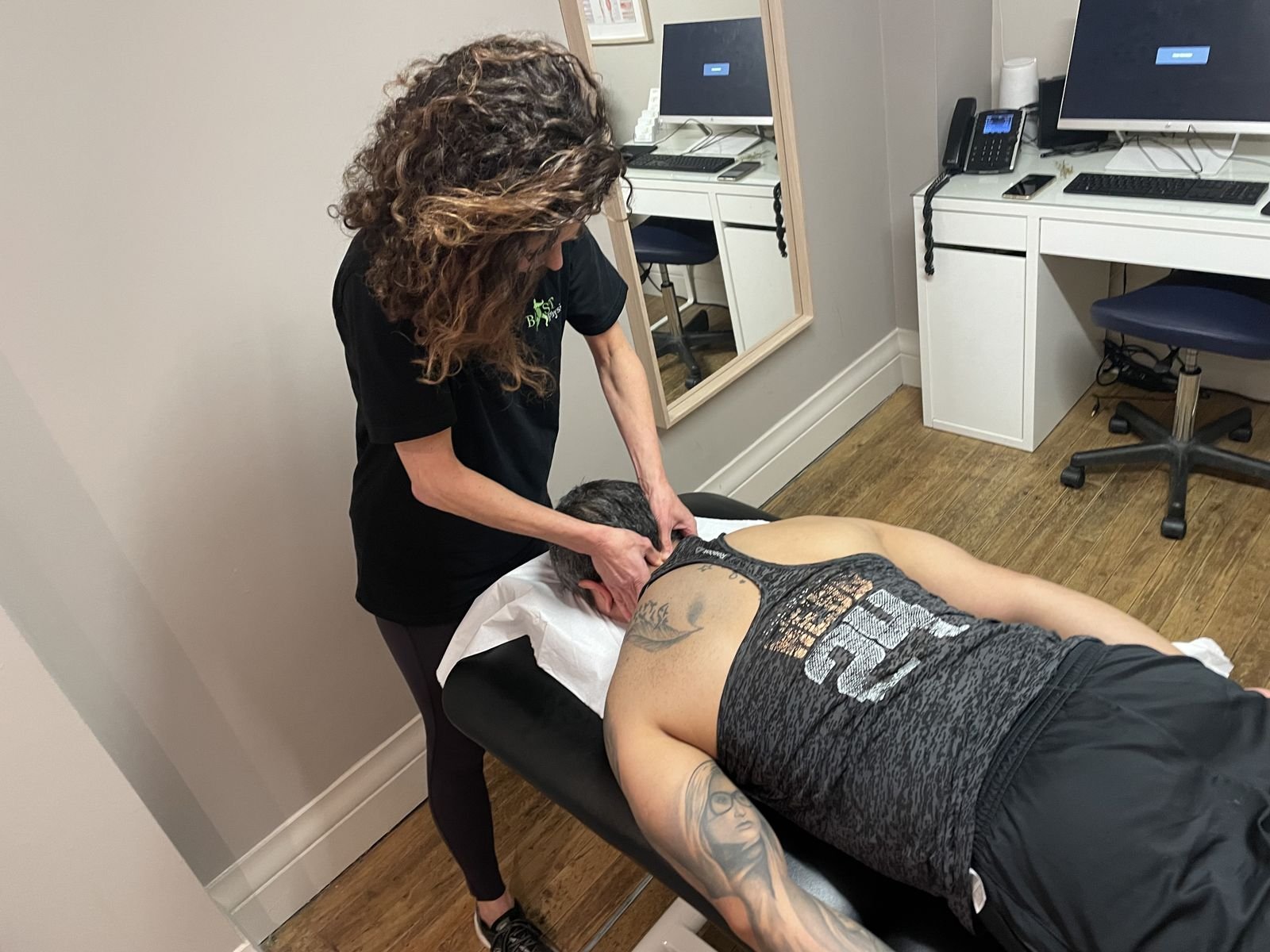
- Hands-on treatment such as spinal mobilisation and soft tissue release to ease pain and spasm
- A progressive exercise plan, from gentle early movement to strength work in the gym
- Acupuncture where it helps settle pain
- Practical advice on sleeping, sitting, lifting, work and getting back to sport
- Fast referral to a spinal consultant or for an MRI if your symptoms need it
Most people with a new episode of low back pain improve substantially within the first six weeks. The right help early on can speed that up and reduce the chance of it becoming long-term.
Costa et al, Canadian Medical Association Journal 2012
★★★★★
“He diagnosed the problem quickly and made a reassuring plan to get it fixed. With every visit we made great progress relieving pain and increasing mobility. I went from agony to pain free in a matter of weeks.”
Timothy H, Muswell Hill, Google review
★★★★★
“I was lucky to have tyrone support me over the past few months for my herniated disk issue. When I first started therapy, I was suffering the lower back pain for long time.”
Earvin Z, Muswell Hill, Google review

Tanvi Parikh
Senior Physiotherapist, Kensington W8 and Kentish Town NW5
Tanvi holds an MSc in Musculoskeletal Healthcare and Rehabilitation from UCL and has worked in both the NHS and private practice in London. She has particular expertise in back and neck pain, scoliosis, chronic pain and recovery after spinal surgery, blending hands-on therapy with exercise and Pilates-based principles.
I want every patient to leave clearer than they arrived, not just about their treatment plan, but about their own body and how to look after it.
Tanvi Parikh

Three exercises for sciatica pain down the leg

An exercise to help prevent back pain, from our Crouch End physio

The stretches our physios recommend for back pain
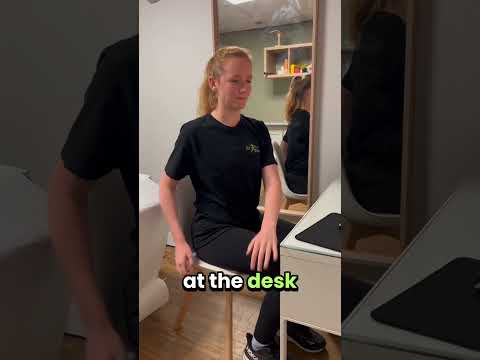
Desk-bound? Three moves for an achy back
04 · Helping yourself
What you can do today
- Keep moving gently. Short walks and normal activity help more than bed rest.
- Change position often. Your back likes variety, so get up from your desk every 30 to 45 minutes.
- Use heat for comfort and simple pain relief if it’s suitable for you.
- Don’t fear bending. Moving through comfortable ranges is safe and helps you recover.
- Look after your sleep and stress. Both have a real effect on back pain.
When back pain needs urgent attention
Go to A&E or call 999 straight away if back pain comes with any of these, as they can be signs of cauda equina syndrome:
- Numbness or tingling around your genitals, bottom or inner thighs (saddle area)
- New problems passing urine or controlling your bladder or bowel
- Weakness or numbness in both legs
- Sexual dysfunction that is new
See a doctor promptly if you have back pain with fever, unexplained weight loss, a history of cancer or after a significant fall or accident.
05 · Your recovery
What your recovery looks like
Reassure and explain
You’ll understand what’s going on, what’s safe and what to expect. That alone often eases pain.
Ease the pain
Hands-on treatment, advice and early exercises calm things down so you can move more.
Build resilience
Progressive strength and fitness so your back copes with life, work and sport and is less likely to flare up.
Why BOOST PHYSIO
Every tool for your best recovery
We believe your best recovery comes from having every tool available, not relying on just one. So you’ll get hands-on treatment to ease pain and get you moving, exercise rehab that’s built around your life and a clear plan that changes as you improve.
Here’s something our patients don’t always realise. Behind every BOOST physio is the whole team. We train together twice a month and every physio has a dedicated mentor who reviews cases with them. If your problem is unusual or stubborn, it gets talked through by people who have seen it many times before.
- Same day appointments, 8am to 9pm, seven days a week at most clinics
- No GP referral needed
- On average our patients reach their goals in around 5 sessions
- Close links with leading orthopaedic surgeons and sports doctors if you need a scan or an opinion
- Recognised by Bupa, AXA Health, Vitality, Aviva and WPA, or simply self-pay
06 · Near you
Back pain physio near you
See a BOOST PHYSIO physio for back pain at any of our clinics across North London and Hertfordshire, with early morning, evening and weekend appointments.
Ready to move with confidence again?
Book today and leave with a clear plan for your back. Your Best Recovery, Guaranteed.
Related reading
Keep reading
Your questions
Your questions answered
Can a physio help with back pain?
Yes. Physiotherapy is one of the most effective treatments for back pain. NICE recommends exercise as a core treatment, with hands-on therapy alongside it. A physio will also explain what’s causing your pain and help you return to normal activity safely.
Should I rest or keep moving with back pain?
Keep moving gently. Bed rest tends to slow recovery. Short walks, changing position often and continuing your normal day as much as you can all help.
How long does back pain last?
Most new episodes improve a lot within six weeks. Some people have pain that lasts longer or keeps coming back, which is where a structured plan makes the biggest difference. On average our patients reach their goals in around 5 sessions.
Do I need an MRI scan for my back pain?
Usually not. Scans often show normal age-related changes that don’t explain pain. We’ll arrange an MRI or specialist opinion quickly if your symptoms or examination suggest it’s needed.
What is the fastest way to relieve back pain?
A combination of staying gently active, heat, simple pain relief if suitable and hands-on treatment from a physio usually gives the quickest relief. Then exercise keeps it away.
Is it a slipped disc?
Discs don’t actually slip. A disc bulge or herniation can irritate a nerve and cause leg pain or sciatica, but most get better without surgery. Read our slipped disc and sciatica guide.
Should I see a physio, osteopath or chiropractor?
All can help with back pain. Physiotherapists combine hands-on treatment with a strong focus on exercise and rehab, which research shows is key to long-term recovery and preventing flare-ups.
Can I go to the gym with back pain?
Often yes, with some changes. We’ll help you adapt your training so you stay active while your back settles, then build you back up.
When is back pain serious?
Get urgent help if you have numbness around your genitals or bottom, new bladder or bowel problems, or weakness in both legs. These are rare but need immediate attention.
Do I need a GP referral?
No. You can book directly online or by phone.
Do you accept health insurance?
Yes. Our physios are recognised by Bupa, AXA Health, Vitality, Aviva and WPA. Self-pay packages are available too.
Where can I see a physio for back pain near me?
We have clinics in Hendon, Hampstead, Swiss Cottage, West Hampstead, Kentish Town, Hampstead Garden Suburb, East Finchley, Muswell Hill, Crouch End, Mill Hill, Kensington, Borehamwood and Elstree.
Written by Steven Berkman, Chartered Physiotherapist and founder of BOOST PHYSIO, with the BOOST PHYSIO clinical team. Reviewed October 2026. This guide is general information and not a substitute for an individual assessment by a physiotherapist or doctor.
References
- Hartvigsen J, Hancock MJ, Kongsted A et al. What low back pain is and why we need to pay attention. The Lancet 2018;391:2356-2367.
- Brinjikji W, Luetmer PH, Comstock B et al. Systematic literature review of imaging features of spinal degeneration in asymptomatic populations. American Journal of Neuroradiology 2015;36:811-816.
- Costa LCM, Maher CG, Hancock MJ et al. The prognosis of acute and persistent low-back pain: a meta-analysis. Canadian Medical Association Journal 2012;184:E613-E624.
- National Institute for Health and Care Excellence. Low back pain and sciatica in over 16s: assessment and management (NG59). 2016, updated 2020.
