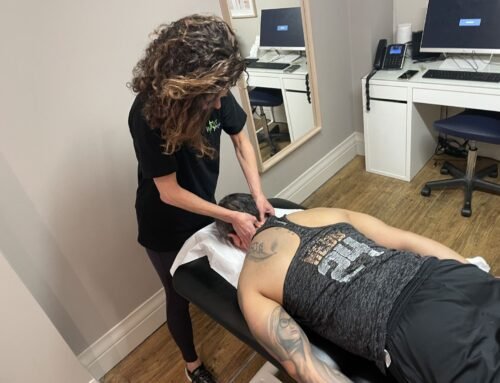
What hands-on treatments help back pain?
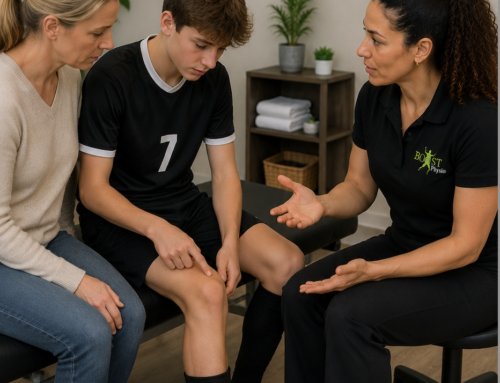
When your back hurts, you want someone to actually do something about it. Hands-on treatment can ease pain quickly and it works best as part of a plan that gets you moving.
★★★★★ 4.9 from 1,400+ Google reviews across our 13 clinics
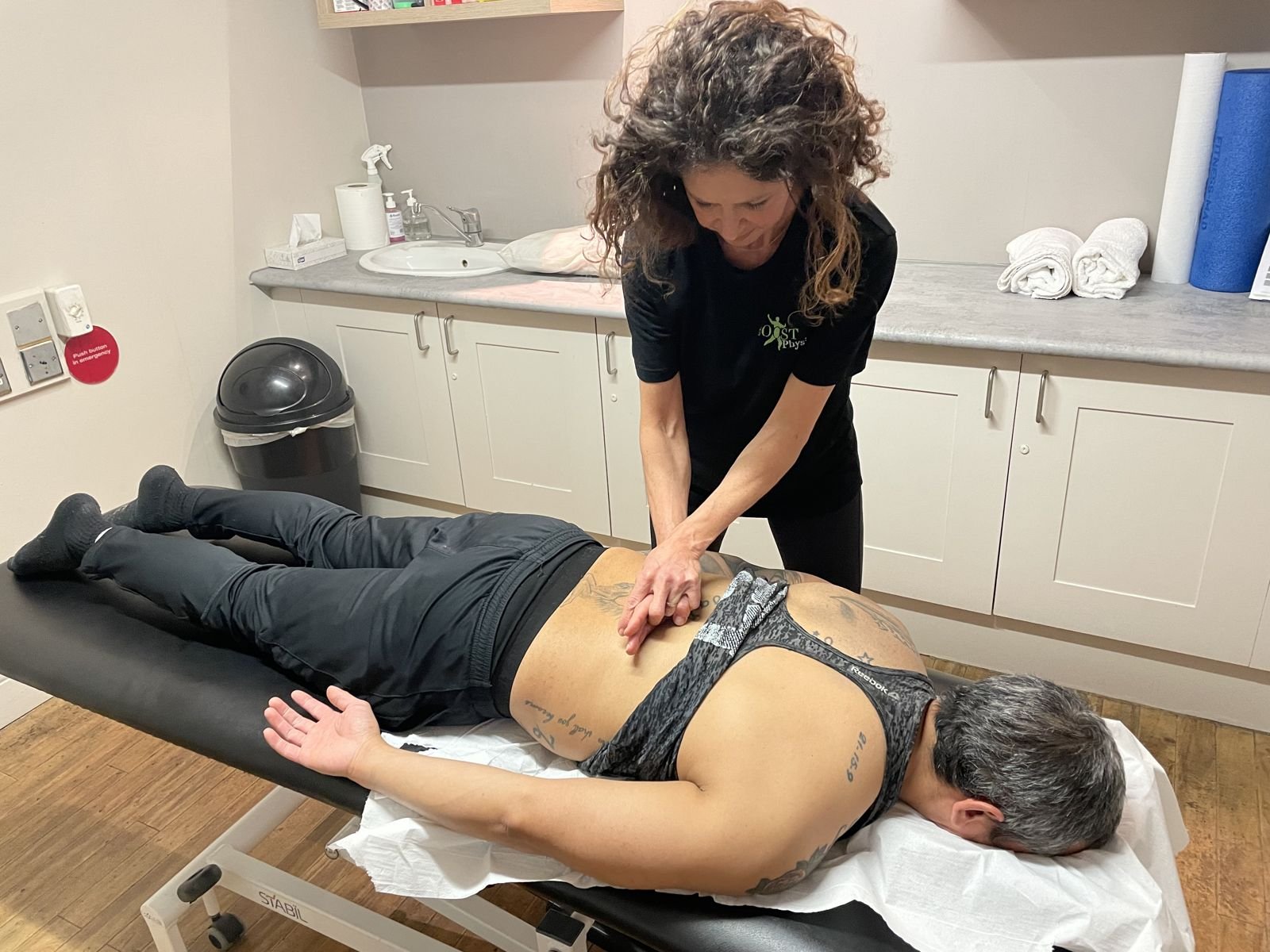
Quick answer: Joint mobilisation, spinal manipulation and soft tissue techniques such as massage can all ease back pain in the short term. NICE (NG59) recommends considering them only as part of a treatment package that includes exercise. A 2019 BMJ review found spinal manipulation gives similar short-term relief to other recommended treatments. Used together with the right exercises, hands-on treatment helps you move more and recover faster.
What are the main hands-on treatments for back pain?
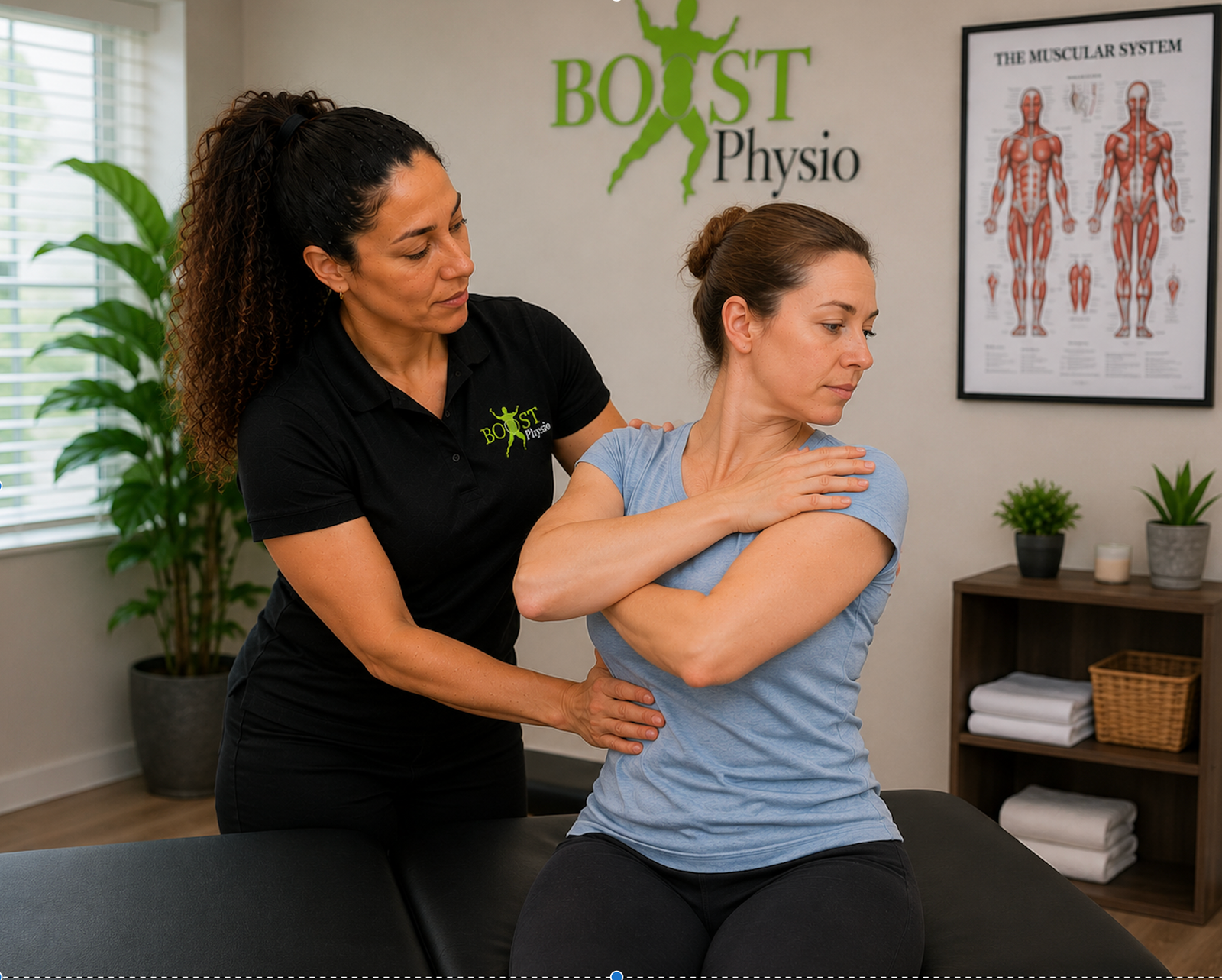
“Hands-on” covers a range of techniques. A good physio chooses between them based on what your back is doing, rather than using the same thing on everyone.
Joint mobilisation
Gentle, rhythmic pressure or gliding movements on the joints of your spine to ease stiffness and pain.
Spinal manipulation
A fast movement at a stiff joint, sometimes with a click. Not essential and not right for everyone.
Soft tissue work
Hands-on pressure on tight, sore muscles to reduce tension and protective spasm.
Nerve mobilisation
Gentle movements that help an irritated nerve glide more freely.
We also use the McKenzie approach, which uses repeated movements to find the direction that eases your pain, along with acupuncture and dry needling and taping for some patients.
| Typical session | Assessment or progress check, hands-on treatment, then exercises |
|---|---|
| How it feels | Usually comfortable; mild soreness for a day or two afterwards is common |
| When you notice a difference | Often during or straight after the session |
| How long relief lasts | Hours to days at first, longer as your exercises build |
| Who gives it | Chartered, HCPC-registered physiotherapists |
What does the evidence say?
Hands-on treatment has a clear place in back pain care, but not on its own. The guidance is consistent that it works best alongside exercise and advice to stay active.
| Treatment | What NICE NG59 says | What it’s good for |
|---|---|---|
| Spinal mobilisation and manipulation | Consider, but only as part of a package that includes exercise | Easing pain and stiffness so you can move and exercise more |
| Soft tissue techniques (such as massage) | Consider, but only as part of a package that includes exercise | Relaxing tight muscles and reducing protective spasm |
| Exercise programmes | Recommended for everyone with low back pain | Long-term recovery and preventing flare-ups |
| Acupuncture | Not recommended for managing low back pain | Some patients still choose it as part of their treatment |
| Belts, corsets, foot orthotics | Not recommended | Little evidence of benefit |
A large systematic review in the BMJ (Rubinstein 2019) found spinal manipulation gives similar short-term relief from chronic low back pain to other recommended treatments, such as exercise. That’s why we see it as a useful tool rather than a cure.
Package
manual therapy should be part of a package with exercise
NICE NG59
Similar
short-term relief from manipulation as other recommended therapies
Rubinstein et al, BMJ 2019
Exercise
is recommended for everyone with low back pain
NICE NG59
Want hands-on treatment for your back?
WhatsApp us your question, call 020 8201 7788 or book online at any of our 13 clinics across North London and Hertfordshire, often the same day.
Why does hands-on treatment work best with exercise?
Hands-on treatment calms a sensitive back. It can reduce pain, ease muscle spasm and help you move more freely, sometimes within one session. That window is the perfect time to start moving more and to rebuild strength.
Exercise is what makes the change last. Stronger, more mobile backs and hips cope better with sitting, lifting and sport and people who keep exercising have fewer flare-ups. Our low back stretch routine and our guide Is walking good for back pain? are good places to start.
That’s the opposite of how passive treatment is sometimes sold. Regular massage on its own might feel great each week, but if nothing else changes, your back is just as sensitive the next time you lift, sit or run.
Hands-on treatment opens the door. Exercise is how you walk through it.
How we use hands-on treatment at BOOST PHYSIO
Many people come to us after NHS physio where they were given exercises but never examined or treated hands-on and they’re often surprised how much better they feel after their first session. We believe your best recovery comes from having every tool available, not relying on just one.
At your first appointment we find out what is driving your pain: which movements ease or flare it, how your spine and hips move, whether a nerve is involved and what your work, sport and sleep look like. Then we choose the hands-on techniques that fit your back and pair them with two or three key exercises.
- Treatment from day one: hands-on treatment and exercise in the same session, not just an assessment
- The right technique for you: mobilisation, manipulation, soft tissue work, nerve mobilisation, acupuncture or taping, chosen for your back
- Less hands-on over time: as you improve, the focus shifts to exercise so you don’t depend on treatment
- Clear progress checks every visit
On average our patients reach their goals in around five sessions. Our back pain page explains how we treat every type of back pain and our acupuncture page covers needling in more detail.
Is hands-on treatment safe for everyone?
For most people, yes. Mild soreness for a day or two afterwards is common and normal. Your physio checks your medical history first and adapts or avoids some techniques, such as manipulation, if you have osteoporosis, take blood thinners or have certain other conditions.
See a doctor urgently instead if
- You have numbness around your bottom or genitals, or new bladder or bowel problems: go to A&E
- Your back pain comes with fever or unexplained weight loss
- You have weakness in your legs that is getting worse
- Pain is constant, severe at night and not eased by any position
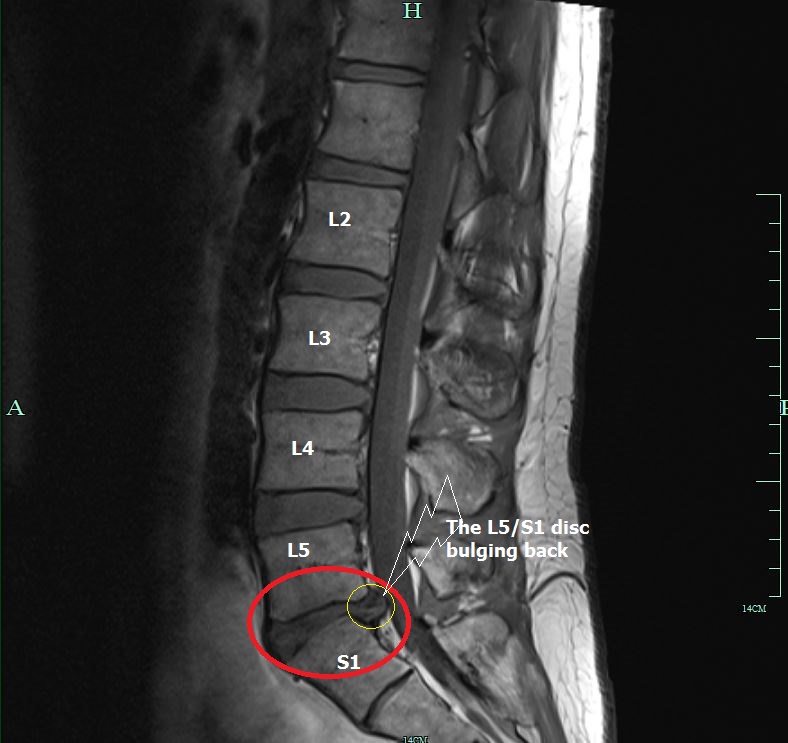
If you’re not sure whether you need a scan first, read Do I need an MRI scan for back pain?
What our patients say
★★★★★
“She helped me bounce back from ruptured ankle ligaments in super quick time -back running In 6-7 weeks instead of 3 months+ that had been expected!”
★★★★★
“Although it will be a long process, I now have a much greater range of movement in my arms and Rebecca has recently started to also work on improving my muscle strength so that I can get back to doing…”
Watch: back pain exercises and treatment
Short videos our physios use with back pain patients.

Neck Pain Hands On Treatment In NW London
Trapped Nerve In Neck? Hands On Treatment Options To Relieve Pain

Sudden back pain? Back spasm? Taping can help
Got a question about your own pain or injury? Send it to our physios.
Get help at your nearest BOOST PHYSIO clinic
We help people with this at all 13 of our clinics across North London and Hertfordshire. Choose your nearest clinic to see the team, opening times and how to find us, or book straight in.
Get your back moving again
WhatsApp us your question, call 020 8201 7788 or book online at any of our 13 clinics across North London and Hertfordshire, often the same day.
Related reading
 Back pain physio
 Sciatica and slipped disc physio
 Acupuncture at BOOST PHYSIO
 Do I need an MRI scan for back pain?
Your questions answered
Does massage help back pain?
Massage can ease muscle tension and pain in the short term. NICE recommends it only as part of a treatment package that includes exercise, which is how we use it.
Is spinal manipulation the same as cracking my back?
Manipulation is a quick, small movement at a stiff joint that sometimes makes a click. The click is just gas in the joint and isn’t what helps. Many people do just as well with gentler mobilisation.
How many hands-on sessions will I need?
Most people feel some relief within the first session or two. On average our patients reach their goals in around five sessions, with the focus moving from hands-on treatment to exercise as you improve.
Will I get hands-on treatment at my first appointment?
Yes. At BOOST PHYSIO you get treatment at your first appointment, alongside a clear explanation of what is going on and the exercises to start.
Is it normal to feel sore after hands-on treatment?
Mild soreness for a day or two is common, especially after deeper soft tissue work. It should settle quickly. Tell your physio if it doesn’t, so they can adjust the treatment.

Written and clinically reviewed by Steven Berkman, BSc Physiotherapy (University of Cape Town), HCPC-registered chartered physiotherapist, MCSP, founder of BOOST PHYSIO in 2008, with Finlay McDonald and Martin Sarembock at BOOST PHYSIO Crouch End. Last reviewed 12 November 2026.
References
- National Institute for Health and Care Excellence. Low back pain and sciatica in over 16s: assessment and management (NG59). 2016, updated 2020.
- Rubinstein SM, et al. Benefits and harms of spinal manipulative therapy for the treatment of chronic low back pain: systematic review and meta-analysis of randomised controlled trials. BMJ. 2019;364:l689.
- NHS. Back pain. nhs.uk.