My child has bad posture: should I be concerned?
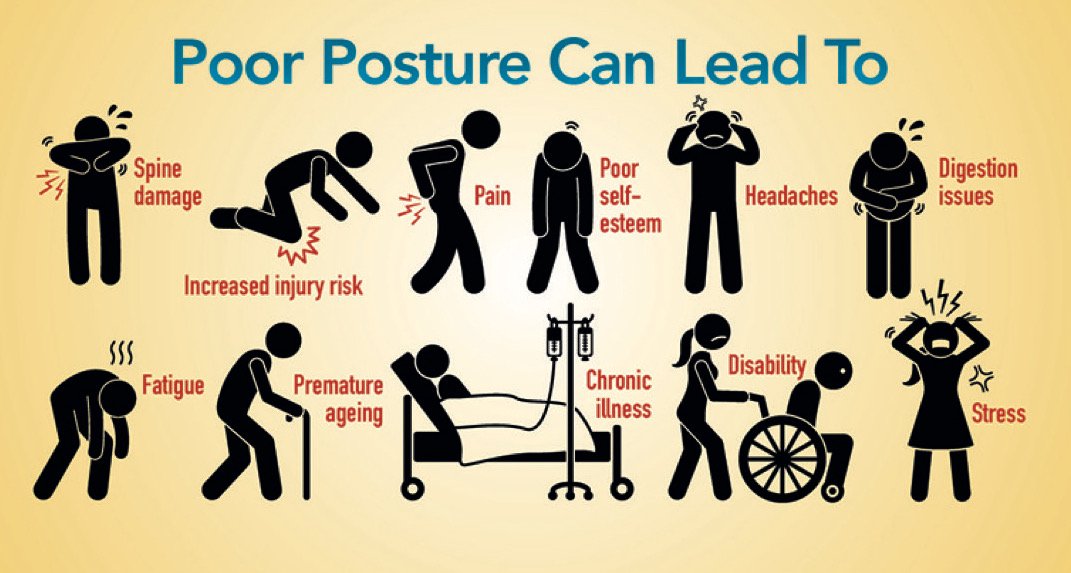
Hunched over a phone, slumped on the sofa, rounding forward under a heavy school bag. Most parents we see have noticed something and want to know if it matters. Usually it doesn’t, but there are a few signs worth checking.
★★★★★ 4.9 from 1,400+ Google reviews across our 13 clinics
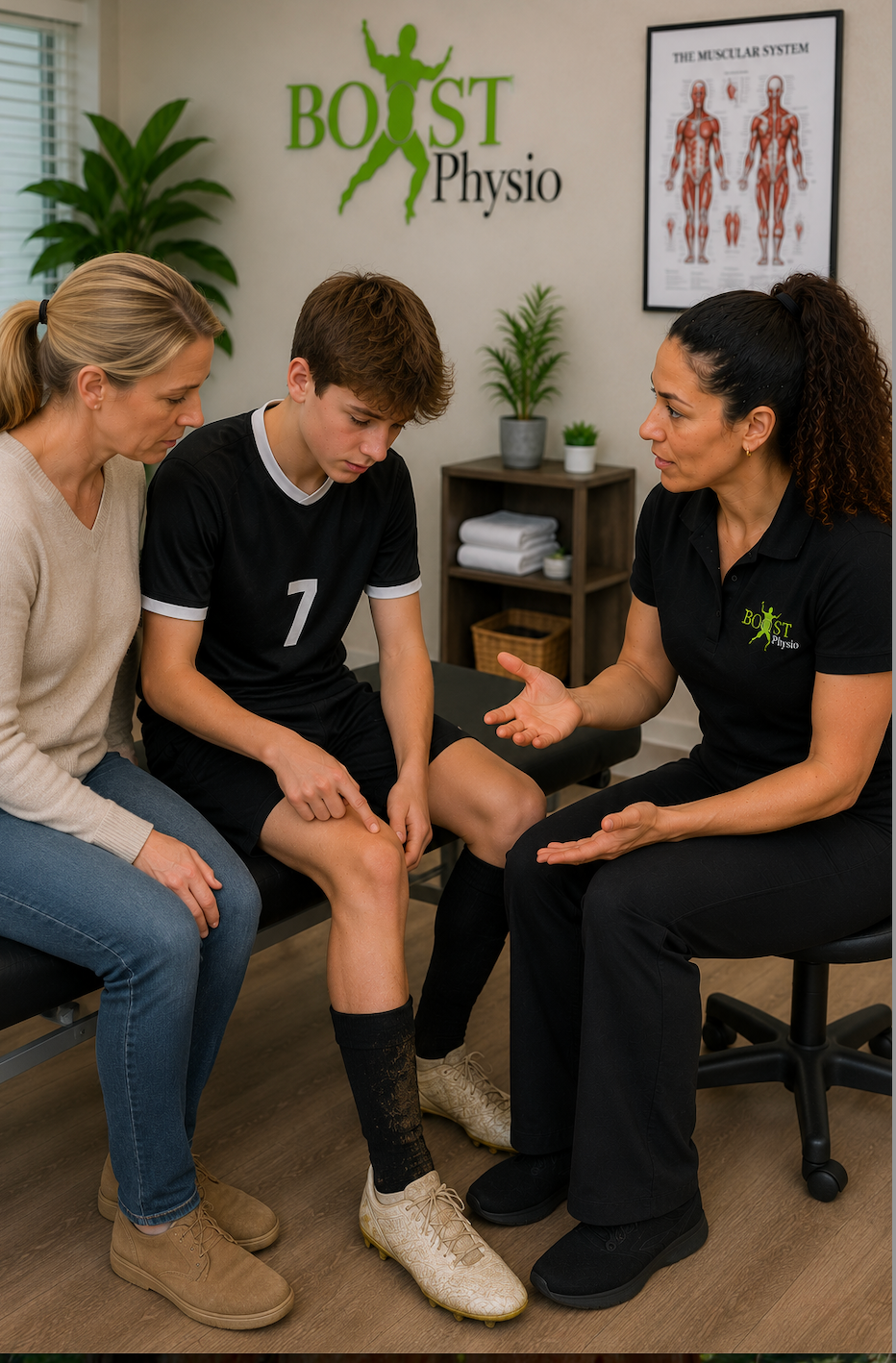
Quick answer: Usually not. Slouching on its own is very common in children and teenagers and is rarely harmful if your child can sit or stand up straight when asked. It’s worth getting checked if one shoulder or hip looks higher, a rib hump shows when they bend forward, or the rounding is stiff and doesn’t correct. Regular activity and strength help far more than nagging.
Is slouching normal in children and teenagers?
Yes. Children and teenagers change position all the time and spend long spells sitting at school, doing homework and on screens. Growth spurts can also leave them feeling gangly and tight for a while. Slumped sitting is a habit, not a disease.
What matters more is whether your child can move freely, sit or stand tall when they choose to and is free of pain. A flexible slouch that corrects easily is very different from a curve that stays the same whatever they do.
| What you notice | Usually just a habit | Worth getting checked |
|---|---|---|
| Rounded shoulders | Straightens when asked | Rounded even when trying to stand tall |
| Upper back curve | Flexible, disappears lying flat | Stiff, sharp or angled curve |
| Shoulders and hips | Level | One shoulder blade, shoulder or hip higher |
| Bending forward | Back looks even | A rib hump on one side |
| Pain | None, or occasional after long sitting | Regular back pain, pain at night or pain stopping sport |
What are the signs of scoliosis?
Scoliosis is a sideways curve of the spine, usually with some twist. The most common type, adolescent idiopathic scoliosis, affects about 2 to 3% of young people. It often shows up during the growth spurt between about 10 and 15 and girls are more likely to have curves that get bigger.
- One shoulder higher than the other
- One shoulder blade sticking out more
- Uneven waist or one hip higher
- Clothes hanging unevenly
- A rib hump on one side when they bend forward
A simple check at home is the forward bend test, which doctors call the Adams test. Ask your child to stand with feet together and bend forward to touch their toes while you look along their back from behind. If one side of the ribs or lower back looks higher, ask your GP or a physio to check.
Worried about your child’s posture?
WhatsApp us your question, call or book online at any of our 13 clinics.
What about a rounded upper back?
Most rounded upper backs in teenagers are postural and flexible. A less common condition, Scheuermann’s kyphosis, causes a stiffer, sharper curve in the upper back that doesn’t straighten when your child stands tall or lies flat. It usually appears during the teenage years and is more common in boys. It needs an X-ray to diagnose.
| Adolescent idiopathic scoliosis | Affects about 2 to 3% of young people |
|---|---|
| Most common age to notice | Growth spurt, roughly 10 to 15 |
| Forward bend (Adams) test | A rib hump suggests scoliosis and needs checking |
| Scheuermann’s kyphosis | Stiff upper back curve that doesn’t correct, diagnosed by X-ray |
| Recommended activity | An average of at least 60 minutes a day for ages 5 to 18 (UK guidelines) |
| School bags | Commonly advised under 10 to 15% of body weight, worn on both shoulders |
What actually helps a child’s posture?
Telling a child to sit up straight rarely lasts. What works better is making their body stronger and more active, so good posture comes more easily. The UK Chief Medical Officers recommend children and young people aged 5 to 18 do an average of at least 60 minutes of moderate to vigorous activity a day across the week.
Move more
Sport, dance, swimming, climbing, cycling and playing outside all build the muscles that support the spine.
Break up screen time
A quick stretch or walk every 30 minutes helps. Phones held at eye level reduce neck strain.
Lighten the bag
Pack only what’s needed, use both straps and adjust them so the bag sits close to the back.
Desk set-up
Feet on the floor, screen roughly at eye level and a chair that lets them sit back.
Teenagers respond best when exercise is linked to something they care about, such as getting faster at football, climbing higher or simply feeling less stiff after a long day of revision. A few minutes a day is plenty.
Posture braces and gadgets aren’t recommended for ordinary slouching. They can weaken the muscles you’re trying to strengthen. For adults, see our guide to how to improve your posture.
How we help you recover at BOOST PHYSIO
We see children and teenagers with back and neck pain, sports injuries and posture worries and we keep it relaxed and practical. At the first appointment we ask about school, sport, screen time and growth, then look at how your child stands, bends and moves, check flexibility and strength and do the forward bend test.
Most of the time we can reassure you and give your child a handful of exercises they’ll actually do, often linked to their sport. If we find signs of scoliosis or kyphosis, we explain what we’ve found and help you arrange the right X-ray or specialist referral through your GP. See our adolescent physio and back pain physio pages.
2-3%
of young people have adolescent idiopathic scoliosis
Clinical guidance
60 mins
average daily activity recommended for ages 5 to 18
UK Chief Medical Officers, 2019
Around 5
sessions on average for our patients to reach their goals
BOOST PHYSIO
Strong, active children usually have the posture to match. We help make that fun and simple.
See your GP soon if your child has
- Back pain that wakes them at night or is getting worse
- Back pain with fever, weight loss or feeling unwell
- Numbness, weakness or changes in walking
- A curve that is getting visibly worse over weeks or months
What our patients say
★★★★★
“I’ve had a really positive experience with Otis at BOOST Physio. He’s incredibly knowledgeable, friendly, professional and personable, and always takes the time to explain things clearly and make you feel…”
★★★★★
“I have been seeing Jolene at Boost Physio for several months for headaches, posture issues, and neck pain.”
★★★★★
“It was amazing working with Catriona Benson as I recovered from an injury – She was incredibly knowledgeable, patient, kind and intentional.”
Watch: posture and back exercises
Short videos from our physios on posture, back stiffness and simple exercises.

How To Help Back Stiffness At Work

How to relieve Upper back tension with one physiotherapist recommended move?
Upper Back Pain? Rounded Shoulders? How to correct!
Got a question about your own pain or injury? Send it to our physios.
Get help at your nearest BOOST PHYSIO clinic
We help people with this at all 13 of our clinics across North London and Hertfordshire. Choose your nearest clinic to see the team, opening times and how to find us, or book straight in.
Friendly, practical advice for families
Chartered physios who see children and teenagers, with no GP referral needed.
Related reading
Your questions answered
Can bad posture damage my child’s spine?
Ordinary slouching doesn’t damage the spine. It’s a habit, not a structural problem. Stiff or uneven curves are different and worth checking.
Do heavy school bags cause back problems?
They can cause aches and fatigue but don’t cause scoliosis. Keeping bags light and worn on both shoulders makes them more comfortable.
At what age should I check my child for scoliosis?
The growth spurt, roughly 10 to 15, is the key time. A quick forward bend check at home every few months is enough.
Should my child wear a posture brace?
Not for ordinary slouching. Braces are only used for certain types of scoliosis and are prescribed by a specialist.
Can a physio help a teenager with back pain?
Yes. Most teenage back pain is linked to activity, growth or sitting and improves with the right exercises and advice.

Written and clinically reviewed by Steven Berkman, BSc Physiotherapy (University of Cape Town), HCPC-registered chartered physiotherapist, MCSP, founder of BOOST PHYSIO in 2008, with Finlay McDonald and Martin Sarembock at BOOST PHYSIO Crouch End. Last reviewed 12 November 2026.
References
- UK Chief Medical Officers. Physical activity guidelines. Department of Health and Social Care, 2019.
- NHS. Scoliosis. nhs.uk.
- NHS. Kyphosis. nhs.uk.
- Scoliosis Association UK. What is scoliosis? sauk.org.uk.