Shockwave therapy
Shockwave therapy for stubborn tendon pain
Tennis elbow, Achilles pain, plantar fasciitis, calcific shoulder or outer hip pain that just won’t settle. Physio-led shockwave with a full rehab plan, at our clinics across North London and Hertfordshire.

Quick answer: shockwave therapy (ESWT) sends pulses of acoustic energy into a painful tendon to ease pain and stimulate healing. It’s most useful for tendon problems that have lasted 3 months or more, such as tennis elbow, Achilles tendinopathy, plantar fasciitis, calcific shoulder tendinopathy and outer hip pain. Our physios at BOOST typically do a course of 3 to 6 sessions. It’s safe, but the evidence on how well it works varies by condition, so we always combine it with hands on treatment and a tailored exercise programme.
What is shockwave therapy?
Shockwave therapy, also called extracorporeal shockwave therapy or ESWT, uses a handheld applicator to send pulses of acoustic energy through the skin into a painful tendon or other soft tissue. It doesn’t involve needles, injections or surgery and you walk out of the clinic straight afterwards.
It’s thought to work by easing pain signals and stimulating the tendon’s own repair processes. At BOOST our physios use shockwave for long-standing tendon pain that hasn’t settled with exercise alone, always as part of a full rehab plan rather than on its own.
Most courses are 3 to 5 sessions, about a week apart. Each session takes around 10 to 15 minutes within your physio appointment.
Typical protocol. Your physio will tailor it to you.
Which conditions can shockwave help?
Shockwave works best for stubborn tendon and soft tissue problems that have been around for 3 months or more. These are the conditions where we use it most.
Tennis elbow
Lateral epicondylalgia, golfer’s elbow
Pain on the outside of the elbow when gripping, lifting or typing. Tennis elbow physio
Achilles tendinopathy
Achilles tendinitis, insertional Achilles pain
Pain and morning stiffness at the back of the heel or in the tendon above it. Achilles tendon physio
Plantar fasciitis
Plantar heel pain
Sharp pain under the heel with your first steps in the morning or after sitting. Heel pain explained
Calcific shoulder tendinopathy
Calcific tendinitis, calcium deposits
Shoulder pain from calcium deposits in the rotator cuff tendons, often worse lying on that side at night.
Outer hip pain
Gluteal tendinopathy, trochanteric bursitis
Pain on the outside of the hip, worse lying on your side, on stairs or after walking. Outer hip pain explained
Knee tendon pain
Patellar tendinopathy, jumper’s knee
Pain just below the kneecap with jumping, running or squatting. Knee pain physio
Shockwave therapy: the key facts
| What it is | Pulses of acoustic energy delivered through the skin to a painful tendon or soft tissue. No needles, no injections and no downtime. |
|---|---|
| Best for | Long-standing tendon problems (3 months or more) such as tennis elbow, Achilles tendinopathy, plantar fasciitis, calcific shoulder tendinopathy and outer hip pain. |
| How many sessions | Usually 3 to 5, about a week apart, alongside your exercise programme. |
| Does it hurt? | It can be uncomfortable for a few minutes. Your physio adjusts the intensity so it stays tolerable and the area may ache for a day or two afterwards. |
| How well it works | Good evidence for calcific shoulder tendinopathy and support for several lower limb tendon problems. Results are more mixed for tennis elbow, so we always combine it with exercise rehab. |
How our physios assess tennis elbow and where shockwave fits into treatment
What happens at a shockwave session?
Your first appointment is a full physiotherapy assessment. We need to be confident it’s a tendon problem that suits shockwave, rather than a nerve, joint or referred pain that needs a different approach.
- Assessment first – history, examination and strength testing to find the true source of your pain
- Safety check – we check medication, recent injections and health conditions before any treatment
- The treatment – a little gel on the skin, then the applicator is moved over the sore area for a few minutes
- Your exercise plan – loading exercises for the tendon, which do the long-term work
- Review – we track pain and function each session, so you know whether it’s working
Most people carry on with normal daily activities straight away. We usually suggest easing off very heavy or high-impact exercise for a day or two after each session. Our patients find it a very helpful adjunct to help their recovery.

Elbow
Tennis elbow
Applied over the tendon on the outside of the elbow, alongside grip and forearm strengthening.
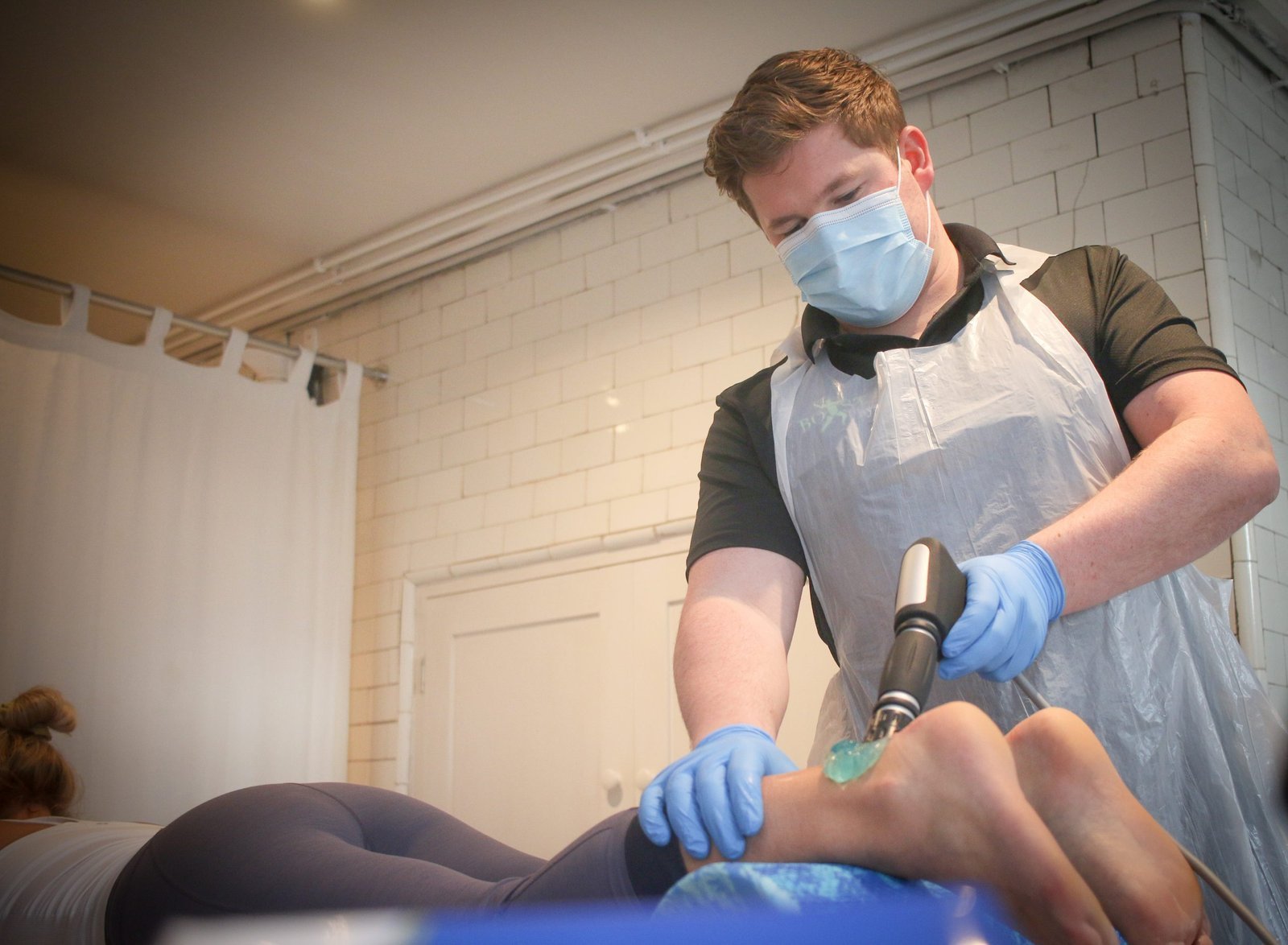
Heel and Achilles
Achilles and heel pain
Used for Achilles tendinopathy and plantar fasciitis that haven’t settled with calf strengthening and load changes.
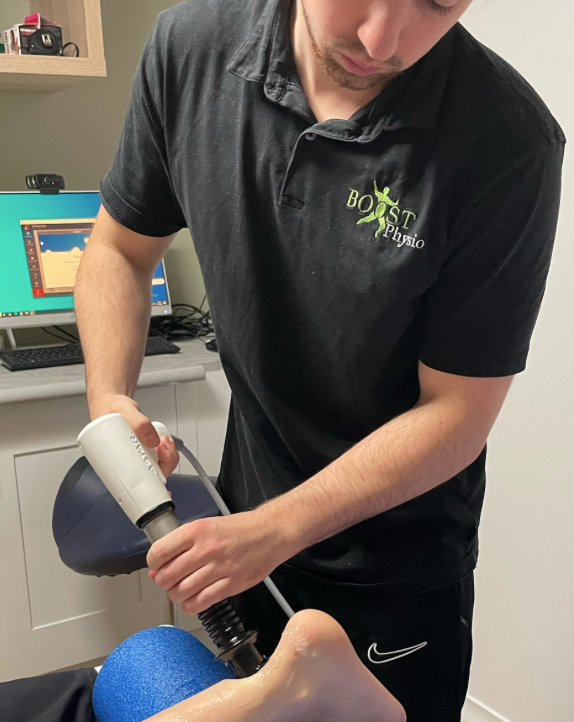
Foot
Foot and lower limb
Also helpful for other stubborn lower limb tendon problems, such as at the knee or outer hip.
Does shockwave therapy work?
For the right problem, it can help. The strongest evidence is for calcific shoulder tendinopathy, where a well-known trial found high-energy shockwave improved pain and function and helped break down calcium deposits. A systematic review also supports its use for several lower limb tendon problems, including outer hip pain, patellar tendinopathy and Achilles tendinopathy.
We want to be straight with you, though. NICE says shockwave raises no major safety concerns but that the evidence on how well it works is inconsistent, especially for tennis elbow. That’s why we only recommend it where it suits your problem and always alongside exercise.
Shockwave or a steroid injection?
Steroid injections can ease tendon pain quickly, but for tennis elbow a large trial found people who had an injection were more likely to have their pain come back within a year than those who didn’t.
Shockwave is a non-invasive option worth trying before an injection for many stubborn tendon problems. If you do need an injection or a specialist opinion, we’ll arrange it through our consultant network.
Why exercise still matters with shockwave
Shockwave can calm pain and kick-start healing, but tendons get stronger by being loaded. In a trial of people with Achilles tendinopathy, shockwave and a calf loading programme gave similar results and both did far better than waiting to see.
That’s why every shockwave course at BOOST PHYSIO comes with a tailored strengthening programme. Shockwave helps you do the exercises with less pain and the exercises build a tendon that copes with the things you want to do.
Watch: shockwave and tendon advice from our physios
Short, practical videos from the BOOST PHYSIO team. If an exercise makes your pain worse, stop and ask your physio for the right version for you.
Why finding the true source of pain matters
Shockwave for an Achilles tendon problem
Tennis elbow rehab exercises
Stretches for morning heel pain
When shockwave isn’t suitable
Your physio will check these before any treatment. Shockwave is not used:
- during pregnancy
- if you have a bleeding disorder or take blood-thinning medication, unless cleared
- over an area with a tumour, infection or broken skin
- over growth plates in children and teenagers
- within a few weeks of a steroid injection into the same area
See a doctor urgently if a joint becomes hot, red and swollen, you have a fever or you can’t take weight after an injury. These need medical assessment, not shockwave.
Why choose BOOST PHYSIO for shockwave therapy?
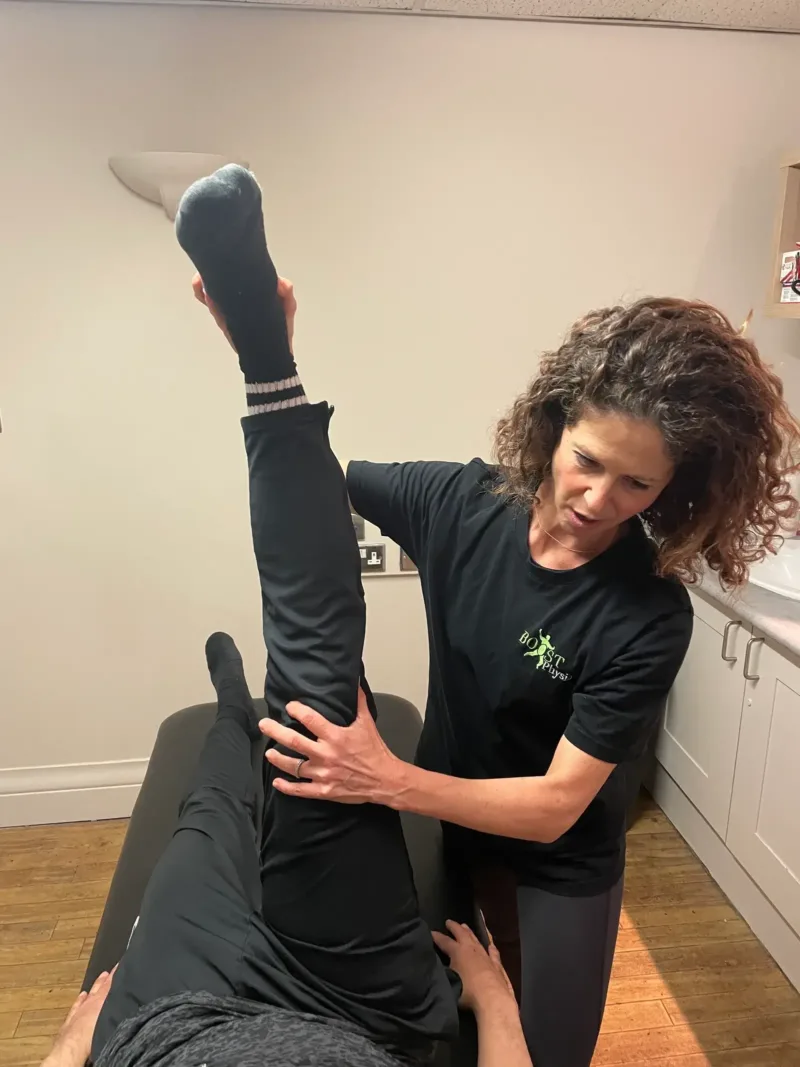
We believe your best recovery comes from having every tool available, not relying on just one. Our physiotherapists combine hands-on treatment with exercise rehabilitation, tailored to you and adjusted as you improve. Every physio trains with the team twice a month and has a dedicated mentor who reviews their cases, so you benefit from the experience of the whole group.
Shockwave is delivered by our chartered physiotherapists as part of your physio appointment, so you get a full assessment, hands-on treatment and an exercise plan, not just a machine. When you book, mention shockwave and we’ll make sure you see a physio who uses it.
- Same day physiotherapy appointments, 8am to 9pm
- A network of clinics across North London and Hertfordshire
- Male and female chartered physiotherapists
- Shockwave therapy, acupuncture and gym-based rehab when you need them
- Close links with leading orthopaedic surgeons and sports physicians
- Treatment recognised by Bupa, AXA Health, Vitality, Aviva and WPA
Shockwave therapy near you
See a BOOST PHYSIO physiotherapist at our clinics in Hendon NW4, Hampstead NW3, Swiss Cottage, West Hampstead NW6, Kentish Town NW5, Hampstead Garden Suburb NW11, East Finchley N2, Muswell Hill N10, Crouch End N8, Mill Hill NW7, Kensington W8, Borehamwood WD6 and Elstree WD6.
Ready to get on top of stubborn tendon pain?
See a chartered physiotherapist today and leave with a clear plan. Your Best Recovery, Guaranteed.
Related reading
 Tennis elbow physio
 Achilles tendon physio
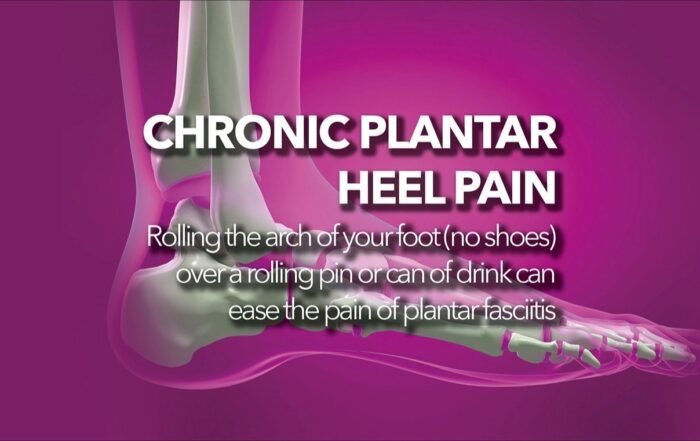 Heel pain and plantar fasciitis
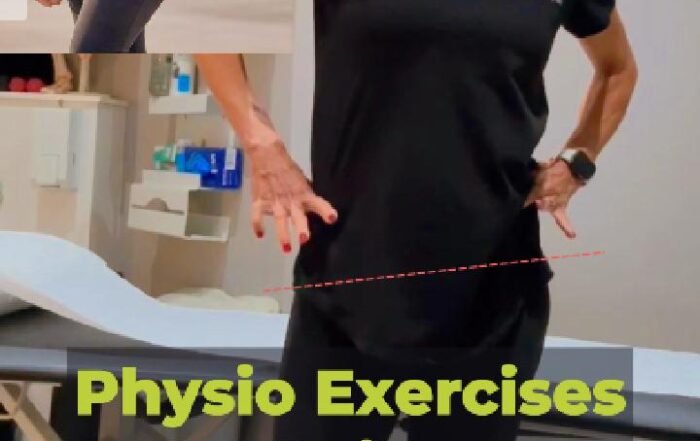 Pain on the outside of your hip?
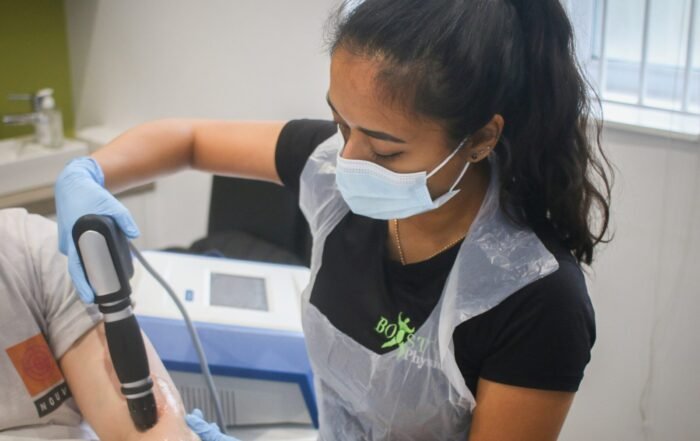 Which conditions can shockwave help treat?
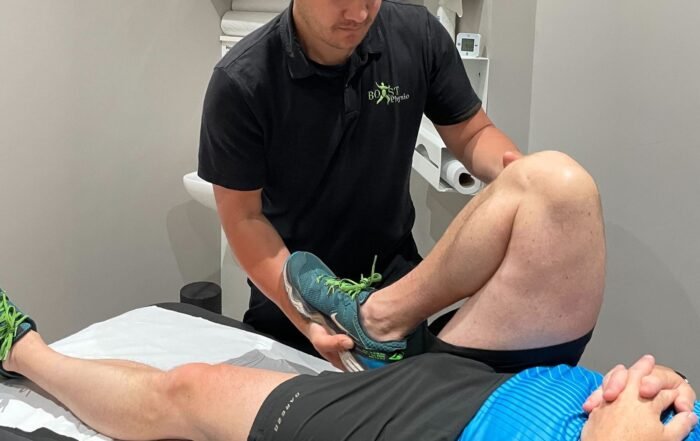 Our sports injury clinic
Written by Steven Berkman, Chartered Physiotherapist and founder of BOOST PHYSIO, with the BOOST PHYSIO team. This article is general guidance and is not a substitute for an individual physiotherapy or medical assessment.
Frequently asked questions about shockwave therapy
What is shockwave therapy used for?
Shockwave therapy is mainly used for long-standing tendon and soft tissue pain, including tennis elbow, Achilles tendinopathy, plantar fasciitis, calcific shoulder tendinopathy, outer hip pain and patellar tendinopathy. It works best for problems that have lasted 3 months or more and haven’t settled with exercise alone.
Does shockwave therapy hurt?
It can feel uncomfortable for the few minutes it’s applied, often like a firm tapping over the sore spot. Your physio adjusts the intensity so it stays tolerable. The area may ache for a day or two afterwards, which is normal.
How many shockwave sessions will I need?
Most people have 3 to 5 sessions, about a week apart. Some notice a change after the first couple of sessions, while for others the benefit builds over the following weeks as the tendon gets stronger with exercise.
Does shockwave therapy work?
It can, for the right problem. The evidence is strongest for calcific shoulder tendinopathy and supportive for several lower limb tendon problems. NICE says it’s safe but that results are inconsistent, particularly for tennis elbow, which is why we always combine it with a tailored exercise programme.
Is shockwave better than a steroid injection?
For many tendon problems, shockwave is a sensible option to try first because it’s non-invasive. Steroid injections can ease pain quickly, but for tennis elbow they have been linked to more pain returning within a year. Your physio will talk you through the options.
Who shouldn’t have shockwave therapy?
Shockwave isn’t used during pregnancy, over areas of infection, tumour or broken skin, over growth plates in children and teenagers, or shortly after a steroid injection into the same area. If you have a bleeding disorder or take blood thinners, your physio will check whether it’s safe for you.
Can I use my private health insurance?
Yes. Our treatment is recognised by Bupa, AXA Health, Vitality, Aviva and WPA. Some insurers ask for a GP referral or authorisation code before your first appointment, so it’s worth checking your policy. You can also self-refer and pay directly, with no referral needed.
Where can I get shockwave therapy near me?
BOOST PHYSIO has a network of clinics across North London and Hertfordshire, including Hendon, Hampstead, Swiss Cottage, West Hampstead, Kentish Town, Muswell Hill, Crouch End, East Finchley, Mill Hill, Kensington, Borehamwood and Elstree. Same day appointments are available from 8am to 9pm. Book online, call 020 8201 7788 or WhatsApp us.
References
- National Institute for Health and Care Excellence. Extracorporeal shockwave therapy for refractory tennis elbow (HTG201, previously IPG313). 2009.
- National Institute for Health and Care Excellence. Extracorporeal shockwave therapy for refractory plantar fasciitis (HTG200, previously IPG311). 2009.
- National Institute for Health and Care Excellence. Extracorporeal shockwave therapy for Achilles tendinopathy (HTG426, previously IPG571). 2016.
- Gerdesmeyer L, Wagenpfeil S, Haake M et al. Extracorporeal shock wave therapy for the treatment of chronic calcifying tendonitis of the rotator cuff: a randomized controlled trial. JAMA 2003;290:2573-2580.
- Mani-Babu S, Morrissey D, Waugh C et al. The effectiveness of extracorporeal shock wave therapy in lower limb tendinopathy: a systematic review. American Journal of Sports Medicine 2015;43:752-761.
- Rompe JD, Nafe B, Furia JP, Maffulli N. Eccentric loading, shock-wave treatment, or a wait-and-see policy for tendinopathy of the main body of tendo Achillis: a randomized controlled trial. American Journal of Sports Medicine 2007;35:374-383.
- Coombes BK, Bisset L, Brooks P et al. Effect of corticosteroid injection, physiotherapy, or both on clinical outcomes in patients with unilateral lateral epicondylalgia: a randomized controlled trial. JAMA 2013;309:461-469.
