

Quick answer: pelvic floor issues after having a baby aren’t limited to leaking when you sneeze, and they don’t only show up in the first few weeks. A heavy, dragging feeling, pain during sex, and finding it hard to get back to running or the gym are all part of the same picture, and it’s genuinely common for symptoms to appear or persist years after birth, not just in the newborn stage. None of it is something you have to just put up with.
Why this matters
Pregnancy and childbirth ask a huge amount of the muscles, ligaments and nerves that support your pelvic floor, whether you delivered vaginally or by caesarean. For a lot of women, some of that recovery happens on its own. For a lot of others, it doesn’t, and the symptoms either persist quietly or don’t fully show up until later, when life adds more load back in, a return to running, a second pregnancy, or simply time.
Large long-term studies following women for years after their first birth have found that urinary incontinence doesn’t reliably resolve on its own with time. One national cohort study followed women for 20 years after childbirth and still found a substantial proportion experiencing urinary incontinence at that point.1 Another 12-year longitudinal study found that incontinence which started around childbirth often persisted, rather than being a short-term postnatal phase.2
The symptoms nobody talks about enough
When people think of postnatal pelvic floor issues, leaking a little when you sneeze, cough or exercise is usually the first thing that comes to mind, and it’s genuinely common. But it’s far from the only thing our women’s health physio Madeleine (Maddy) sees patients for at BOOST PHYSIO.
- Leaking when you sneeze, cough or exert yourself – stress urinary incontinence, one of the most common and most treatable pelvic floor issues after childbirth.
- A heavy, dragging feeling – often related to the pelvic organs sitting slightly lower than they used to, which can range from barely noticeable to genuinely uncomfortable by the end of the day.
- Pain during sex – can relate to scar tissue, muscle tension, or the pelvic floor not yet working the way it did before, and it’s something many women assume they simply have to live with.
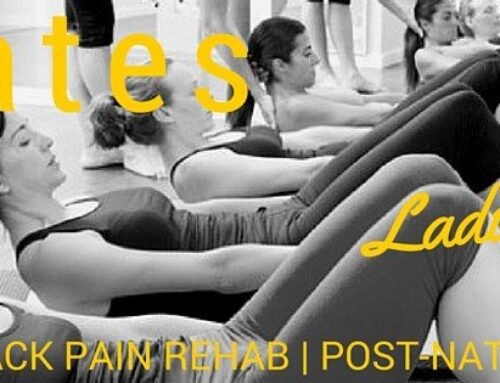
- Struggling to get back to running or the gym – a pelvic floor that isn’t yet coping well with impact or load is a common, and very fixable, reason activity feels harder or riskier than it used to.
A follow-up study assessing women three to five years after their first delivery found meaningful rates of urinary incontinence, faecal incontinence and pelvic organ prolapse symptoms still present at that point, well beyond the newborn stage.3 Postpartum studies have also linked perineal trauma during birth to the frequency and severity of pain during sex afterwards, reinforcing that this is a recognised, physical issue rather than something to be embarrassed about.
“These are some of the most common reasons women come and see me. You don’t need to have just given birth to book in either, pelvic floor issues can show up years later and they’re just as worth sorting out then.” — Madeleine Paterson, Senior Physiotherapist, BOOST PHYSIO Hampstead & Kensington
It doesn’t have to be recent
One of the most common misconceptions we hear is that pelvic floor physiotherapy is only relevant in the first few months after birth. It isn’t. Whether your baby is six weeks old or sixteen years old, if you’re dealing with leaking, heaviness, pain during sex or difficulty returning to the activity you love, an assessment can still help. Pregnancy and birth change the pelvic floor, but that change isn’t fixed forever, targeted rehabilitation genuinely helps, at any stage.
Hear from Maddy
What a pelvic floor assessment actually involves
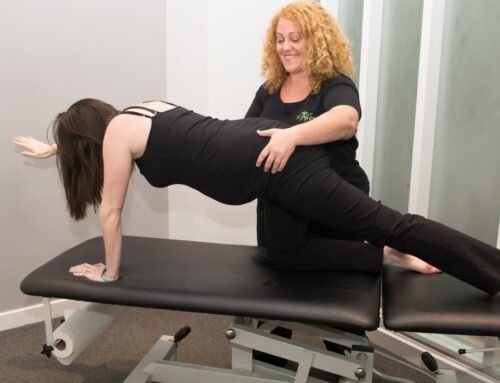
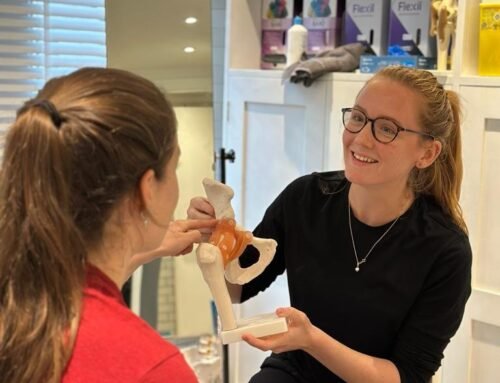
Maddy offers the Mummy MOT®, a dedicated postnatal assessment that checks your pelvic floor, your abdominal muscles (including checking for any separation, known as diastasis recti), your posture and your readiness to return to exercise. It’s a thorough, unhurried assessment designed specifically around what your body has been through, not a generic check-up.
You don’t need a referral, and you don’t need to wait for your six-week check to book in. If you’re not sure whether now is the right time, that’s exactly the kind of question an assessment answers quickly. Our guide to women’s health physiotherapy covers what to expect in more detail.
| # | Fact |
|---|---|
| 1 | A national cohort study found urinary incontinence was still present in a substantial proportion of women 20 years after their first birth.1 |
| 2 | Incontinence starting around childbirth tends to persist rather than resolve on its own, according to a 12-year longitudinal study.2 |
| 3 | Studies following women 3 to 5 years after their first delivery still find meaningful rates of urinary incontinence, faecal incontinence and prolapse symptoms.3 |
| 4 | A caesarean delivery reduces some risk compared with vaginal birth, but does not remove it, pelvic floor symptoms are still reported after caesarean births. |
| 5 | There is no cut-off date on when pelvic floor physiotherapy stops being useful, it helps whether symptoms started six weeks or sixteen years ago. |
Worth knowing
Most of what’s described above responds well to targeted physiotherapy and doesn’t need anything more urgent than booking an assessment when it suits you. That said, if you notice sudden new heaviness or a visible bulge, bleeding that isn’t your period, or severe pain, it’s worth seeing your GP alongside a physiotherapy assessment, so the full picture is covered.
Our approach: every tool for your best recovery
At BOOST PHYSIO, we believe your best recovery comes from having every tool available, not relying on just one. Maddy combines hands-on assessment with a tailored, gradual return-to-activity plan, adjusted as you progress. It’s the thinking behind our promise: Your Best Recovery, Guaranteed.
Maddy sees patients at both BOOST PHYSIO Hampstead and BOOST PHYSIO Kensington, where we offer:
- ✓ Same day physiotherapy appointments
- ✓ No referral needed, self-refer directly
- ✓ Treatment recognised by Bupa, AXA Health, Vitality and WPA
Book your Mummy MOT or pelvic health assessment with Maddy online now, call 020 8201 7788 or WhatsApp us.
Frequently asked questions about pelvic floor issues after childbirth
How soon after birth can I book a pelvic floor assessment?
I had a caesarean, do I still need this?
Is leaking during exercise something I just have to live with?
What does the Mummy MOT actually check?
Do I need a GP referral to book in?
[boost_locations_block]
[boost_locations_schema]
Written with Madeleine Paterson, Senior Physiotherapist at BOOST PHYSIO Hampstead & Kensington, and the BOOST PHYSIO team. This article is general guidance and is not a substitute for an individual physiotherapy or medical assessment. References: (1) Gyhagen M, Bullarbo M, Nielsen TF, Rådestad I, "The Prevalence of Urinary Incontinence 20 Years After Childbirth: A National Cohort Study in Singleton Primiparae After Vaginal or Caesarean Delivery", BJOG, 2013;120(2):144-151. (2) MacArthur C, Wilson D, Herbison P, et al, "Urinary Incontinence Persisting After Childbirth: Extent, Delivery History, and Effects in a 12-Year Longitudinal Cohort Study", BJOG, 2016;123(6):1022-1029. (3) "An Observational Follow-Up Study on Pelvic Floor Disorders to 3-5 Years After Delivery", International Urogynecology Journal, 2017.