Why do my knees click and crack?
A crack as you stand up, a click on the stairs, a grinding feeling when you squat. Knee noises can sound alarming, but on their own they are rarely a sign of damage.
★★★★★ 4.9 from 1,400+ Google reviews across our 13 clinics

Quick answer: Most knee clicking is harmless. Research in BJSM (Robertson 2017) found knee noises are very common in people with no knee pain at all. Clicks usually come from gas bubbles in the joint fluid or tendons moving over bone. Get it checked if the noise comes with pain, swelling, locking or the knee giving way, as these can point to a meniscus tear, kneecap problem or arthritis.
What causes knees to click?
There are a few everyday reasons your knees make noise. None of them mean your knee is wearing out.
Gas bubbles
Tiny gas bubbles in the joint fluid collapse as you move. Once it pops it usually won’t go again for 20 minutes or so.
Tendons and soft tissue
A tendon or band of tissue flicks over a bony bump as the knee bends. Common around the kneecap and outside of the knee.
Rough joint surfaces
Called crepitus. A gritty feeling under the kneecap, often on stairs or squatting, very common from your 40s onwards.
Knee noise without pain is so common that physios treat it as normal unless something else is going on. If the noise is new and comes with pain, that is when we want to look more closely.
When does a clicking knee matter?
The noise itself is not the clue. What comes with it is.
| Click with sharp pain and locking | Possible meniscus (cartilage) tear, especially after a twist |
|---|---|
| Grinding with pain on stairs or squats | Often kneecap pain (patellofemoral pain) or early arthritis |
| Clunk with the knee giving way | Possible ligament injury such as the ACL, or kneecap instability |
| Swelling after activity | Irritation inside the joint that needs assessing |
Our knee pain page explains how we assess and treat each of these. If your knee feels stiff as well as noisy, our knee stiffness guide has simple exercises to start with.
Noisy and painful knee?
WhatsApp us your question, call 020 8201 7788 or book online at any of our 13 clinics across North London and Hertfordshire, often the same day.
Click, crack or grind: what does each sound usually mean?
| The sound | What it usually is | Get it checked if |
|---|---|---|
| A single pop you can’t repeat straight away | Gas bubbles collapsing in the joint fluid | Never on its own |
| A regular click at the same point | A tendon or band of tissue moving over bone | It’s painful or getting louder with activity |
| A grind or crunch under the kneecap | Rougher surfaces behind the kneecap (crepitus) | It comes with pain on stairs, squats or kneeling |
| A clunk with the knee giving way | The knee shifting, sometimes from a ligament injury | Always, especially after a twist or fall |
| A catch with the knee locking | Something getting caught in the joint, such as a torn piece of meniscus | Always and urgently if you can’t straighten it |
Notice the pattern. In every row, it’s the pain, swelling, locking or giving way that matters, not the sound.
Does a crunching knee mean arthritis?
Not necessarily. Plenty of people with crunchy knees have no arthritis and plenty with arthritis on an X-ray have very little pain. NICE’s osteoarthritis guideline (NG226, 2022) says osteoarthritis can be diagnosed without a scan if you are 45 or over, have activity-related joint pain and no morning stiffness or stiffness lasting 30 minutes or less.
Common
knee noises in people with no knee pain
Robertson et al, BJSM 2017
45+
age from which NICE says OA can be diagnosed clinically
NICE NG226, 2022
Exercise
is a core treatment for knee osteoarthritis
NICE NG226, 2022
Even if arthritis is part of the picture, exercise and strength work are the first treatments NICE recommends. Have a look at our arthritis physio page for what that looks like in practice.
What can I do about noisy knees?
If your knee clicks but doesn’t hurt, keep doing what you love. If it is noisy and sore, these usually help:
- Strengthen your thighs and hips: stronger quads and glutes control the kneecap and share the load
- Build up gradually: increase running, stairs or squats by small steps rather than big jumps
- Keep moving: joints feel better with regular movement, so short daily walks beat long rests
- Check your footwear: worn-out shoes can change how load passes through your knee
A noisy knee that feels fine is a working knee. Don’t let the sound stop you moving.
How we assess and treat noisy knees at BOOST PHYSIO
A lot of people come to us worried that a crunching knee means their joint is wearing out. Often the most useful thing we do on the first visit is explain what the noise is and what it isn’t, so they can get back to the gym, the park run or the stairs without that worry hanging over them.
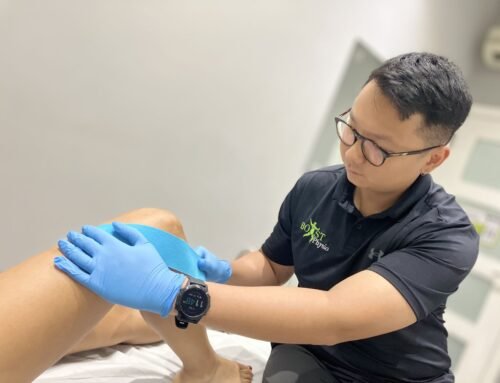
We start with your story: when the noise started, whether there was an injury and what hurts. Then we look at how your knee moves and how well it is controlled. We watch you squat, step down from a step and, if you’re active, hop. We check the kneecap, the cartilage (meniscus) with tests such as the Thessaly test and the ligaments, including the Lachman test for the ACL. We also check the strength of your thigh and hip muscles, because weakness there is one of the most common things we find in painful, noisy knees.
- Hands-on treatment to ease pain and stiffness around the kneecap and joint
- Progressive strength work for the quads, glutes and calves, built around what you want to get back to
- Load advice so you know how much running, stair work or squatting to do while it settles
- Clear next steps if anything needs a scan or a specialist opinion
Most painful knees improve with this kind of plan and on average our patients reach their goals in around five sessions.
When should I see a physio?
Book an assessment if your knee is noisy and painful for more than 2 weeks, if it locks, swells or gives way, or if the noise started after an injury. Your physio will test your knee’s movement, strength and stability and tell you clearly whether anything needs more investigation.
When to get urgent help
- Your knee is hot, red and very swollen, especially with a fever
- You can’t put weight on the leg after an injury
- Your knee is locked and you can’t straighten it
You can book at any of our 13 clinics, often the same day and you don’t need a GP referral. Wear shorts or bring some, so we can watch your knee move properly.
What our patients say
★★★★★
“I’ve had a really positive experience at BOOST PHYSIO, where I’ve been receiving dedicated treatment plan for an IT band injury in my knee.”
★★★★★
“I injured my knee from running and was worried it would prevent me from running a marathon at the end of the year.”
Watch: knee exercises our physios use
Short videos with simple knee exercises and tests.
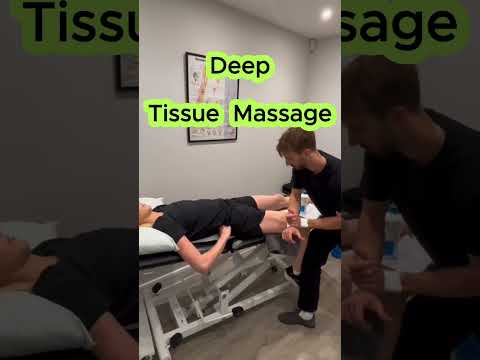
How To Release Quads Tension and help your knee

Pain Squatting? Pain At Front Of Knee? It could be patellar tendinitis!

Can I Squat after total knee replacement surgery? When can I squat after TKR?
Got a question about your own pain or injury? Send it to our physios.
Get help at your nearest BOOST PHYSIO clinic
We help people with this at all 13 of our clinics across North London and Hertfordshire. Choose your nearest clinic to see the team, opening times and how to find us, or book straight in.
Get your knee checked properly
WhatsApp us your question, call 020 8201 7788 or book online at any of our 13 clinics across North London and Hertfordshire, often the same day.
Related reading
Your questions answered
Is it bad if my knees crack when I squat?
Usually not. Cracking without pain is very common and is often just gas bubbles or tendons moving. If squatting is also painful, a physio can check your kneecap and strength.
Can knee clicking be fixed?
Painless clicking doesn’t need fixing. Painful clicking often improves with strengthening of the thigh and hip muscles and a gradual return to activity.
Does knee clicking mean my cartilage is damaged?
Not on its own. A meniscus tear more often causes pain, catching or locking and swelling, usually after a twisting injury. A physio can test for this.
Should I stop running if my knee clicks?
If it doesn’t hurt, keep running. If it is painful, reduce your distance rather than stopping completely and get assessed if it hasn’t settled within 2 weeks.
Do I need a scan for a clicking knee?
Rarely. Most knee problems can be diagnosed with a clinical assessment. A scan is considered if you have locking, repeated giving way or no improvement with treatment.

Written and clinically reviewed by Steven Berkman, BSc Physiotherapy (University of Cape Town), HCPC-registered chartered physiotherapist, MCSP, founder of BOOST PHYSIO in 2008, with Finlay McDonald and Martin Sarembock at BOOST PHYSIO Crouch End. Last reviewed 12 November 2026.
References
- Robertson CJ, et al. Study of knee crepitus in adults without knee pain. Br J Sports Med. 2017.
- National Institute for Health and Care Excellence. Osteoarthritis in over 16s: diagnosis and management (NG226). 2022.
- NHS. Knee pain. nhs.uk.