Why does my knee hurt going down stairs?
Plenty of people tell us their knees are fine on the flat, but the stairs at home or the escalator that’s broken at the station are another story. Pain going down is a very common pattern and it tells us a lot.
★★★★★ 4.9 from 1,400+ Google reviews across our 13 clinics
Quick answer: Knee pain going down stairs is most often caused by patellofemoral pain, irritation behind the kneecap, or early knee arthritis. Going down loads the front of the knee more than going up, because your thigh muscle works hard to control you as you lower. Strengthening the thigh and hip muscles is the treatment with the best evidence.
Why is going down stairs worse than going up?
When you step down, your front thigh muscle (the quadriceps) has to lengthen while it works, lowering your body weight in a controlled way. This presses the kneecap firmly into the groove at the front of your thigh bone. The force through the joint behind the kneecap on stairs can be several times your body weight.
If the tissues around the kneecap are irritated, or the muscles that control the knee are tired or weak, that load shows up as pain. Going up stairs uses the muscles differently, so many people find it easier.
| Most common cause | Patellofemoral pain (pain around or behind the kneecap) |
|---|---|
| Who gets it | Teenagers, runners and adults of all ages, more often women |
| Other causes | Knee arthritis, a meniscus problem, tendon pain below the kneecap |
| Best evidence treatment | Hip and knee strengthening exercises |
| Usual timescale | Most improve over 6 to 12 weeks of exercise |
What are the common causes?
| Cause | Typical signs | Typical age |
|---|---|---|
| Patellofemoral pain | Ache around or behind the kneecap, worse on stairs, squatting and after sitting with bent knees | Teens to 40s, very common in runners |
| Knee osteoarthritis | Stiffness, ache after activity, sometimes swelling and grinding | Usually 45 and over |
| Meniscus problem | Catching, locking or pain on twisting, sometimes after an injury | Any age |
| Patellar tendon pain | Pain just below the kneecap, worse with jumping | Active people, often sport |
Clicking or grinding on its own isn’t usually a worry. See our guide to why knees click and crack. If you’re over 45 and think it may be arthritis, read knee arthritis: physio or knee replacement?
Stairs getting harder?
WhatsApp us your question, call or book online at any of our 13 clinics.
What can I do to make stairs easier now?
Lead with the good leg
Going up, step with your good leg first. Going down, lead with the sore leg. Up with the good, down with the bad.
Use the rail
Taking some weight through your arms reduces load through the knee while it settles.
Break up sitting
Long spells with bent knees, in the cinema or on a flight, often make it worse. Straighten your legs and stand when you can.
Adjust, don’t stop
Reduce deep squats, lunges and hills for a while rather than giving up exercise completely.
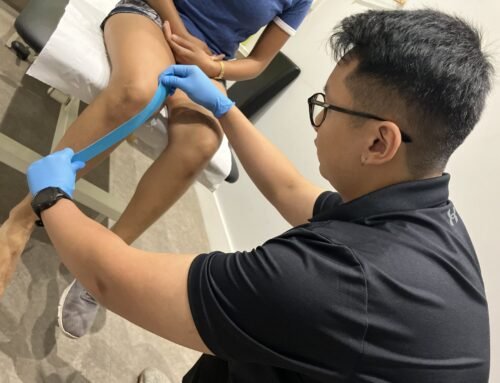
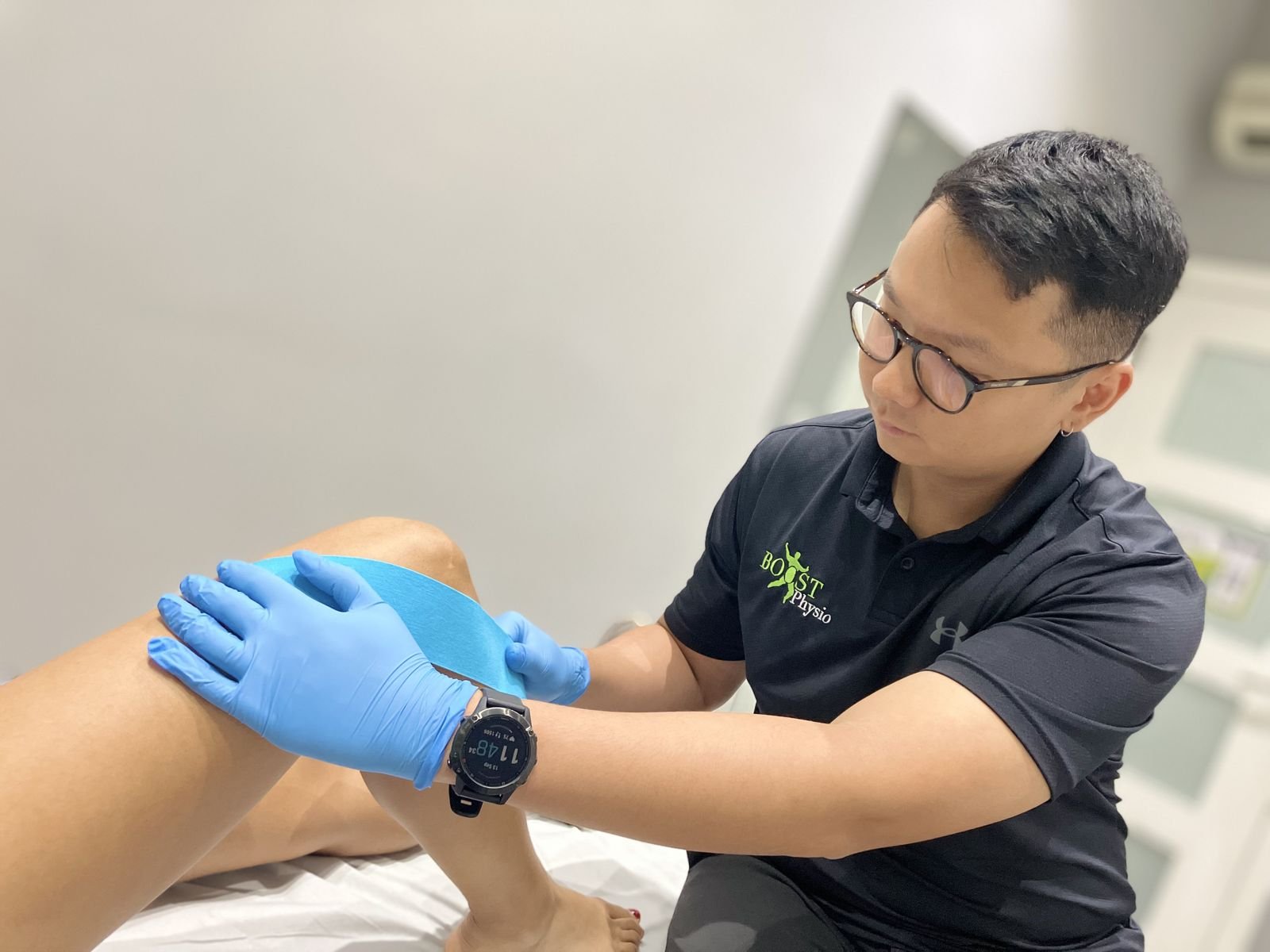
Taping the kneecap can give short-term relief for some people with patellofemoral pain and is something we often use in clinic while the exercises take effect.
Why has my knee started hurting now?
Patellofemoral pain often starts after a change rather than an injury. The most common triggers we see are a jump in running distance, a new gym class with lots of lunges and squats, a holiday with long hilly walks or simply a busier few months with less time to exercise. Weight gain and long hours sitting play a part too.
Your knee isn’t damaged. The tissues around the kneecap have become more sensitive because the load on them went up faster than they could adapt. That’s why the answer is to reduce the aggravating load for a while and build strength gradually, rather than resting completely.
- A recent increase in running, hill walking or squatting
- New shoes, or running on a camber or treadmill
- Weak or tired hip and thigh muscles
- Long spells sitting with knees bent
How we help you recover at BOOST PHYSIO
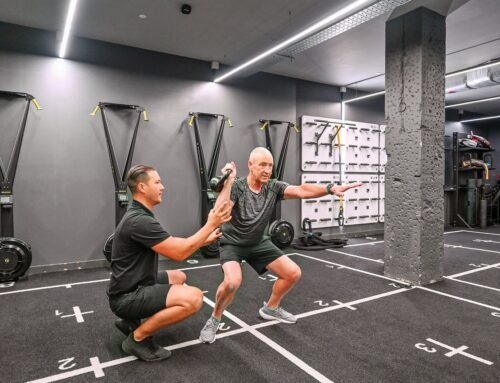
Knee pain on stairs is one of the most common reasons people come to see us with a knee. At your first appointment we watch you squat, step down from a box and balance on one leg, then check the kneecap, the hip and the foot. Very often the hip muscles are not controlling the knee as well as they could.
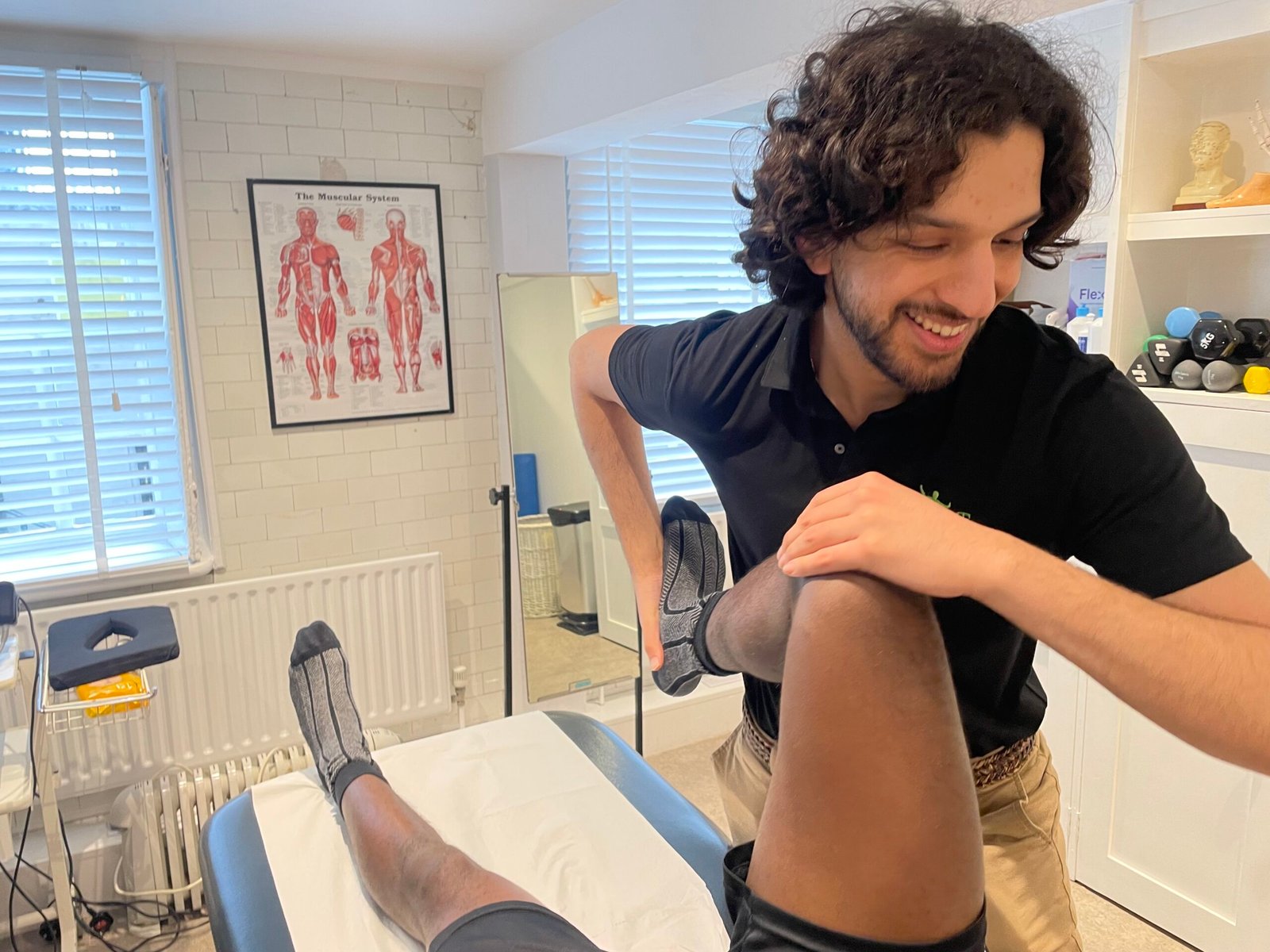
Your plan usually starts with exercises that load the knee without flaring it up, such as wall sits, bridges and side-lying hip work, then builds to step-downs, single leg squats and the things you want to get back to. We add hands-on treatment and taping where it helps and review your plan every visit. See our knee pain physio page for more.
For runners we look at your weekly mileage and running form and may suggest small changes such as a slightly shorter stride or a gradual return plan. Most people keep some activity going the whole way through.
Hip + knee
strengthening is the recommended treatment for patellofemoral pain
Collins et al, BJSM 2018
6-12 weeks
of exercise for most people to improve
Clinical guidance
Around 5
sessions on average for our patients to reach their goals
BOOST PHYSIO
Stairs are a great test. When they stop hurting, you know your knee is getting stronger.
When should I get my knee checked by a doctor?
See a doctor or go to urgent care if
- Your knee is hot, red and swollen, especially with a fever
- You can’t put weight on it after an injury
- Your knee locks and won’t straighten
- It gave way with a pop and swelled quickly
- You have calf pain and swelling as well
For everything else, physio is a good first step. Most people don’t need a scan for this kind of pain. Read do I need a scan for my knee pain?
What our patients say
★★★★★
“She gave me a thorough knee massage on the first day, making sure my knees were healthy and moisturised!”
★★★★★
“They gave me confidence in my knee exercises and explained everything clearly.”
★★★★★
“I injured my knee from running and was worried it would prevent me from running a marathon at the end of the year.”
Watch: knee exercises from our physios
Short videos showing exercises we use with knee pain in clinic.
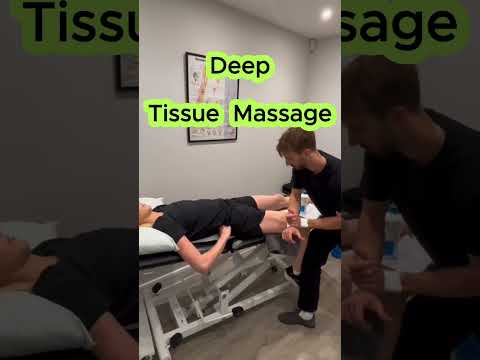
How To Release Quads Tension and help your knee

Physio Exercises to help pelvic stability- for knee, hip and back pain

Pain at Front of Knee or Knee Cap? Our physios use these exercises to help recovery
Got a question about your own pain or injury? Send it to our physios.
Get help at your nearest BOOST PHYSIO clinic
We help people with this at all 13 of our clinics across North London and Hertfordshire. Choose your nearest clinic to see the team, opening times and how to find us, or book straight in.
Get your knees moving freely
Chartered physios, same day appointments and no GP referral needed.
Related reading
 Knee pain physio
 Why do my knees click and crack?Do I need a scan for knee pain?Knee arthritis: physio or replacement?
Your questions answered
Is knee pain going down stairs a sign of arthritis?
It can be, especially if you’re over 45 with stiffness after rest. In younger and active people it’s more often patellofemoral pain. A physio can tell the difference with a simple assessment.
Should I avoid stairs if my knee hurts?
No. Use the rail and lead with your good leg going up and your sore leg going down. Avoiding stairs completely makes the muscles weaker over time.
Can patellofemoral pain go away?
Yes. Most people improve with hip and knee strengthening over 6 to 12 weeks. It can come back if you stop the exercises or increase activity too quickly.
Does knee support or taping help?
Taping can give short-term relief for some people. A support may help you feel more confident, but strength work is what makes the long-term difference.
What exercises help knee pain on stairs?
Wall sits, bridges, side-lying hip raises and slow step-downs, progressed over weeks. Your physio will set the right level so they don’t flare up your knee.

Written and clinically reviewed by Steven Berkman, BSc Physiotherapy (University of Cape Town), HCPC-registered chartered physiotherapist, MCSP, founder of BOOST PHYSIO in 2008, with Finlay McDonald and Martin Sarembock at BOOST PHYSIO Crouch End. Last reviewed 12 November 2026.
References
- Collins NJ, Barton CJ, van Middelkoop M, et al. 2018 Consensus statement on exercise therapy and physical interventions (orthoses, taping and manual therapy) to treat patellofemoral pain. Br J Sports Med. 2018;52:1170-8.
- National Institute for Health and Care Excellence. Osteoarthritis in over 16s: diagnosis and management (NG226). 2022.
- NHS. Knee pain. nhs.uk.