Do I need a scan for my knee pain?
When your knee hurts, a scan feels like the obvious next step. You want to know what’s wrong. But for most knee pain a careful assessment tells us more than a picture and scans can sometimes cause more worry than they solve.
★★★★★ 4.9 from 1,400+ Google reviews across our 13 clinics

Quick answer: Most people with knee pain don’t need a scan. NICE says knee osteoarthritis can be diagnosed without imaging in people aged 45 or over with activity-related pain and little morning stiffness. A scan helps after a significant injury, if the knee locks or gives way, or if pain isn’t improving with treatment. Scans often show changes in knees that don’t hurt at all.
When does knee pain need a scan?
A scan is useful when its result would change what we do. That usually means after a significant injury, when we suspect a fracture or a torn ligament, or when the knee has mechanical symptoms such as locking. It also helps when pain isn’t improving as expected with good treatment, or when something doesn’t fit the usual pattern.
| Situation | Scan usually needed? | Which scan |
|---|---|---|
| Gradual ache over 45, stiff after rest | No, usually diagnosed clinically (NICE) | X-ray only if the diagnosis is unclear |
| Twisting injury, fast swelling, knee unstable | Often | MRI to check the ACL and meniscus |
| Knee locks and won’t straighten | Yes | MRI |
| Fall or blow, can’t bear weight | Possibly, using the Ottawa knee rules | X-ray for a fracture |
| Pain not improving after 6 to 12 weeks of treatment | Sometimes | Depends on the findings |
| Hot, red, swollen knee with fever | Urgent medical assessment | Doctor decides |
For gradual knee pain, an assessment of how your knee moves, how strong your muscles are and where it hurts usually gives the answer.
What are the Ottawa knee rules?
The Ottawa knee rules are a checklist doctors and physios use after a knee injury to decide whether an X-ray is needed to look for a fracture. An X-ray is advised if any one of these applies.
- Age 55 or over
- Tenderness only over the kneecap
- Tenderness over the head of the fibula, the bony bump on the outside of the knee below the joint
- Unable to bend the knee to 90 degrees
- Unable to take 4 steps, both straight after the injury and when assessed
If none apply, a fracture is very unlikely and an X-ray usually isn’t needed.
Worried about your knee?
WhatsApp us your question, call or book online at any of our 13 clinics.
Why can a scan show problems that don’t hurt?
Knees change as we age, just like skin gets wrinkles. A large study in the New England Journal of Medicine (Englund 2008) scanned the knees of people aged 50 to 90 from the general population. Meniscus tears were common and increased with age and 61% of people who had a tear had no knee pain, aching or stiffness in the previous month.
| Meniscus tears without symptoms | 61% of people with a tear had no symptoms (Englund 2008) |
|---|---|
| Diagnosing knee arthritis | Clinical, without imaging, in most people 45 and over (NICE NG226) |
| Keyhole washout for arthritis | Not recommended unless the knee is truly locking (NICE) |
| Most knee pain | Improves with exercise based rehab |
| When to scan | When the result would change your treatment |
That’s why we treat the person, not the scan. A worrying sounding report doesn’t always explain your pain and a normal one doesn’t mean you’re imagining it.
What tells us more than a scan?
Your story is the most useful part of any knee assessment. When did it start? Was there an injury? Does it swell? Does it catch, lock or give way? Is it worse on stairs, squatting or after sitting? Those answers narrow things down quickly.
Movement
How far your knee bends and straightens and whether it’s stiff or painful at the end of range.
Strength
How strong your thigh, hip and calf muscles are compared with the other leg.
Special tests
Ligament tests such as the Lachman test and meniscus tests on twisting and squatting.
Function
How you squat, step down, balance and hop, which shows how the knee copes with real life.
Together these tell us what’s sore, why it started and what to do about it, which is the information a scan can’t give.
How we help you recover at BOOST PHYSIO
At your first appointment we take a careful history: how it started, what makes it worse, whether it swells, clicks, locks or gives way. Then we examine the knee, test the ligaments and meniscus, check strength and watch how you squat, step and balance. Most of the time that gives us a clear working diagnosis.
If we think you need a scan, we tell you why and help arrange it and we can write to your GP or refer you to one of the knee surgeons we work with. If you’ve already had a scan, bring the report and we’ll explain it in plain English. Then we start treatment straight away with hands-on techniques and exercises. Read more on our knee pain physio page.
61%
of people with a meniscus tear on MRI had no symptoms
Englund et al, NEJM 2008
45+
can usually be diagnosed with knee arthritis without a scan
NICE NG226
Around 5
sessions on average for our patients to reach their goals
BOOST PHYSIO
A scan is a tool, not a diagnosis. We use it when it will change what we do.
When should I see a doctor straight away?
Get urgent medical help if
- Your knee is hot, red and swollen, especially with a fever
- You can’t put any weight on it after an injury
- Your knee looks out of shape
- You have calf pain, swelling or redness
- You have unexplained weight loss, night sweats or constant night pain
For most other knee pain, physio is a good first step and you don’t need a GP referral. Related reading: why does my knee hurt going down stairs? and knee arthritis: physio or knee replacement?
What our patients say
★★★★★
“Over the course of about 7 months as my knee improved we went from hands on sessions to strengthening sessions in the gym.”
★★★★★
“I had been attending an osteopath for osteoarthritis in both my knees.”
★★★★★
“Rebecca has helped me recover from a lateral meniscal tear in my knee.”
Watch: knee assessment and exercises
Short videos from our physios on knee pain and rehab.

How this patient with a torn meniscus (cartilage) of the knee is doing, without surgery?

Pain Squatting? Pain At Front Of Knee? It could be patellar tendinitis!

Why is My Knee Swollen? 🤔🦵Reasons and causes for swelling in knee
Got a question about your own pain or injury? Send it to our physios.
Get help at your nearest BOOST PHYSIO clinic
We help people with this at all 13 of our clinics across North London and Hertfordshire. Choose your nearest clinic to see the team, opening times and how to find us, or book straight in.
Find out what’s going on with your knee
A full assessment, a clear explanation and a plan, often the same day.
Related reading
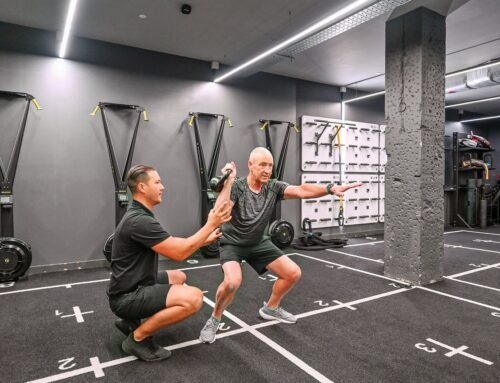
 Knee pain physio
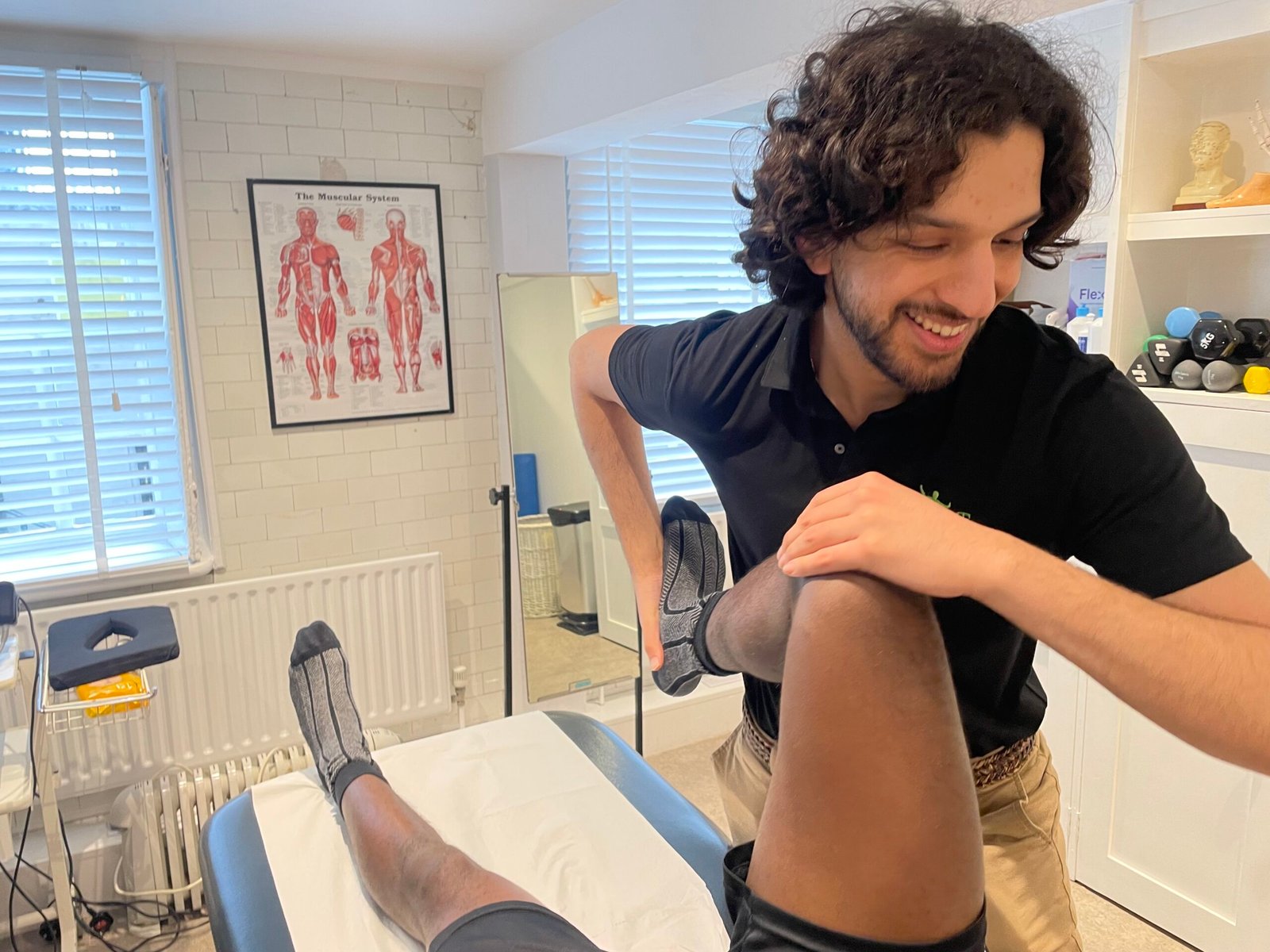
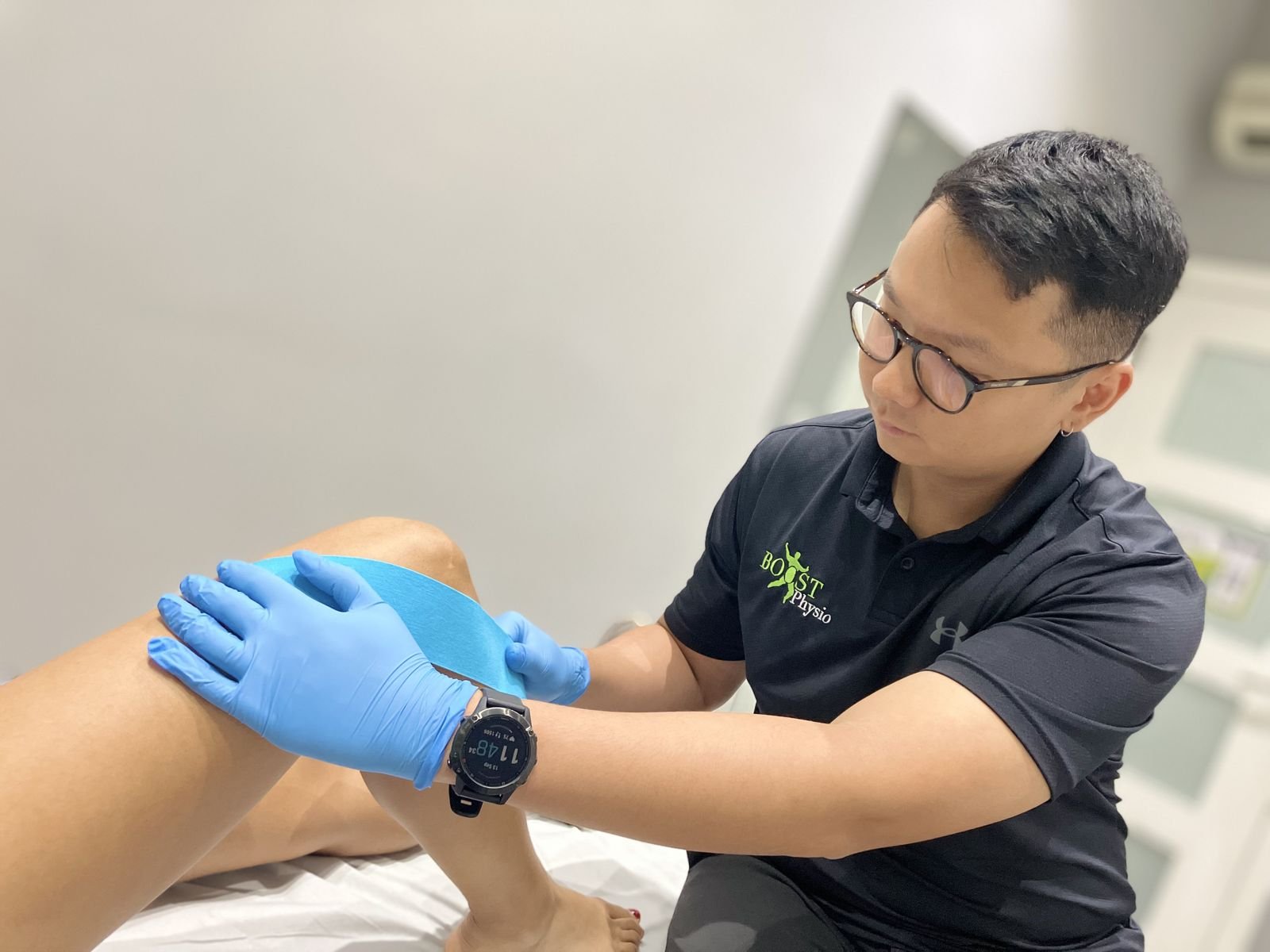 Knee pain going down stairsDo you need surgery for a torn ACL?
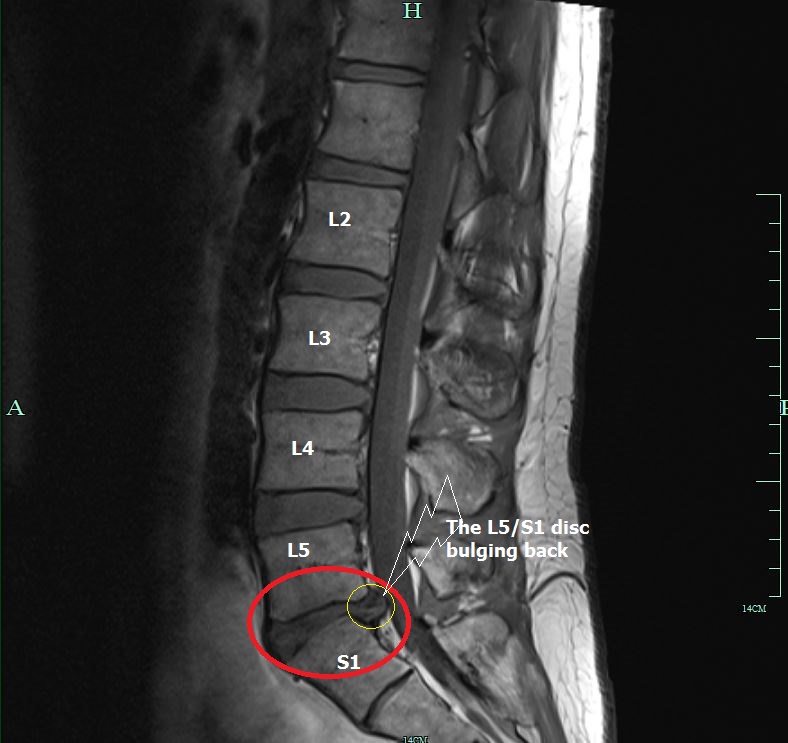 Do I need an MRI scan for back pain?
Your questions answered
Should I get an MRI for knee pain?
Only if the result would change your treatment, for example after a significant injury, if your knee locks or if you aren’t improving. Many knee problems are diagnosed with a clinical assessment.
Can a physio diagnose a meniscus tear?
A physio can strongly suspect one from your history and tests such as joint line tenderness and pain on twisting. An MRI confirms it if it would change treatment.
Is an X-ray or MRI better for knee pain?
They show different things. An X-ray shows bone and joint space, useful for fractures and arthritis. An MRI shows soft tissues such as ligaments, cartilage and the meniscus.
My scan shows arthritis. Does that mean I need surgery?
No. Exercise and weight management are the first treatments NICE recommends. Many people with arthritis on X-ray have little pain and stay active for years.
Can I refer myself for a knee scan?
Private scans are available, but a scan without an assessment often confuses rather than helps. We’ll advise whether you need one and which type.

Written and clinically reviewed by Steven Berkman, BSc Physiotherapy (University of Cape Town), HCPC-registered chartered physiotherapist, MCSP, founder of BOOST PHYSIO in 2008, with Finlay McDonald and Martin Sarembock at BOOST PHYSIO Crouch End. Last reviewed 12 November 2026.
References
- National Institute for Health and Care Excellence. Osteoarthritis in over 16s: diagnosis and management (NG226). 2022.
- Englund M, Guermazi A, Gale D, et al. Incidental meniscal findings on knee MRI in middle-aged and elderly persons. N Engl J Med. 2008;359:1108-15.
- Stiell IG, Greenberg GH, Wells GA, et al. Prospective validation of a decision rule for the use of radiography in acute knee injuries. JAMA. 1996;275:611-15.