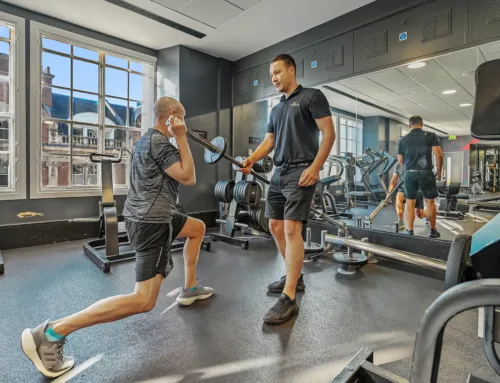
Is it normal to feel sore after physio?
You leave your appointment feeling looser, then the next morning you’re a bit achy and wonder if something went wrong. It’s one of the most common messages we get and it’s usually a good sign that your body is responding.
★★★★★ 4.9 from 1,400+ Google reviews across our 13 clinics

Quick answer: Yes. Mild soreness for 24 to 48 hours after physio is normal, especially after hands-on treatment, dry needling or new exercises. Muscle soreness from new exercise usually peaks at 24 to 72 hours. It should feel like a dull ache that eases day by day. Sharp pain, swelling or pain that is worse after 3 days is worth telling your physio about.
Why do I feel sore after physio?
Physio asks your body to do something different. Hands-on treatment moves stiff joints and works into tight muscles. Exercises load muscles and tendons in new ways. Both can leave you feeling a bit achy, much like you might after a new gym class.
Delayed onset muscle soreness, often called DOMS, is the ache you feel a day or two after unfamiliar exercise. It’s a normal response as muscles adapt and usually settles within a few days without treatment.
How long normal soreness usually lasts (hours)
Source: Clinical guidance on post-treatment soreness and DOMS
What is normal soreness and what isn’t?
| Normal | Tell your physio | |
|---|---|---|
| How it feels | Dull ache or stiffness | Sharp, stabbing or burning pain |
| When | Starts within a day, eases over 1 to 3 days | Gets worse after 3 days |
| Swelling | None or very mild | New or increasing swelling |
| Function | You can still do your daily activities | You’re limping or can’t use the area |
| Symptoms | Local to the area treated | New pins and needles, numbness or weakness |
A useful rule we use with exercise is that some discomfort during or after is acceptable, as long as it settles by the next morning and your symptoms aren’t building from week to week. This approach, called pain monitoring, was used in a well-known Achilles tendon trial by Silbernagel and colleagues in 2007.
Feeling sore and not sure if it’s normal?
WhatsApp us your question, call or book online at any of our 13 clinics.
Which treatments are most likely to make me sore?
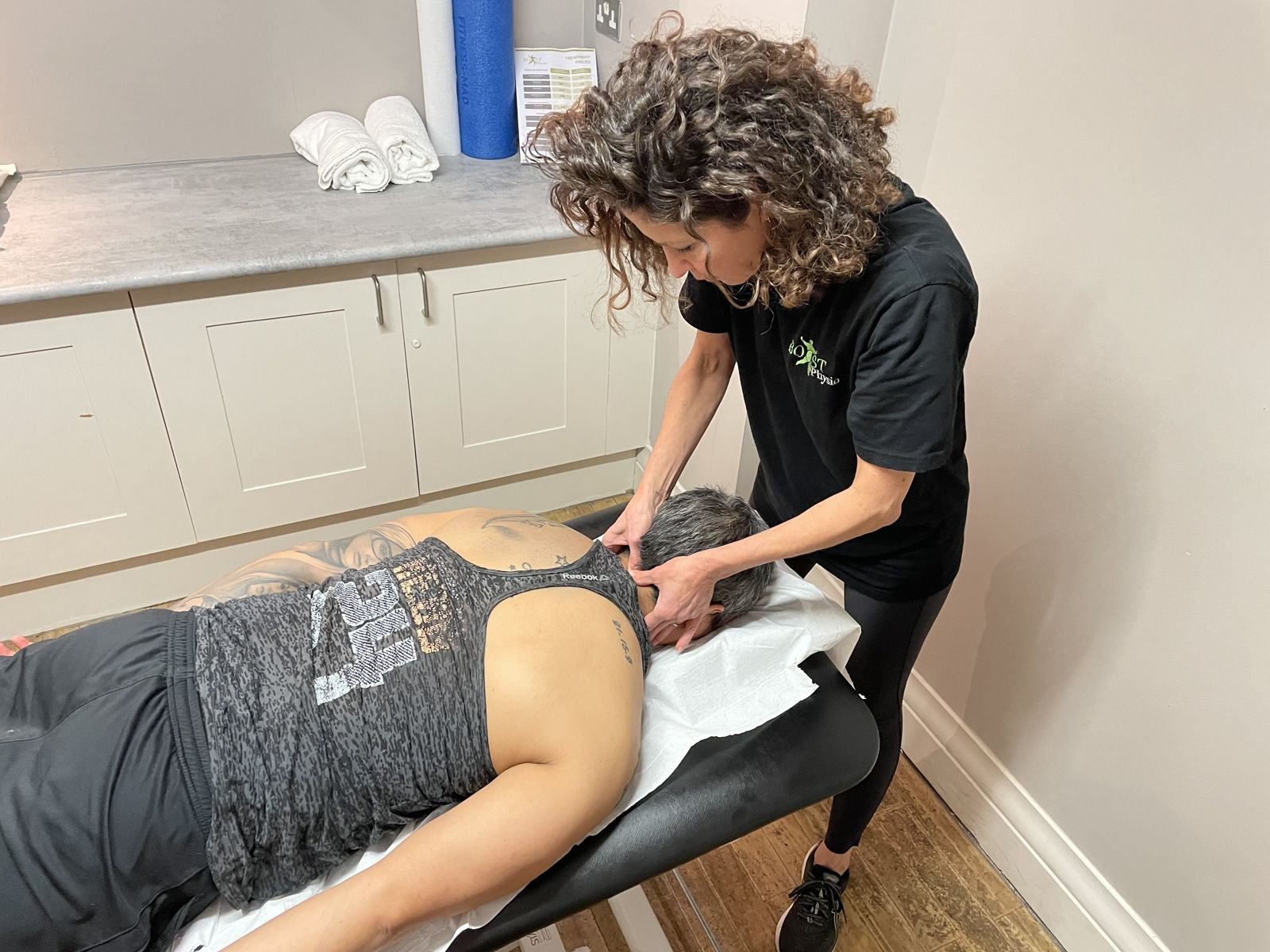
Some treatments are more likely to leave you achy than others. Deep soft tissue work on a tight calf, hamstring or upper back often feels tender the next day, a bit like a bruise. Joint mobilisation can leave a stiff joint feeling achy as it gets used to moving more.
Dry needling and acupuncture can cause a short-lived ache or small bruise where the needle went in. Shockwave therapy can make a tendon sore for a day or two. Strength exercises cause the most soreness when they’re new, or when we increase the weight or repetitions.
Knowing this in advance helps. We’ll usually tell you which parts of your session are most likely to make you sore, so you can plan around them, for example not booking a big run or a long walk for the next morning.
- Deep soft tissue massage
- Joint mobilisation on a stiff joint
- Dry needling, acupuncture or shockwave
- A new or progressed strength exercise
How can I ease soreness after physio?
Keep moving
Gentle walking or easy movement often eases stiffness faster than resting.
Heat for stiffness
A warm shower or heat pack for 10 to 15 minutes can ease muscle ache.
Space out the hard stuff
Avoid a big gym session or long run the day after a new programme.
Sleep and drink water
Good sleep helps recovery. Stay well hydrated, especially after dry needling.
Painkillers can help if you need them, but check with a pharmacist if you take other medicines. Read our guide to heat or ice for more.
| Normal soreness | Dull ache for 24 to 48 hours |
|---|---|
| Muscle soreness from new exercise | Peaks at 24 to 72 hours |
| Exercise discomfort | Acceptable if it settles by the next morning |
| When to tell us | Sharp pain, swelling or worse after 3 days |
| Best remedy | Gentle movement, heat and time |
How we help you recover at BOOST PHYSIO
We’d rather you leave a session feeling slightly worked than wondering whether anything happened. Before you go, we tell you what you might feel over the next day or two and what to do about it. We also start new exercises at a level you can manage, then build them up.
If you’re sore, we want to know. At your next visit we ask how you responded and adjust the plan, perhaps using gentler hands-on techniques or changing the number of repetitions. And if you’re worried in between, you can send us a WhatsApp and the team will get back to you. Read more about the hands-on treatments we use.
24-48 hrs
is typical for normal post-treatment soreness
Clinical guidance
24-72 hrs
when muscle soreness from new exercise usually peaks
Exercise science
Around 5
sessions on average for our patients to reach their goals
BOOST PHYSIO
A little soreness means your body is adapting. Our job is to keep it at the right level.
When is soreness after physio a warning sign?
Contact your physio or a doctor if you have
- Severe pain that is much worse than before your appointment
- New swelling, heat or redness in a joint
- New numbness, pins and needles or weakness
- Pain, swelling or redness in one calf, or breathlessness
- Feeling generally unwell or feverish
If any of these happen after a session, don’t wait for your next appointment. Call us or send a WhatsApp so we can advise you, or seek medical help if it’s urgent.
These are uncommon. For most people, soreness after physio fades within a day or two and is followed by feeling better than before. If you’re not sure, read how many physio sessions will I need? or ask us directly.
What our patients say
★★★★★
“She carefully reviewed every aspect of my pain and tailored both the treatment and exercises to my specific needs.”
★★★★★
“I was very pleased with the treatment from Zoe Katz at Boost Physio. She carefully reviewed every aspect of my pain and tailored both the treatment and exercises to my specific needs.”
★★★★★
“Katy really helped me with my pain by giving me specific exercises for my hip and shoulder.”
Watch: exercises and treatment with our physios
See what treatment and exercise rehab look like at BOOST PHYSIO.

Physio Rehab after Knee Surgery- type of gym based exercises physios use

Tennis Elbow Physio Rehab Exercises That Help

Ankle balance and strengthening exercises, BOOST PHYSIO London
Got a question about your own pain or injury? Send it to our physios.
Get help at your nearest BOOST PHYSIO clinic
We help people with this at all 13 of our clinics across North London and Hertfordshire. Choose your nearest clinic to see the team, opening times and how to find us, or book straight in.
Treatment that gets you moving again
Hands-on treatment and exercise rehab, at 13 clinics across North London and Hertfordshire.
Related reading

Your questions answered
How long should I be sore after physio?
Usually 24 to 48 hours. Muscle soreness after new exercises can peak at 24 to 72 hours. If it’s getting worse after 3 days, let your physio know.
Should I do my exercises if I’m sore?
Usually yes, perhaps with fewer repetitions or less weight. Gentle movement often helps. If an exercise causes sharp pain, stop and ask us.
Is it normal to feel worse after physio?
A short-lived increase in ache is common after a new treatment. Feeling much worse, or worse for several days, isn’t expected and we’ll adjust your plan.
Is soreness after dry needling normal?
Yes. A bruised or achy feeling for a day or two is common after dry needling or acupuncture.
Can I go to the gym after physio?
Usually, but keep it light the same day, especially after a new programme or hands-on treatment. Ask your physio what suits you.

Written and clinically reviewed by Steven Berkman, BSc Physiotherapy (University of Cape Town), HCPC-registered chartered physiotherapist, MCSP, founder of BOOST PHYSIO in 2008, with Finlay McDonald and Martin Sarembock at BOOST PHYSIO Crouch End. Last reviewed 12 November 2026.
References
- Silbernagel KG, Thomeé R, Eriksson BI, Karlsson J. Continued sports activity, using a pain-monitoring model, during rehabilitation in patients with Achilles tendinopathy: a randomized controlled study. Am J Sports Med. 2007;35:897-906.
- Cheung K, Hume P, Maxwell L. Delayed onset muscle soreness: treatment strategies and performance factors. Sports Med. 2003;33:145-64.
- Chartered Society of Physiotherapy. What is physiotherapy? csp.org.uk.