
Quick answer: legs that tire early on a walk are usually telling you that the muscles behind each step, calves, glutes and the small stabilisers around the hip and ankle, aren’t yet strong or efficient enough for the distance you’re asking of them. Targeted strengthening, not just more walking, is usually the fastest way to build genuine stamina.
Why this matters
Tired legs on a walk aren’t just an inconvenience, they’re often the first sign that everyday independence is quietly at risk. Losing confidence in a walk to the shops, round Hampstead Heath or to see family can lead to doing less, which in turn makes the legs weaker still. Catching and reversing this early, with the right targeted exercise, is one of the most effective things you can do to protect your mobility and confidence for years to come.
Struggling to keep going on longer walks?
If your legs tire before you’re ready to stop, or a walk that used to feel easy now leaves you needing a rest, you’re not alone, and it’s rarely just “getting older.” More often it reflects a specific, fixable strength or endurance gap.
3 exercises Setareh recommends
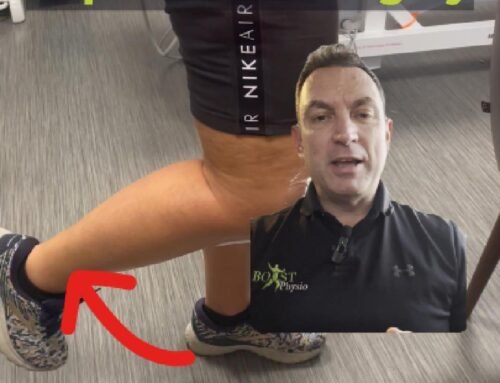
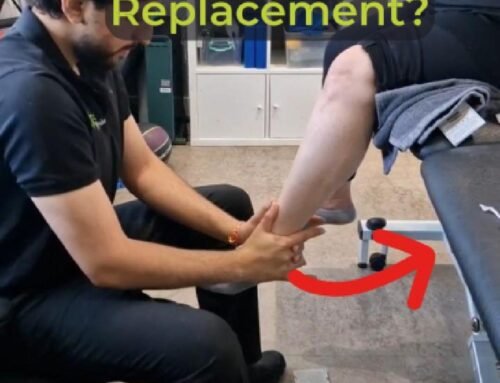
Setareh, physiotherapist at BOOST PHYSIO Swiss Cottage NW3, works with patients across the area, from a stroll along Finchley Road to daily dog walks round Swiss Cottage and Hampstead Heath, and shares three simple exercises to build the strength and stamina behind every step: calf raises to build push-off power, sit-to-stands to build glute and quad endurance, and single leg balance holds to improve the small stabilising muscles that keep each step efficient. Small, consistent changes like these can make a real difference to how far, and how confidently, you walk. If balance is also a concern on your walks, our guide to falls prevention and balance exercises in Hampstead covers this in more depth.
“Small, consistent changes to strength and stamina make a real difference to how far, and how confidently, you walk.” — Setareh, Physiotherapist, BOOST PHYSIO Swiss Cottage
When leg fatigue might be something more
Occasional tiredness on a longer walk is normal. But if fatigue comes on very quickly, is accompanied by pain, cramping, numbness or breathlessness, or is new and unexplained, it’s worth getting checked, either by your GP or by one of our physiotherapists, to rule out anything beyond muscular deconditioning. Read more about the muscle strength changes that come with age in our article on sarcopenia, and about the link between balance and overall health in this simple balance test. If you’re also weighing up who to see, our guide on choosing a physiotherapist in Hampstead may help.
Our approach: every tool for your best recovery
At BOOST PHYSIO, we believe your best recovery comes from having every tool available, not relying on just one. That’s why our physiotherapists combine hands-on manual therapy with targeted exercise rehabilitation, tailored specifically to you and adjusted as you progress. We’ve seen first-hand, time and again, that patients get the best and most lasting results when both are used together. It’s the thinking behind our promise: Your Best Recovery, Guaranteed.
At BOOST PHYSIO Swiss Cottage, inside the O2 Centre on Finchley Road, we offer:
- ✓ Same day physiotherapy appointments, 8am to 9pm
- ✓ Male and female clinicians
- ✓ Treatment recognised by BUPA, AXA and WPA
Book your assessment online now, call 020 8201 7788 or WhatsApp us.
Frequently asked questions about leg fatigue when walking
Written with Setareh, physiotherapist at BOOST PHYSIO Swiss Cottage NW3, and the BOOST PHYSIO team. This article is general guidance and is not a substitute for an individual physiotherapy assessment.