Why does my shoulder hurt at night?
A shoulder that aches all night is exhausting. You roll over, it wakes you and by morning you’re tired and sore. It’s one of the most common things we hear about in clinic and it usually has a clear cause.
★★★★★ 4.9 from 1,400+ Google reviews across our 13 clinics

Quick answer: Shoulder pain at night is most often caused by an irritated rotator cuff tendon, frozen shoulder or bursitis. Lying on the shoulder squashes the sore tissues and at rest you notice pain more. Sleeping on your back or the other side with a pillow hugged in front of you usually helps. Get it assessed if it lasts more than 2 weeks.
What are the common causes of shoulder pain at night?
Your shoulder is a shallow ball and socket held in place by four small rotator cuff muscles and their tendons. When those tendons or the bursa above them are irritated, lying on that side presses on them. Lying still also means there’s nothing to distract you from the ache.
| Cause | Typical signs | Who it affects |
|---|---|---|
| Rotator cuff related pain | Ache on the outside of the upper arm, painful to lift the arm out to the side | The most common cause, often after a change in activity |
| Frozen shoulder | Severe night pain and a shoulder that steadily stiffens in every direction | Most common between 40 and 60, more common with diabetes |
| Calcific tendinopathy | Sudden, very intense pain, sometimes without injury | Often people aged 30 to 50 |
| Rotator cuff tear | Weakness lifting the arm, sometimes after a fall | More common with age |
| Shoulder arthritis | Deep ache, grinding and stiffness | Usually over 60 |
| Neck problems | Pain spreading from the neck, sometimes with pins and needles | Any age |
You can read more about what can be mistaken for frozen shoulder and frozen shoulder or rotator cuff in our other guides.
How should I sleep with shoulder pain?
Small changes in how you lie can make a big difference to the amount of sleep you get. The aim is to stop the shoulder being squashed or pulled into an awkward position.
On your back
Put a pillow under your sore arm so the elbow is slightly forward and supported.
On your good side
Hug a pillow in front of you so the sore arm rests on it rather than falling forward.
Not on the sore side
Lying on the painful shoulder squashes the tendons. Avoid it until things calm down.
Before bed
A warm shower or heat pack for 10 to 15 minutes can ease stiffness.
During the day, keep the shoulder moving gently. Resting it completely in a sling usually makes stiffness worse. Try to avoid long spells with your arm above shoulder height, such as reaching into high cupboards or sleeping with your arm under the pillow, until the pain settles.
Painkillers taken an hour before bed can help some people. Speak to a pharmacist or GP about what’s right for you, especially if you take other medicines.
Shoulder keeping you awake?
WhatsApp us your question, call or book online at any of our 13 clinics.
Shoulder pain at night: the key facts
| Most common cause | Rotator cuff related shoulder pain |
|---|---|
| Frozen shoulder | Affects about 2 to 5% of people and can last 1 to 3 years |
| Frozen shoulder and diabetes | Much more common in people with diabetes |
| Scans | Often not needed at first. A clinical assessment usually guides treatment |
| Injections | A steroid injection may help some people, alongside exercise |
Most people notice their night pain improving before anything else. That’s a good sign. Lifting, reaching behind your back and sport usually come back over the following weeks as the tendons get stronger.
Most rotator cuff problems settle with the right exercises over 6 to 12 weeks. Frozen shoulder takes longer, but physio helps keep movement and manage pain while it runs its course. Find out more about shoulder pain physio.
How we help you recover at BOOST PHYSIO
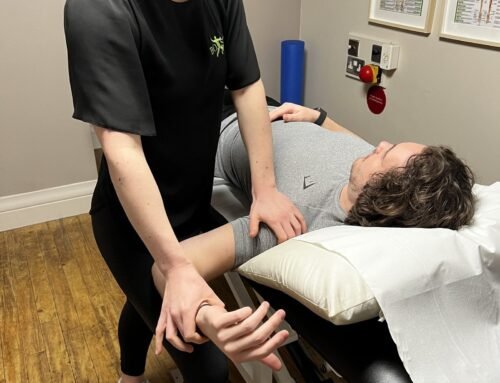
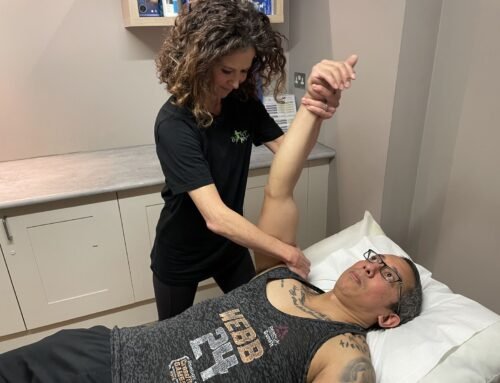
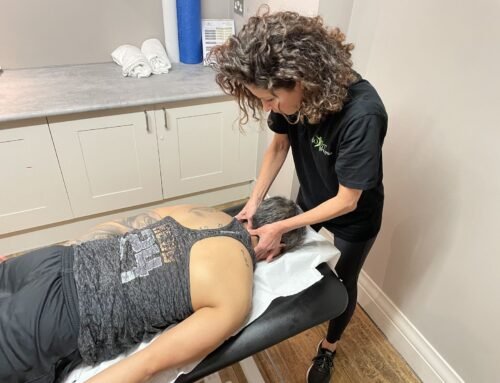
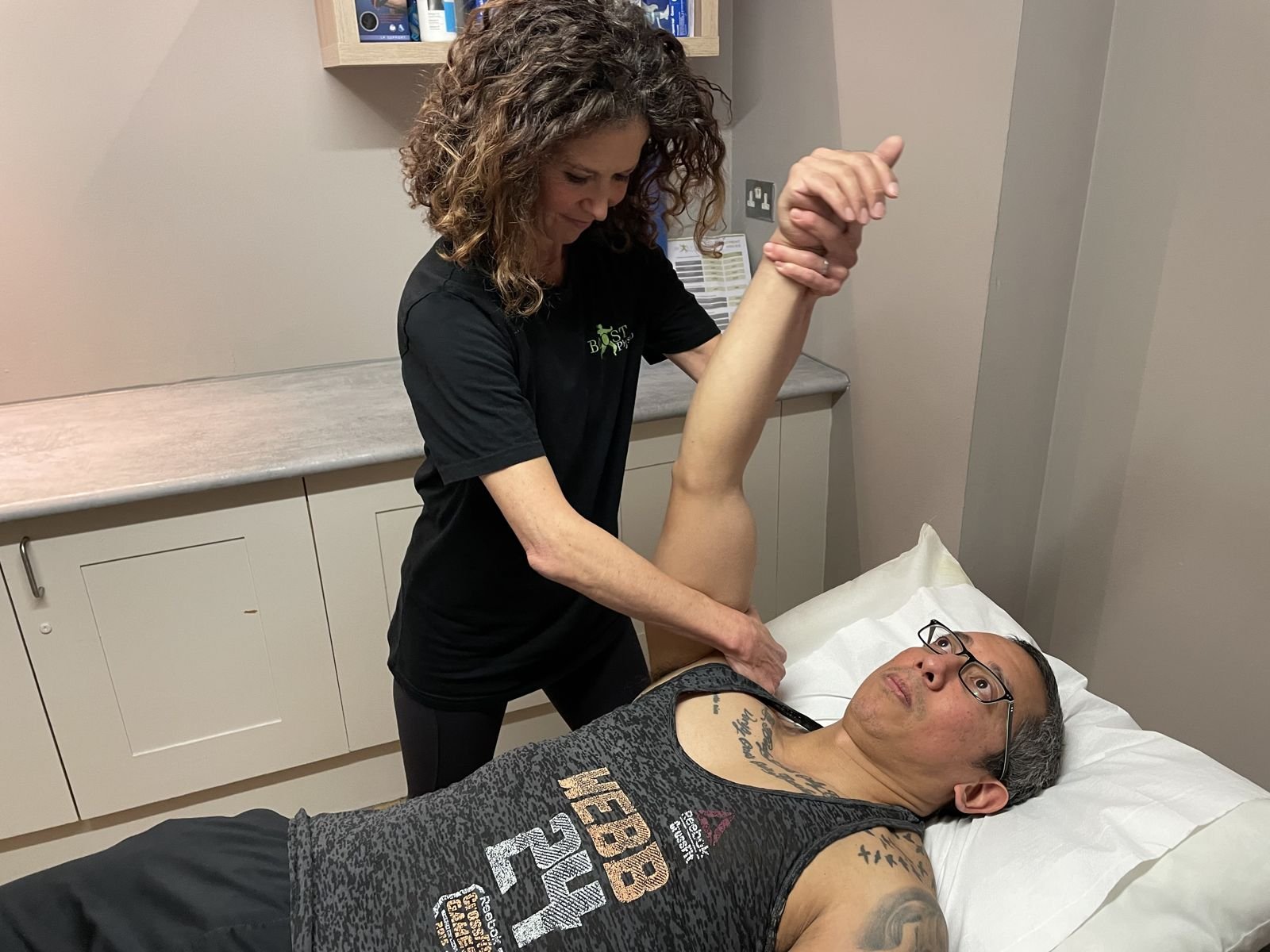
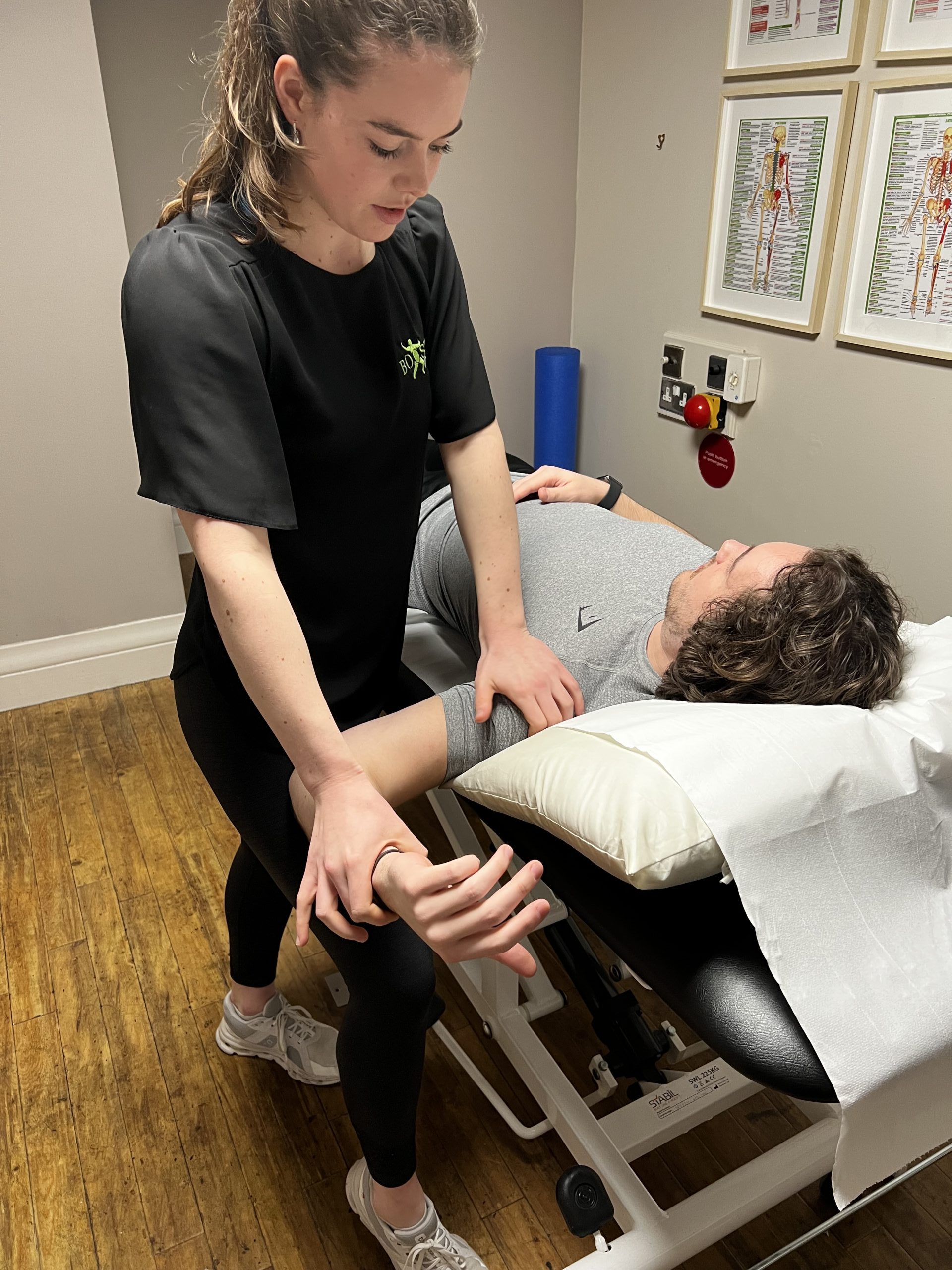
Night pain is one of the main reasons people come to see us with a shoulder. At your first appointment we ask exactly when it hurts and what wakes you, then test how far your shoulder moves on its own and with help, the strength of each rotator cuff muscle and whether your neck is involved.
That usually tells us whether it’s a tendon problem, a stiff capsule like frozen shoulder or something that needs a scan or a doctor. Your plan combines hands-on treatment to ease pain, sleep advice and a few exercises that load the tendons gradually. We review it at every visit and progress it as your sleep improves.
We also look at what’s loading the shoulder during the day. Desk set-up, a new gym programme, decorating, swimming or carrying a toddler on one hip are all common triggers we see. Changing those for a few weeks often matters as much as the exercises.
2-5%
of people develop frozen shoulder
NICE CKS
6-12 weeks
for most rotator cuff pain to improve with exercise
Clinical guidance
Around 5
sessions on average for our patients to reach their goals
BOOST PHYSIO
Better sleep is usually the first sign your shoulder is on the mend.
When should I see a doctor about shoulder pain at night?
Get medical help straight away if you have
- Shoulder or arm pain with chest pain, breathlessness or sweating: call 999
- A hot, red, swollen shoulder or a fever
- Shoulder pain after a fall with a change in shape or you can’t lift your arm
- Unexplained weight loss or a history of cancer
- Night pain that is constant and doesn’t change with position
For most night pain, physio is a good first step and you don’t need a GP referral. If your pain hasn’t improved after 2 weeks of sleeping differently and keeping gently active, book an assessment.
What our patients say
★★★★★
“Madeleine helped me with recovery after a rotator cuff injury and frozen shoulder.”
★★★★★
“Really great treatment frozen shoulder is on the mend.”
★★★★★
“Toisin is a fantastic physiotherapist and helped resolve a bad shoulder problem in a few months.”
Watch: shoulder pain explained by our physios
Short videos from our physios on shoulder pain, frozen shoulder and rehab.

Physiotherapy exercises for Frozen Shoulder

Frozen Shoulder Explained: What is it? How does frozen shoulder happen?

Resistance Band Shoulder Rotator Cuff Physio Approved Exercises
Got a question about your own pain or injury? Send it to our physios.
Get help at your nearest BOOST PHYSIO clinic
We help people with this at all 13 of our clinics across North London and Hertfordshire. Choose your nearest clinic to see the team, opening times and how to find us, or book straight in.
Sleep better, move freely
Chartered physios, same day appointments and no GP referral needed.
Related reading
 Shoulder pain physio
 What can be mistaken for frozen shoulder?
 Frozen shoulder or rotator cuff?Heat or ice: which is better?
Your questions answered
Why is shoulder pain worse at night?
Lying on the shoulder squashes the sore tendons and bursa. When you lie still, blood flow changes and there’s less to distract you, so you notice the ache more.
What is the best sleeping position for shoulder pain?
On your back with a pillow under the sore arm, or on your good side hugging a pillow. Avoid lying on the painful side until it settles.
Is night pain a sign of a rotator cuff tear?
It can be, but most night pain comes from an irritated tendon rather than a tear. Weakness lifting your arm is more suggestive of a tear and a physio can test for it.
Will my shoulder night pain go away on its own?
Mild pain often settles in a few weeks. Pain that lasts longer than 2 weeks, or keeps waking you, is worth assessing so you get the right exercises.
Do I need a scan for shoulder pain at night?
Not usually at first. A careful assessment guides treatment and we’ll refer you for a scan if your symptoms or progress suggest it’s needed.

Written and clinically reviewed by Steven Berkman, BSc Physiotherapy (University of Cape Town), HCPC-registered chartered physiotherapist, MCSP, founder of BOOST PHYSIO in 2008, with Finlay McDonald and Martin Sarembock at BOOST PHYSIO Crouch End. Last reviewed 12 November 2026.
References
- National Institute for Health and Care Excellence. Clinical Knowledge Summaries: Shoulder pain. cks.nice.org.uk.
- National Institute for Health and Care Excellence. Clinical Knowledge Summaries: Frozen shoulder. cks.nice.org.uk.
- NHS. Shoulder pain. nhs.uk.