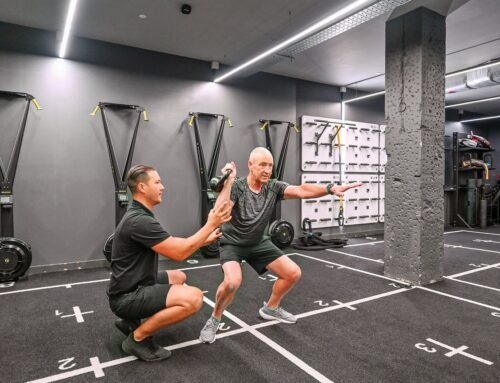
Physio after shoulder surgery
Rotator cuff repair, subacromial decompression and shoulder replacement each heal on a different timeline. Here’s what to expect, stage by stage and how physio gets you back to doing what you love.
★★★★★ 4.9 from 1,400+ Google reviews across our 13 clinics
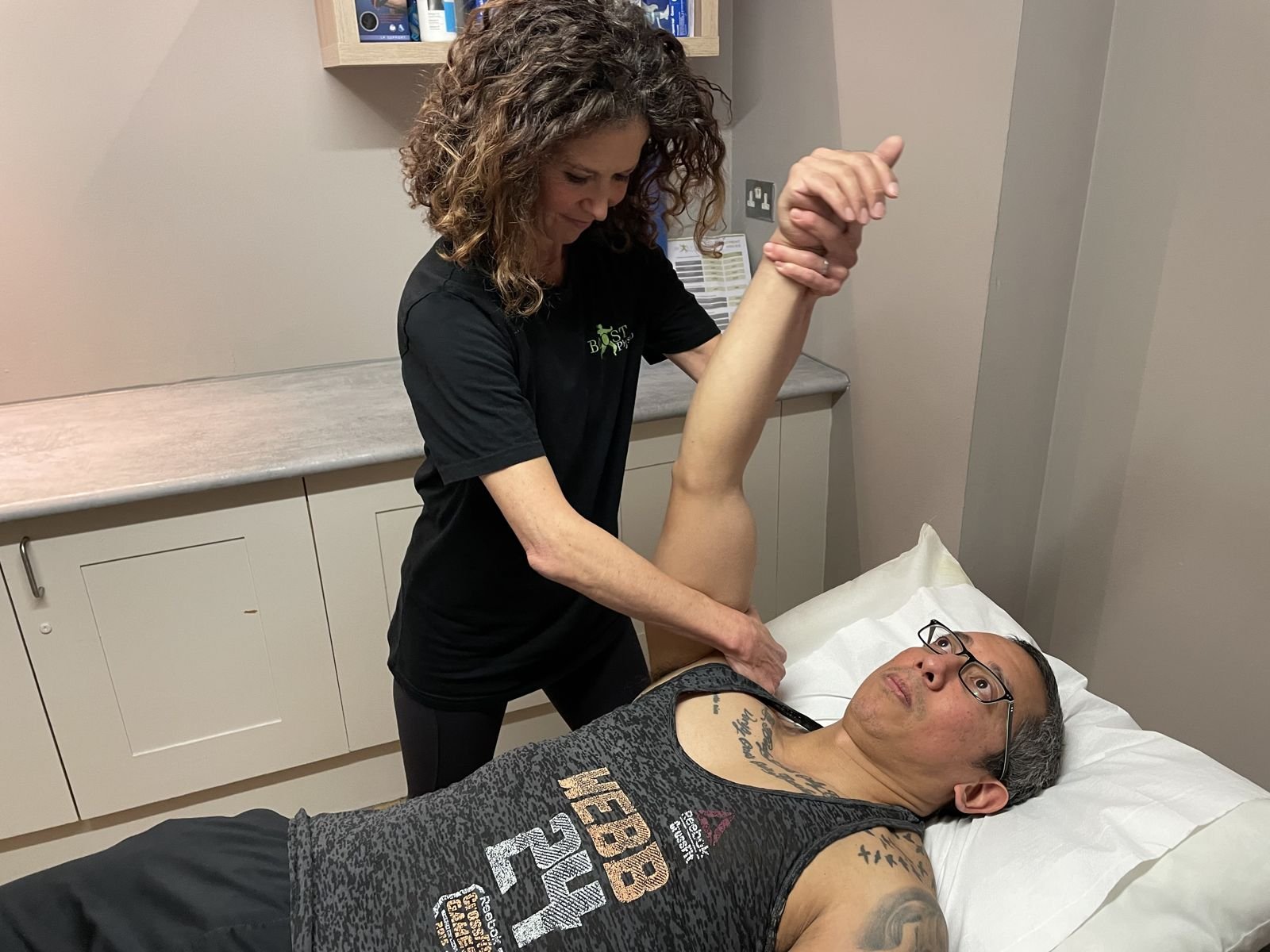
Quick answer: Recovery depends on the operation. After a subacromial decompression most people are out of the sling within days and back at a desk in 2-4 weeks. After a rotator cuff repair you’ll usually wear a sling for 4-6 weeks, start strengthening around 12 weeks and keep improving for 12-18 months. After a shoulder replacement expect a sling for up to 6 weeks and gains for 12-24 months.
Which shoulder operation have you had?
“Shoulder surgery” covers very different operations and the biggest difference is how much has been repaired. Knowing which one you’ve had and your surgeon’s protocol, is the starting point for your rehab.
Rotator cuff repair
A torn rotator cuff tendon is stitched back onto the bone. The repair needs protecting while it heals, so this has the slowest early phase.
Subacromial decompression
Keyhole surgery to remove bone spur and inflamed tissue under the acromion, giving the tendons more room. Nothing is repaired, so you can move it early.
Shoulder replacement
The worn joint is replaced. An anatomic replacement copies the normal ball and socket; a reverse replacement swaps them and relies on your deltoid muscle.
Decompression is sometimes done at the same time as a rotator cuff repair. If so, follow the rotator cuff timeline, because the repair is the part that sets the pace.
How long does recovery take after each operation?
These are typical timelines from NHS shoulder unit guidance. Your surgeon’s instructions always come first and the size of a tear, the quality of your tendon and your general health all change things.
| Milestone | Subacromial decompression | Rotator cuff repair | Shoulder replacement |
|---|---|---|---|
| Sling | A few days, for comfort | Up to 4-6 weeks | Usually up to 6 weeks |
| Driving | Around 1-3 weeks | At least 6 weeks | Around 6 weeks |
| Desk work | Around 2-4 weeks | Around 6-8 weeks | Around 6 weeks |
| Manual or heavy work | 6 weeks to 3 months | 3-4 months or more | Heavy lifting from about 6 months |
| Keeps improving for | Several months | 12-18 months | 12-24 months |
Typical earliest return to driving (weeks)
Source: NHS shoulder unit patient information (Royal Berkshire, Hull, UHS, UHB)
You must be out of the sling, off strong painkillers and able to control the car in an emergency before you drive. Check with your insurer too. We cover the knee and hip version of this question in when can I drive after a knee or hip replacement.
4-6 weeks
in a sling after most rotator cuff repairs
NHS shoulder units
12 weeks
before strength training usually starts after a cuff repair
Oxford University Hospitals
12-24 months
for a shoulder replacement to keep improving
RJAH, 2024
Just had shoulder surgery?
WhatsApp us your question, call or book online at any of our 13 clinics.
What happens in each stage of shoulder rehab?
| Weeks 0-6: protect | Sling as advised, keep the elbow, wrist and hand moving, pendulum and assisted movements if your surgeon allows, posture and sleep advice |
|---|---|
| Weeks 6-12: restore movement | Out of the sling, gentle active movement, shoulder blade control, light everyday tasks below shoulder height |
| Weeks 12+: strengthen | Progressive band and weights work for the rotator cuff and shoulder blade muscles, reaching overhead, lifting |
| 3-6 months+: return to life | Sport and hobby specific training, such as golf and front crawl around 12 weeks after a replacement, heavier lifting and manual work |
| Decompression | Moves faster: active movement within days and strengthening as pain settles over the first few weeks |
Why so careful after a rotator cuff repair? A repaired tendon doesn’t reach its full strength until around 12-16 weeks, so lifting, pushing up from a chair and putting your hand behind your back are usually off limits until then. After a replacement, your surgeon may restrict certain movements, especially turning the arm outwards, to protect the muscle repaired at the front of the shoulder.
The sling question is changing. The UK RaCeR studies are testing whether letting people take the sling off as soon as they feel able, after a cuff repair, gives a better recovery than the usual 4 weeks. Until the results are in, follow your surgeon’s advice.
Why does rehab matter so much after a decompression?
The UK CSAW trial, published in The Lancet, compared decompression with keyhole surgery that removed nothing and with no surgery at all. Both surgical groups improved, but decompression gave no extra benefit over the placebo operation and the gain over no treatment was too small to matter clinically. That tells us something useful: the rehab and the rest after surgery do a lot of the work.
So if you’ve had a decompression, don’t treat physio as optional. Getting your movement back early and then strengthening the rotator cuff and shoulder blade muscles is what makes the difference. If you’re still deciding about surgery, our shoulder pain physio page explains what a good course of physio looks like first.
How we help you recover at BOOST PHYSIO
We see people at every stage after shoulder surgery: the week after the operation with the arm still in a sling, at 6 weeks when the sling comes off and the shoulder feels stiff and months later when they want to get back to golf, swimming, tennis or lifting grandchildren.
Your surgeon’s protocol comes first. We read your operation notes and discharge instructions, then assess your pain, swelling, movement, the strength around your shoulder blade and neck and how you’re sleeping and managing day to day. Where it helps, we keep your surgeon updated on your progress.
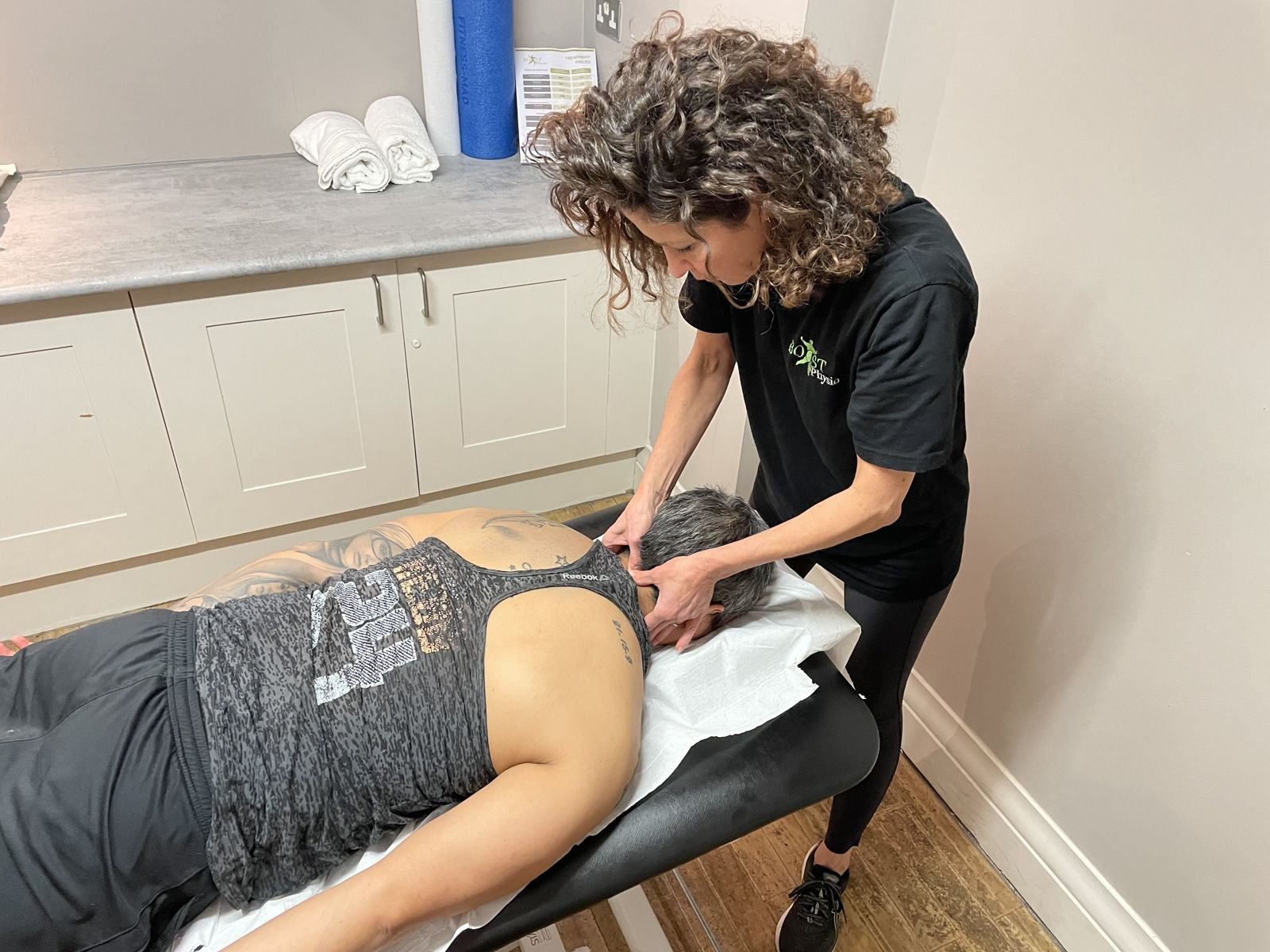
Your plan combines hands-on treatment to ease pain and stiffness, carefully staged exercises that are progressed every visit and clear advice on what you can and can’t do yet. Your home programme is short and simple, because the work you do between sessions is what moves you forward. When you’re ready, we build strength and sport specific training so you finish rehab confident, not just pain free.
The operation gives you a chance. The rehab is what turns it into a great result.
Choosing the right physio matters over 6-12 months of rehab. We’ve written a guide to choosing the right physio after shoulder surgery. We also help before surgery, as being stronger going in often makes the first weeks after easier.
When to contact your surgeon or hospital straight away
- Redness, heat, swelling or discharge from the wound, or a temperature
- A sudden pop, sharp pain or loss of movement you’d already gained
- Numbness, tingling, a cold or discoloured hand that doesn’t settle
- Calf pain or swelling, chest pain or shortness of breath – call 999 or go to A&E
- Pain that is getting steadily worse rather than better
What our patients say
★★★★★
“Looking back to 16 weeks since my operation and what was achieved by Annie, I never thought I could get to such a high level of mobility and strength in such a short period.”
★★★★★
“I am half way through a course of 12 post shoulder operation physio sessions with Aaran at Boost in Hendon”
★★★★★
“Rebecca did my physio over six months after an ACJ reconstruction. I started with very little movement and wasn’t convinced I’d get much of it back.”
Watch: shoulder rehab exercises from our physios
Exercises we use in the strengthening stages of shoulder rehab. After surgery, only start these when your surgeon and physio say your shoulder is ready.

Setareh’s early to mid stage rotator cuff exercises

Sarah’s resistance band rotator cuff exercises

Resistance band exercises for shoulder recovery

Late stage shoulder rehab with a medicine ball
Got a question about your own recovery? Send it to our physios.
Get help at your nearest BOOST PHYSIO clinic
We help people with this at all 13 of our clinics across North London and Hertfordshire. Choose your nearest clinic to see the team, opening times and how to find us, or book straight in.
Get your shoulder back to its best
Same day appointments, no GP referral needed, 13 clinics across North London and Hertfordshire.
Related reading
 Shoulder surgery rehab: choosing the right physioShoulder pain physioWhat can be mistaken for frozen shoulder?
 How many physio sessions will I need?
Your questions answered
When should I start physio after shoulder surgery?
Most people start in the first couple of weeks, with gentle elbow, wrist and hand exercises and any early shoulder movements your surgeon allows. After a decompression you’ll move sooner; after a rotator cuff repair the early weeks are about protecting the repair. Follow your surgeon’s protocol and bring it to your first appointment.
When can I sleep on my side after shoulder surgery?
After a rotator cuff repair, NHS guidance (for example Royal Berkshire’s) is not to lie on the operated side for about 6 weeks, then to let comfort guide you. After a replacement, ask your surgeon. Many people sleep better propped up on pillows, with a pillow supporting the arm in front of them.
How many physio sessions will I need after shoulder surgery?
It depends on the operation. A decompression may need a handful of sessions; a rotator cuff repair or replacement often needs regular sessions over several months, spaced out as you become independent with your exercises. We’ll agree a plan with you at your first visit.
My shoulder is still stiff months after surgery. Can physio still help?
Yes. Stiffness is common after shoulder surgery and usually improves with the right mix of hands-on treatment and progressive exercise. If progress stalls, we’ll talk with you about whether a review with your surgeon is needed.
Will my health insurance cover physio after shoulder surgery?
Most policies with Bupa, AXA Health, Vitality, WPA and Aviva include post-operative physio, though limits vary. Check with your insurer and get an authorisation number if they need one, then book with us directly.

Written and clinically reviewed by Steven Berkman, BSc Physiotherapy (University of Cape Town), HCPC-registered chartered physiotherapist, MCSP, founder of BOOST PHYSIO in 2008, with the BOOST PHYSIO physiotherapy team. Last reviewed 26 November 2026. This article is general information and doesn’t replace advice from your own doctor, surgeon or physio.
References
- University Hospital Southampton. Rotator cuff repair: after surgery care. uhs.nhs.uk.
- Royal Berkshire NHS Foundation Trust. Rotator cuff repair (September 2025) and Arthroscopic subacromial decompression (March 2025) patient information.
- The Royal Orthopaedic Hospital. Rotator cuff repair (RCR) patient information. roh.nhs.uk.
- Robert Jones and Agnes Hunt Orthopaedic Hospital. Total shoulder replacement rehabilitation guideline. 2024.
- Oxford University Hospitals. Rotator cuff repair rehabilitation guideline. ouh.nhs.uk.
- Beard DJ, et al. Arthroscopic subacromial decompression for subacromial shoulder pain (CSAW). Lancet. 2018;391(10118):329-338.
- Littlewood C, et al. Rehabilitation following rotator cuff repair: a multi-centre pilot and feasibility randomised controlled trial (RaCeR). Clin Rehabil. 2021;35(6):829-839.