
Quick answer: pain on the outside of your hip that’s worse lying on your side, on stairs or getting up from a chair is most often Greater Trochanteric Pain Syndrome (GTPS). It’s commonly called trochanteric bursitis, but the main problem is usually the gluteus medius and minimus tendons. The best evidence supports education on avoiding tendon compression plus a progressive strengthening programme, which in a large BMJ trial did better than a steroid injection or wait and see.
Does the outside of your hip ache when you lie on your side at night? If so, you’re far from alone. It’s one of the most common problems we see at our Muswell Hill clinic and right across BOOST PHYSIO, especially in women over 40. It can really wear you down. Broken sleep, sore stairs and that stiff, achy feeling when you get up after sitting for a while.
The good news is that it responds really well to the right treatment. The less good news is that a lot of the usual advice makes it worse.
What is GTPS?
The greater trochanter is the bony bump you can feel on the outside of your hip. Two of your buttock muscles, gluteus medius and gluteus minimus, attach there through tendons. Their job is to keep your pelvis level every time you stand on one leg, which you do with every single step.
For years this pain was blamed on an inflamed bursa, a small fluid-filled cushion near the bone. We now know the main issue is usually the gluteal tendons themselves becoming irritated and less able to cope with load. That’s why you’ll often hear it called gluteal tendinopathy or glute med tendinopathy. The bursa can be involved, but it’s rarely the whole story. If you’d like to know more about why these muscles matter so much, have a read of our article on why you need good glutes.
It’s more common than most people realise. A US population study found that around 1 in 4 women aged 50 to 79 had the condition.
How do you know if it’s GTPS?
The classic signs are:
- Pain on the outside of the hip – sometimes spreading down the side of the thigh
- Pain lying on the sore side – and often on the other side too, as the top leg drops across
- Pain on stairs, hills or getting up from a low chair
- Tenderness when you press on the bony bump
- Stiffness first thing or after sitting – it eases a little once you get moving, then aches again later
Pain deep in the groin is a different pattern and can point to the hip joint itself, such as hip impingement or arthritis, so it’s worth getting properly assessed.
Why tendons get grumpy
Tendons don’t like being squashed. When your thigh crosses the midline of your body, the band of tissue on the outside of your hip presses the tendon against the bone. Do that for hours at a time and the tendon gets irritated.
The other trigger is a sudden change in load. A new walking challenge, a busy holiday on your feet, a return to running or even a spell of doing much less than usual can all tip it over. Runners, have a look at our running injury physio page too.
Watch: exercises for pain on the outside of the hip
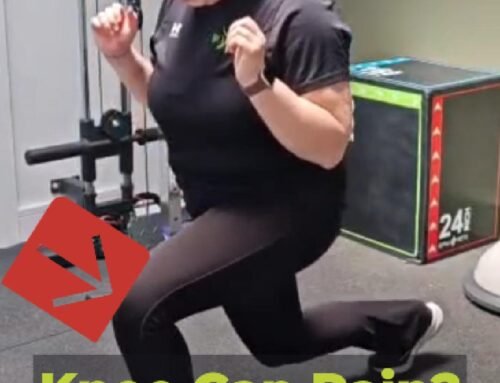
In this short video from our physio Katy in our Muswell Hill clinic, you can see how weakness in the glutes lets the pelvis drop to one side when you stand on one leg and how the right exercises start to build that control back up.
Our top tips to settle it down
- Put a pillow between your knees at night – this stops your top leg dropping across and squashing the tendon
- Stop crossing your legs – sit with your knees hip-width apart and your feet flat
- Don’t hang on one hip – standing with your weight on one leg and the hip poking out is one of the worst offenders
- Avoid low, soft chairs – if your knees end up higher than your hips, add a cushion
- Go easy on side stretches and foam rolling – stretching the outside of the hip or rolling your ITB usually compresses the tendon further and makes it more irritable
- Don’t stop moving altogether – complete rest makes tendons weaker, not stronger, so keep walking at a level that doesn’t flare you up
Tendons love the right kind of load. Rest alone won’t fix it, but neither will pushing through pain.
What does the evidence say?
A large randomised trial published in the BMJ in 2018 (the LEAP trial) compared three approaches: education plus a targeted exercise programme, a steroid injection or simply waiting to see. After eight weeks, the education and exercise group reported the most improvement and the least pain.
Injections can give short-term relief, but on their own they don’t strengthen the tendon and the pain often comes back. That’s why exercise sits at the heart of how we treat it.
How physio helps
We start by working out what’s aggravating your hip, then build a plan around you. Every hip is different, so your physiotherapist will choose the right mix for you. Treatment may include:
- Targeted strengthening exercises – the foundation of recovery. We start with gentle holds (isometric exercises) to ease pain, then progress to standing and single-leg exercises so your hip can handle walking, stairs and everyday life again
- Shockwave therapy (ESWT) – sound waves delivered through the skin to stimulate healing in stubborn tendons, particularly helpful when pain has been hanging around for a few months. Read more about which conditions shockwave can help
- Myofascial release – hands-on soft tissue work to ease tension in the surrounding muscles and help you move more comfortably, similar to the techniques used in our sports massage
- Joint mobilisations – gentle hands-on techniques to improve movement in the hip and lower back, which can take pressure off the sore area
- Acupuncture – fine needles used alongside your exercise programme to help calm pain, making it easier to keep active. Find out how we use acupuncture
- Taping – supportive tape to offload the area and give short-term relief while your tendon gets stronger. Here’s how physio taping works
Hands-on treatments and shockwave work best alongside exercise, not instead of it. They help settle the pain so you can build the strength that keeps it away for good.
Most people start to feel a difference within a few weeks, although tendons do take time. Sticking with your programme for around three months is what makes the change last.
When to see your GP first
Please get checked by your GP if your hip pain came on after a fall, if you have pain in the groin, a fever or feel generally unwell, or if the pain is constant at night whatever position you lie in.
Ready to sleep through the night again?
At BOOST PHYSIO we offer:
- ✓ Same day physiotherapy appointments with chartered physiotherapists
- ✓ Exercise rehabilitation combined with shockwave, acupuncture, taping and hands-on treatment
- ✓ Treatment recognised by Bupa, AXA Health, Vitality and WPA
Book your assessment online now, call 020 8201 7788 or WhatsApp us.
Frequently asked questions about outer hip pain
Is trochanteric bursitis the same as gluteal tendinopathy?
Why does my hip hurt more at night?
Should I have a steroid injection?
Does shockwave therapy help outer hip pain?
How long does it take to recover?
References: Mellor R et al. Education plus exercise versus corticosteroid injection use versus a wait and see approach on global outcome and pain from gluteal tendinopathy. BMJ 2018;361:k1662. Segal NA et al. Greater trochanteric pain syndrome: epidemiology and associated factors. Arch Phys Med Rehabil 2007;88:988-92.
Written by Steven Berkman, Chartered Physiotherapist and founder of BOOST PHYSIO, with the BOOST PHYSIO Muswell Hill team. This article is general guidance and is not a substitute for an individual physiotherapy assessment.