
Physio near South Kensington, two stops from your door
Whether you live in SW7, work near Exhibition Road or study at Imperial, our Kensington clinic is a short hop away. Here’s what we treat, how to get to us and what to expect.
★★★★★ 5.0 from 125 Google reviews

Quick answer: BOOST PHYSIO Kensington is on the 3rd floor of Virgin Active, 17A Old Court Place, W8 4PL, about three minutes’ walk from High Street Kensington station. From South Kensington it’s two stops on the Circle line, or around 25 to 30 minutes’ walk through Kensington Gardens. Senior Physiotherapist Tanvi Parikh treats knee, shoulder, neck and back pain and sports injuries, with full gym access for your rehab.
Getting to us from South Kensington
| By Tube | South Kensington to High Street Kensington, two stops via Gloucester Road on the Circle line (or a District line train towards Edgware Road), then a three minute walk |
|---|---|
| On foot | Around 25 to 30 minutes from South Kensington, much of it through Kensington Gardens |
| Address | 3rd Floor, Virgin Active, 17A Old Court Place, London W8 4PL, just off Kensington High Street |
| Booking | Online 24/7, by phone on 020 8201 7788 or by WhatsApp |
| Insurance | Bupa, AXA Health, Vitality, WPA and Aviva |
We’re honest about distance: we don’t have a clinic in South Kensington itself. But plenty of our Kensington patients live or work in SW7 and find the short trip worth it for the gym space and a physio who follows them all the way through rehab.
Why rehab in a gym makes a difference
Our Kensington clinic sits inside Virgin Active, so your treatment room opens straight onto a fully equipped gym. That matters because most knee, shoulder and back problems get better through progressive strengthening, not just hands-on treatment.
Instead of handing you a sheet of exercises and hoping for the best, your physio can take you onto the gym floor, check your technique and build up the load safely. When you’re ready, you leave with a programme you can actually follow on your own.
One patient summed it up well in their Google review: “The facilities in Kensington are very good, clean and modern.”

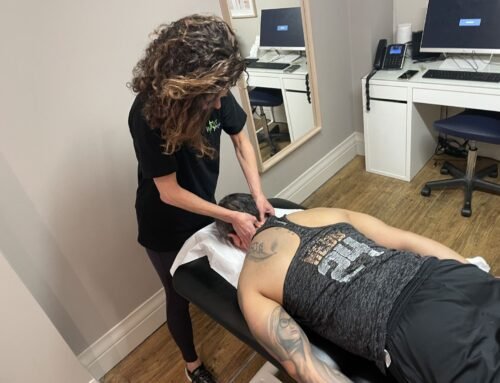
Our Kensington clinic, 3rd floor of Virgin Active
What we treat most at Kensington
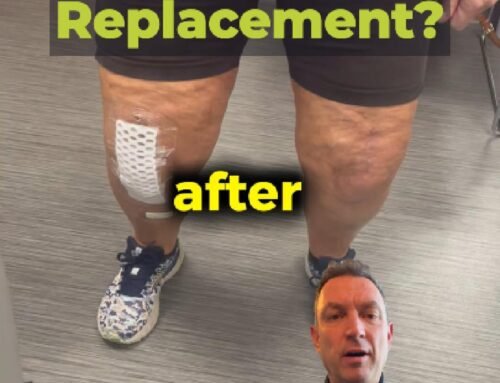
Knee pain
Runner’s knee, tendon pain, post-surgery
Pain at the front of the knee is one of the most common problems we see. International consensus recommends exercise for the hip and knee together, which is exactly what the gym lets us do.
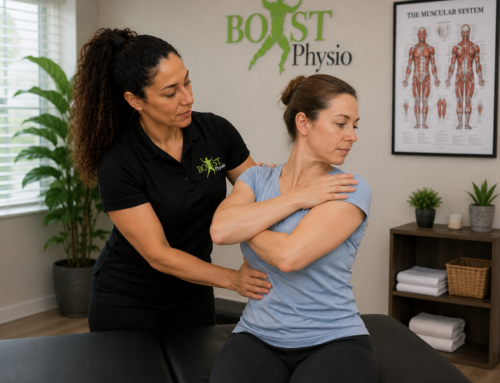
Shoulder pain
Rotator cuff, instability, stiffness
Tanvi has a special interest in shoulder instability and rehabilitation, helping people get back to the gym, swimming and lifting without that nagging catch.
Neck and back pain
Desk work, scoliosis, after spinal surgery
Long days at a desk in town take their toll. We combine hands-on treatment with strengthening and simple changes to your working day.
Sports injuries
Running, tennis, gym, pilates
From a first half marathon to a return to reformer pilates, we plan your return to sport step by step.
After surgery
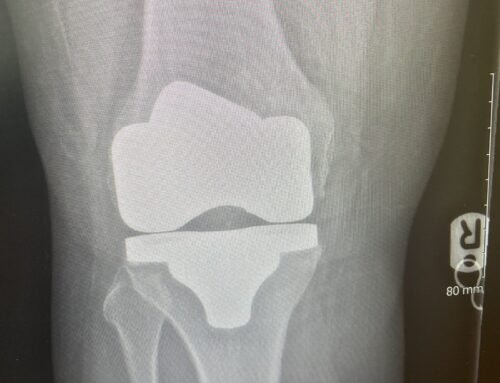
Knee, shoulder, ankle and spine
We follow your surgeon’s protocol and keep you moving forward week by week.
Long-standing pain
Pain lasting three months or more
Tanvi has worked in the NHS and private practice treating complex, long-standing pain.

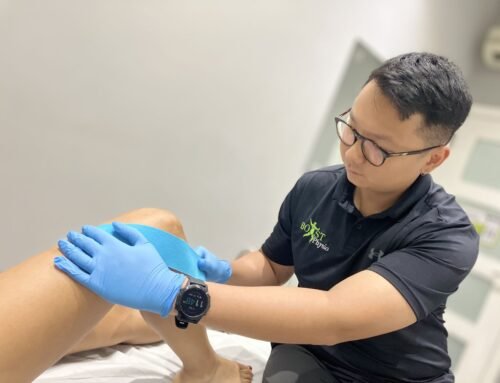
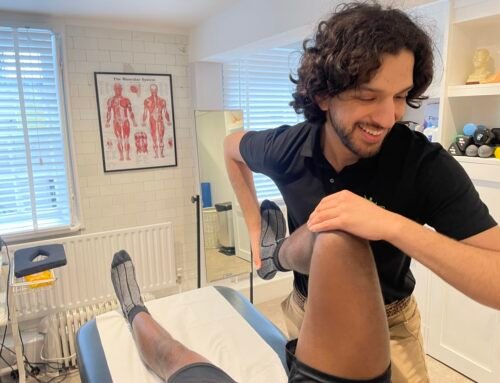
Exercises our physios use for pain at the front of the knee
Knee pain: why we look at your hips too
Pain at the front of the knee, often called runner’s knee or patellofemoral pain, flares up on stairs, squats, long sits and running. It accounts for 25 to 40% of the knee problems seen in sports injury clinics.
The 2016 international consensus statement recommends exercise therapy as the cornerstone of treatment and specifically combining hip and knee exercises rather than knee exercises alone. In practice that means strong glutes and quads, good landing control and a sensible running build-up.
25-40%
of knee problems seen in sports injury clinics are patellofemoral (front of knee) pain.
Crossley et al, BJSM 2016
Hip + knee
exercise together is recommended over knee exercises alone for front of knee pain.
Patellofemoral pain consensus, BJSM 2016
3 mins
walk from High Street Kensington station to our clinic.
BOOST PHYSIO Kensington
Close to South Kensington, ready when you are
See a senior physio at our Kensington clinic, two stops from SW7.
What Kensington patients say
★★★★★
“The facilities in Kensington are very good, clean and modern.”
Thomas C., Google review, Kensington
★★★★★
“during each session she not only helps relieve my pain but also provides personalised exercises I can do at home.”
Yasmine B., Google review, Kensington
★★★★★
“my recovery from two serious injuries (after a bad car accident) has been nothing but miraculous.”
Alina P., Google review, Kensington
Your Kensington physio

Tanvi Parikh
Senior Physiotherapist, Kensington and Kentish Town
Tanvi holds an MSc in Musculoskeletal Healthcare and Rehabilitation from University College London. She has worked across private practice and the NHS in London and has particular expertise in back and neck pain, scoliosis, long-standing pain, shoulder instability and recovery after spinal and joint surgery.
Watch: meet Tanvi and see the clinic
Short videos from the BOOST PHYSIO team. Tap to play.

Meet Tanvi, our Kensington physio

BOOST PHYSIO on Kensington High Street

How we rehab shoulder injuries
When to get checked urgently
Please seek urgent medical advice rather than waiting for a physio appointment if you have:
- A knee that has locked, given way badly or swollen up quickly after an injury
- Back pain with numbness around the saddle area or new bladder or bowel problems
- Pain with fever, unexplained weight loss or feeling generally unwell
- Neck pain with dizziness, double vision or difficulty swallowing
Why patients choose BOOST PHYSIO
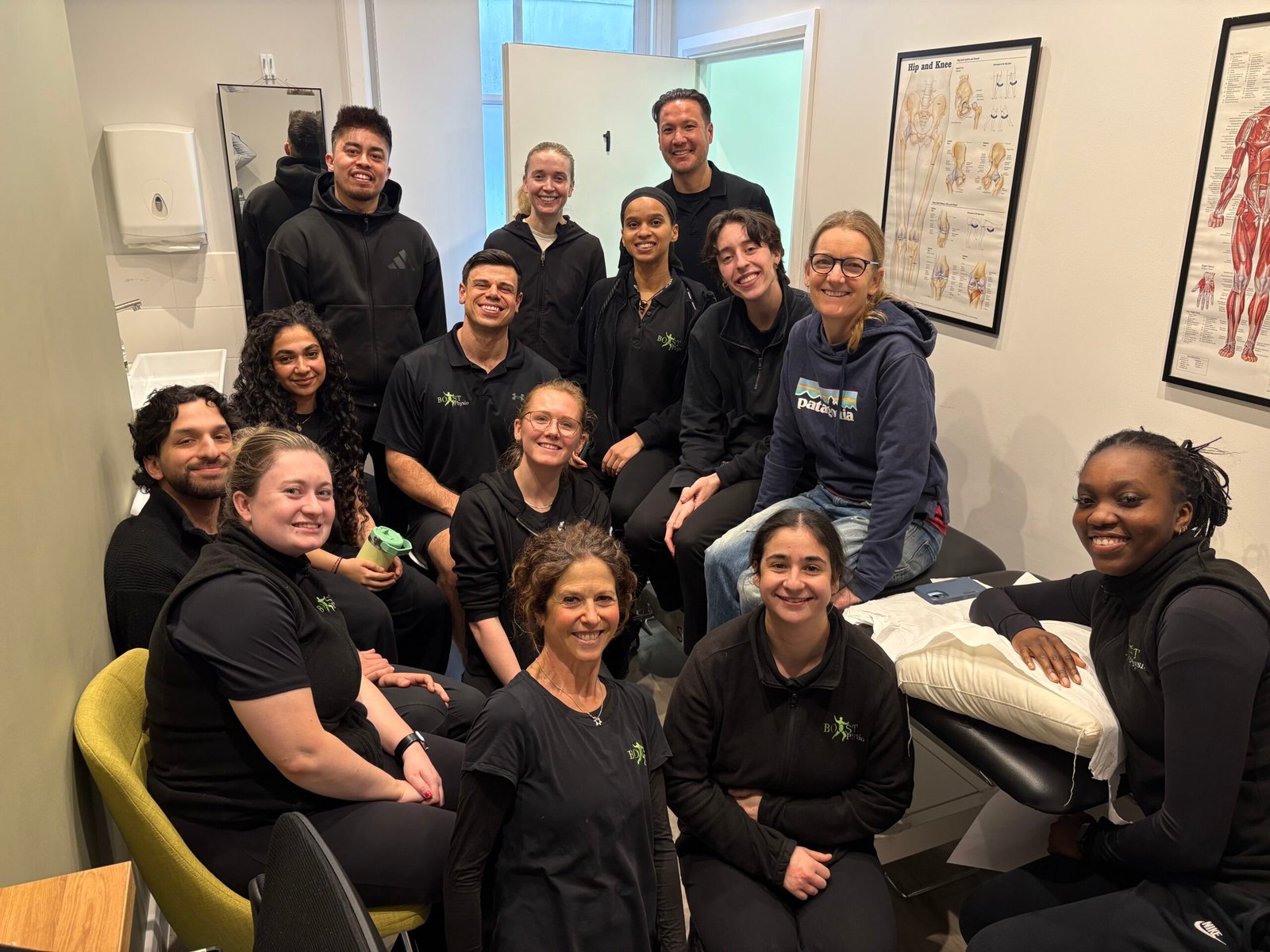
Kensington is one of 13 BOOST PHYSIO clinics across North London and Hertfordshire. Being part of a bigger group matters more than most people realise. Our physios train together twice a month and every physio has a dedicated mentor who reviews cases with them, so when you see one of us you get the experience of the whole team behind them.
We combine hands-on treatment with exercise rehabilitation built around you, then adjust it as you progress. That’s what sits behind our promise: Your Best Recovery, Guaranteed.
- Same day appointments, seven days a week
- No GP referral needed to book
- Recognised by Bupa, AXA Health, Vitality, WPA and Aviva
- Strong links with London’s leading consultants and surgeons
Prefer somewhere else? Our Swiss Cottage Leisure Centre clinic is on the Jubilee line and you can find out more about our Kensington physio clinic here.
Book at BOOST PHYSIO Kensington
Two stops from South Kensington. Book online in under a minute.
Related reading
 Physio in Kensington: treatment room to the gym
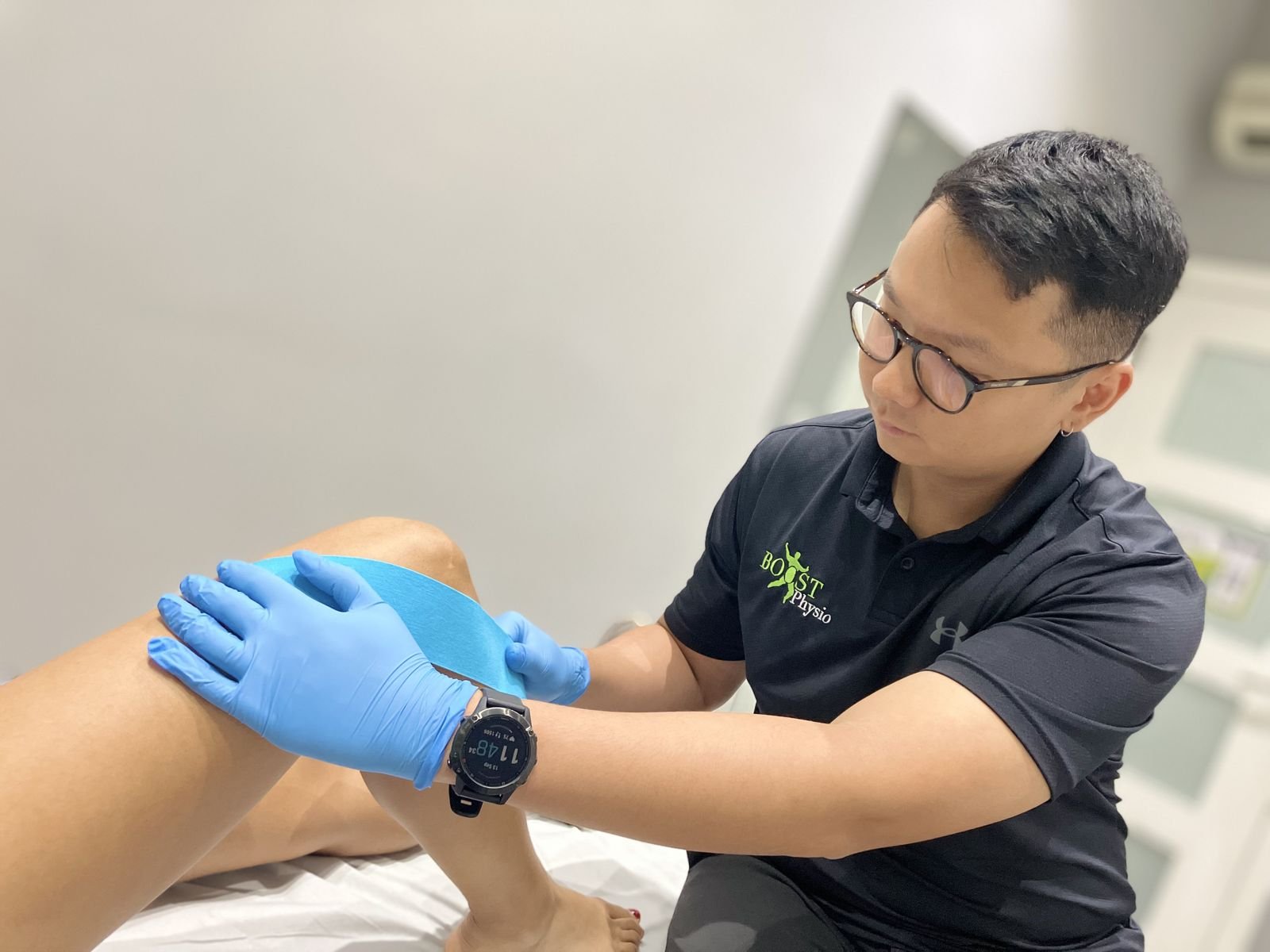 Knee pain physio in London
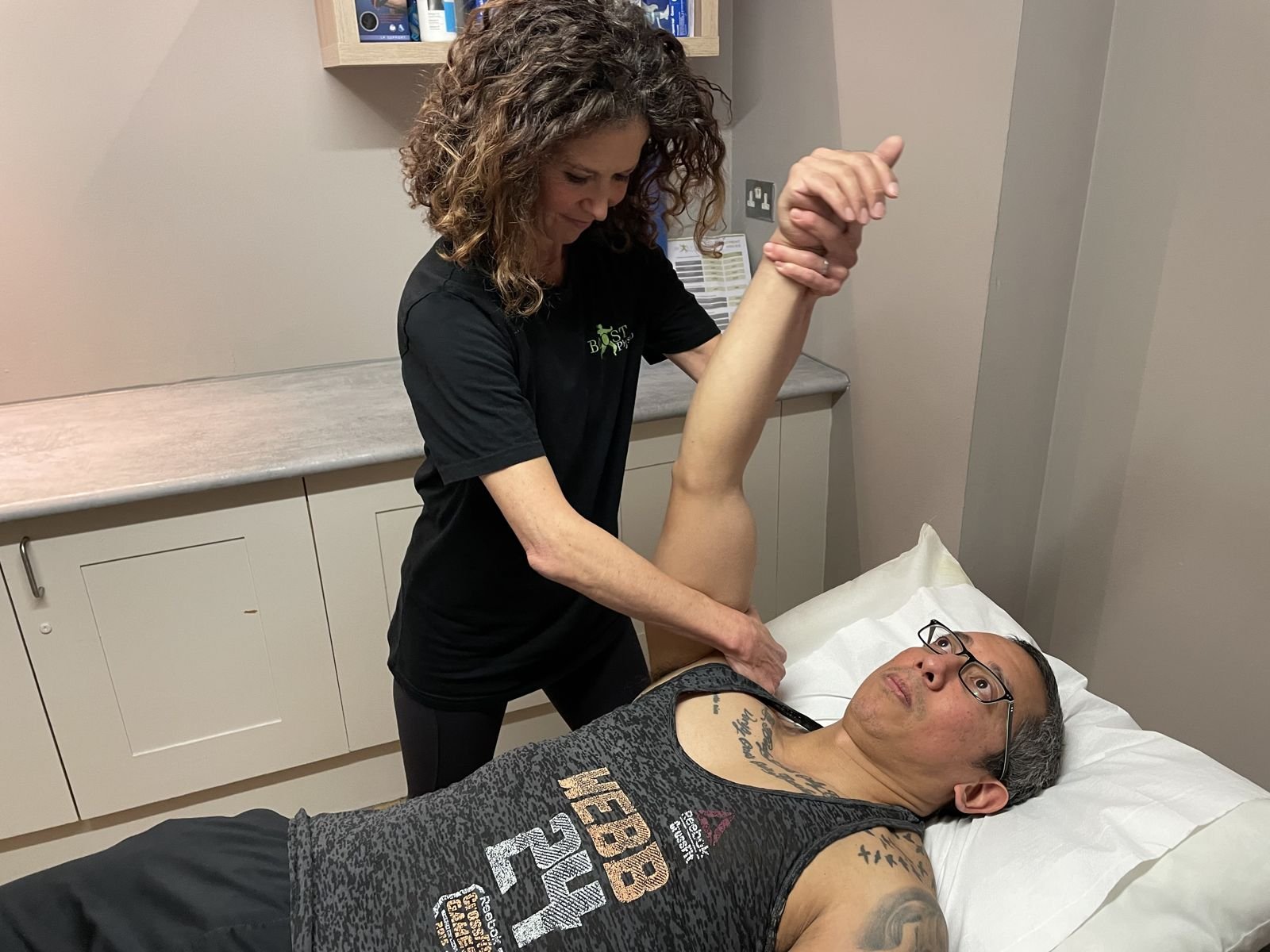 Shoulder pain physio in London
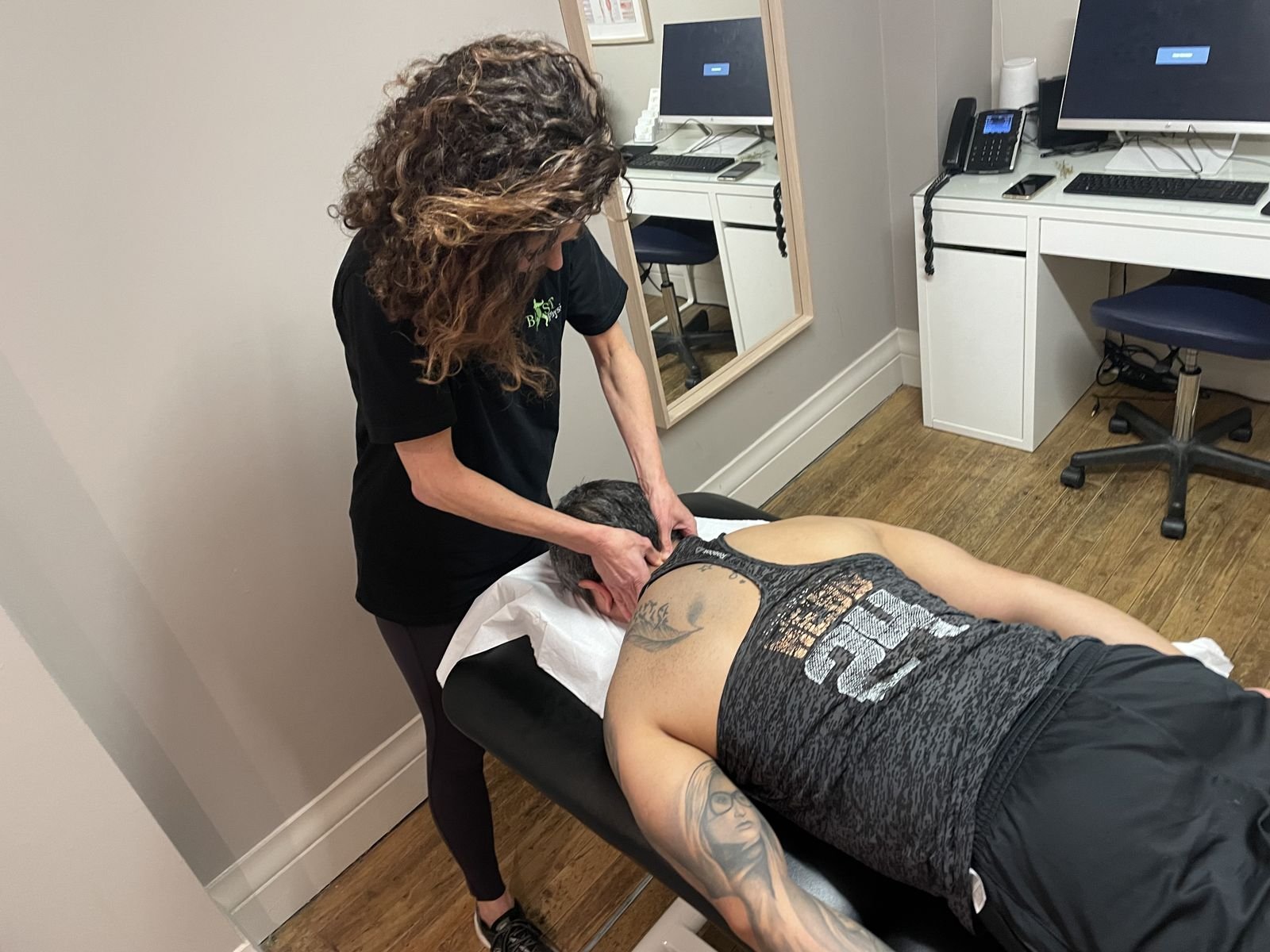 Back pain physio in LondonSports injury clinic in LondonHow much does private physio cost in London?
Your questions answered
Is there a BOOST PHYSIO clinic in South Kensington?
Not in South Kensington itself. Our nearest clinic is in Kensington at Virgin Active, 17A Old Court Place, W8 4PL, two stops from South Kensington on the Circle line.
How do I get from South Kensington to the Kensington clinic?
Take the Circle line (or a District line train towards Edgware Road) two stops to High Street Kensington, then walk about three minutes to Old Court Place. Walking takes around 25 to 30 minutes, much of it through Kensington Gardens.
Do I need to be a Virgin Active member?
No. You don’t need a gym membership to see our physio. The clinic is on the 3rd floor of the Virgin Active building.
What does the Kensington clinic treat?
Knee, shoulder, neck and back pain, sports and running injuries, long-standing pain and rehab after surgery.
Can I use my health insurance?
Yes. We are recognised by Bupa, AXA Health, Vitality, WPA and Aviva. Get your authorisation code from your insurer before your first visit.
Do I need a GP referral?
No. You can book directly online, by phone on 020 8201 7788 or on WhatsApp.
Who is the physio at Kensington?
Senior Physiotherapist Tanvi Parikh, who holds an MSc from UCL and specialises in sports injuries, shoulder instability and spinal care.

Written and clinically reviewed by Steven Berkman, BSc Physiotherapy (University of Cape Town), HCPC-registered chartered physiotherapist, MCSP, founder of BOOST PHYSIO in 2008, with Tanvi Parikh at BOOST PHYSIO Kensington. Last reviewed 28 October 2026.
References
- Crossley KM et al. 2016 Patellofemoral pain consensus statement from the 4th International Patellofemoral Pain Research Retreat, Manchester. Part 2: recommended physical interventions. Br J Sports Med 2016;50:844-852.
- Collins NJ et al. 2018 Consensus statement on exercise therapy and physical interventions to treat patellofemoral pain. Br J Sports Med 2018;52:1170-1178.
This article is general guidance and is not a substitute for an individual physiotherapy assessment. If you have severe or worsening pain, numbness, weakness, loss of bladder or bowel control, or you feel unwell, seek urgent medical advice.