
Frustrated with NHS physio?
Your physio didn’t even touch you?
Why so much physio has become hands off, what the evidence really says about hands-on treatment and why we use both.
Quick answer: Many people are surprised when an NHS physio session involves no hands-on treatment, or even no physical examination. The evidence supports exercise as the foundation of most recovery and NICE recommends manual therapy as part of a package that includes exercise, not on its own. So the best approach isn’t hands-on or exercise. It’s both: hands-on treatment to ease pain and stiffness so you can move better, combined with the right exercise to build you back up.
Why doesn’t NHS physio include hands-on treatment?
It is one of the most common things patients tell us when they first come in: “They didn’t touch me, they just gave me exercises.” Healthwatch England heard the same in 2026, including one person whose physio “didn’t touch” them or ask them to demonstrate the problem.
There are two honest reasons. First, capacity: NHS services increasingly use phone, video and app based care to see more people. You can’t treat someone hands-on over the phone. Second, evidence: research has rightly shifted physio towards active exercise rather than passive treatment alone. The problem is when that shift goes so far that hands-on care disappears completely.
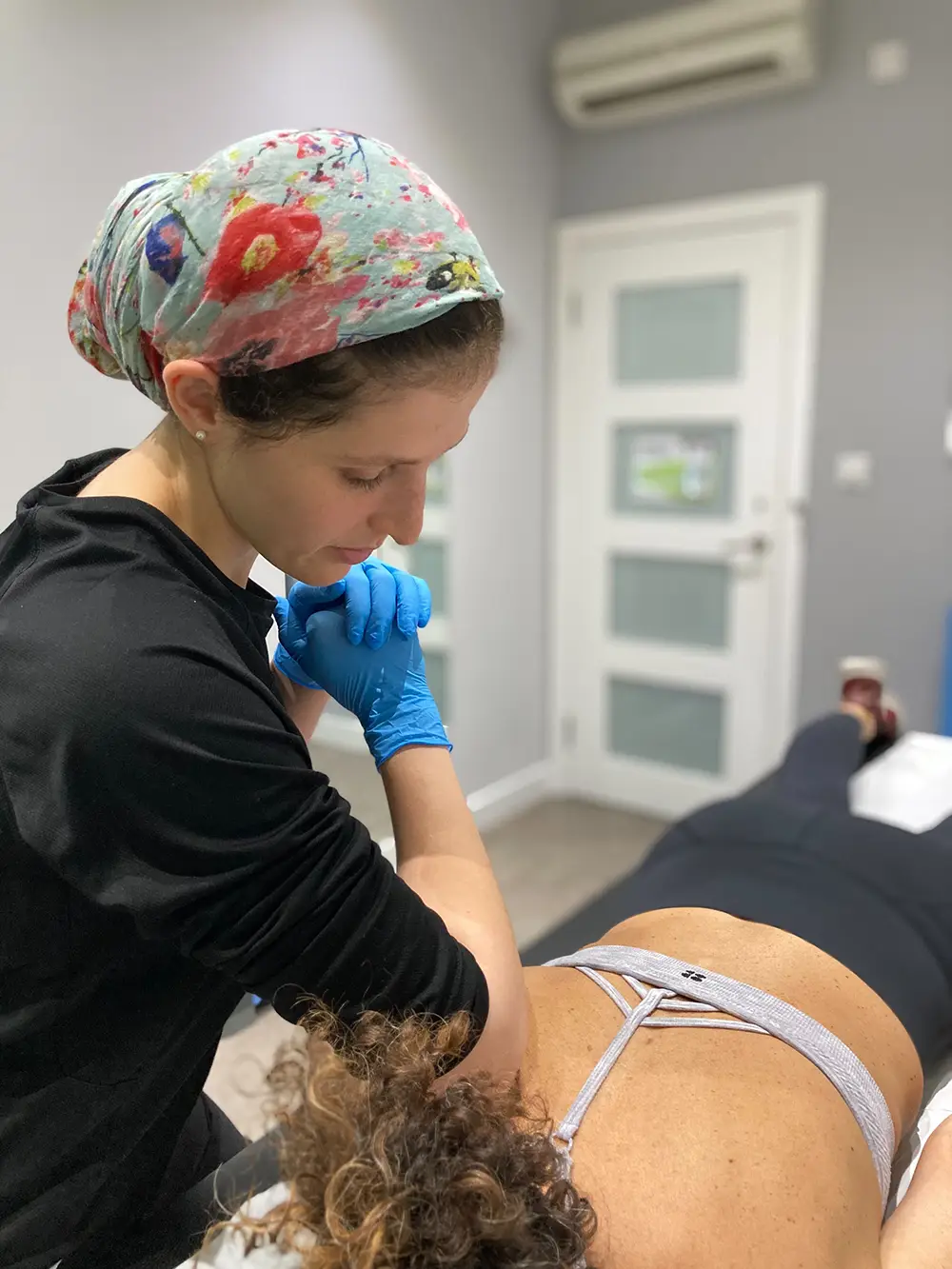
Hands-on treatment options for a trapped nerve in the neck
What the evidence says about hands-on treatment
Let’s be clear: hands-on treatment on its own is rarely the whole answer. NICE’s guideline on low back pain and sciatica (NG59) recommends considering manual therapy, such as manipulation, mobilisation or soft tissue techniques, only as part of a treatment package that includes exercise.
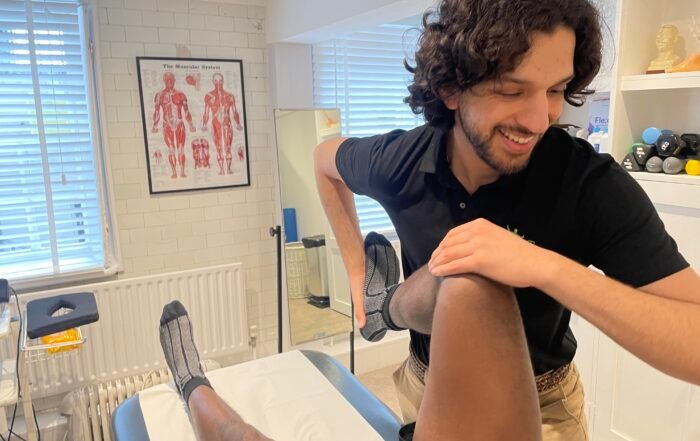
That’s exactly how we use it. Easing pain and stiffness with skilled hands often means you can move more freely and do your exercises better in the very same session. Patients frequently tell us that feeling a change on the couch gave them the confidence to keep going with their rehab.
Hands-on treatment opens the door. Exercise is how you walk through it.
Touch matters in assessment too
Hands-on isn’t just about treatment. Feeling how a joint moves, where tissue is tender, how a muscle responds and how your nerves behave under testing gives us information a phone call simply can’t. A proper physical examination is often what turns “general knee pain” into a clear diagnosis with a clear plan.
Want hands-on treatment and a plan?
Book with a BOOST physio for hands-on treatment combined with exercise rehab.
The hands-on tools we use at BOOST PHYSIO
Joint mobilisation
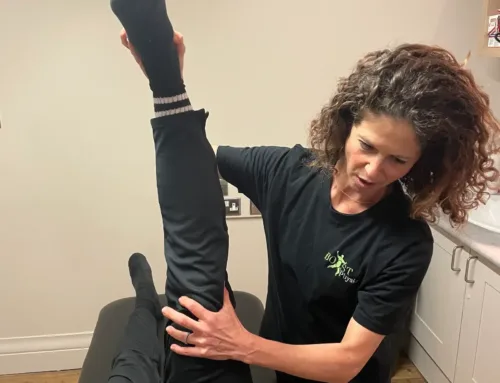
Gentle, controlled movements to ease stiff joints in the spine, shoulders, hips, knees and ankles.
Soft tissue work
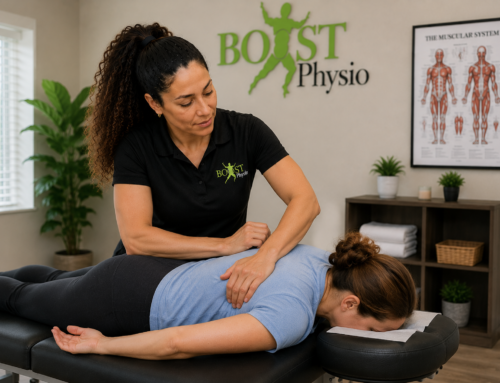
Massage and soft tissue techniques to ease tight, sore muscles and help you move more comfortably.
Acupuncture
We continue to use acupuncture for suitable patients as part of a wider treatment plan.
Taping
Supportive taping to offload sore areas and help you move with confidence while you rebuild.
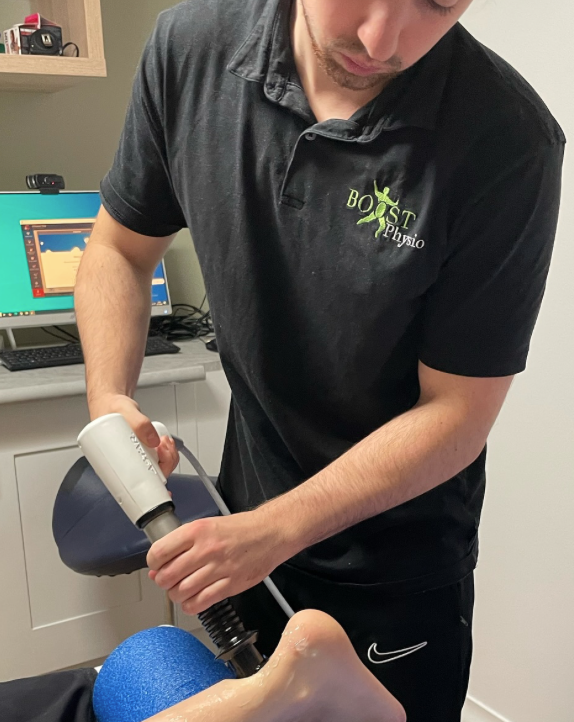
Shockwave therapy
For stubborn tendon problems such as tennis elbow and Achilles pain, available at selected clinics.
Exercise rehab
The foundation of it all: a programme built around you, demonstrated, checked and progressed.
When hands-on treatment is most useful
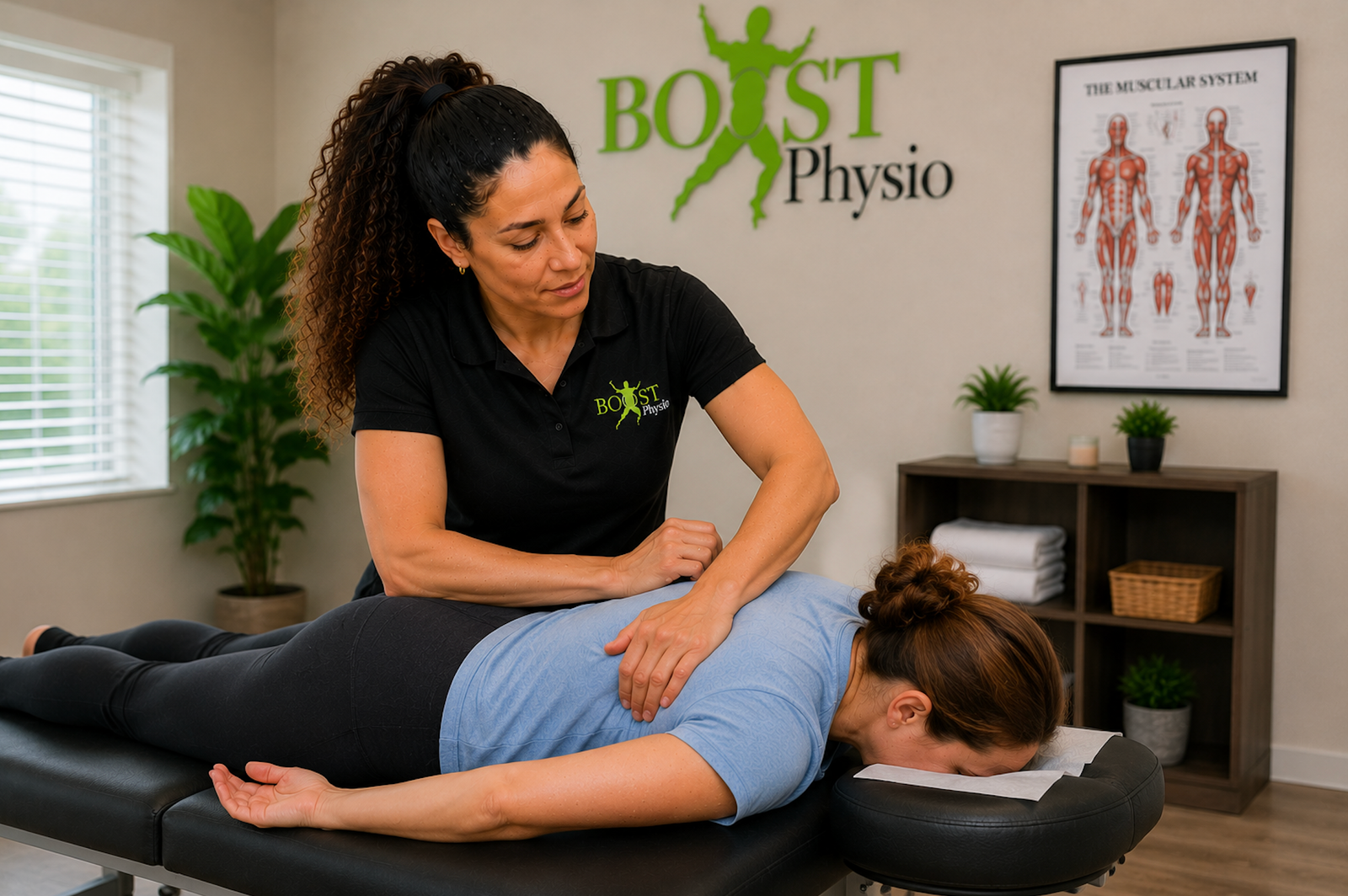
- Stiff, painful joints: such as a stiff neck, frozen shoulder or a back that has locked up
- Muscle tension and spasm: that is stopping you moving normally
- After surgery: helping regain movement in a stiff knee or shoulder, alongside exercise
- When pain stops you exercising: easing pain enough to get your rehab started
If you’re also frustrated by short appointments or only being given exercise sheets, those articles might help too.
Hands-on physio at a glance
| Is hands-on treatment evidence based? | Yes, as part of a package that includes exercise (NICE NG59 for low back pain) |
|---|---|
| Does it work on its own? | Rarely as the whole answer. Combined with exercise is best |
| Why NHS physio is often hands off | Capacity, remote appointments and a shift towards exercise based care |
| What we use | Mobilisation, soft tissue work, acupuncture, taping, shockwave at selected clinics and exercise rehab |
| Best for | Stiffness, muscle spasm, post surgery stiffness and pain that stops you exercising |
Watch: hands-on physio at BOOST
See how our physios combine hands-on treatment with exercise.
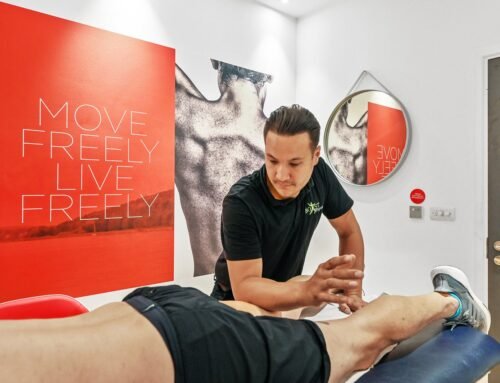
Hands-on physiotherapy in Hendon
Types of taping physios use and why
Expert physio treatment in Hendon
Every tool for your best recovery
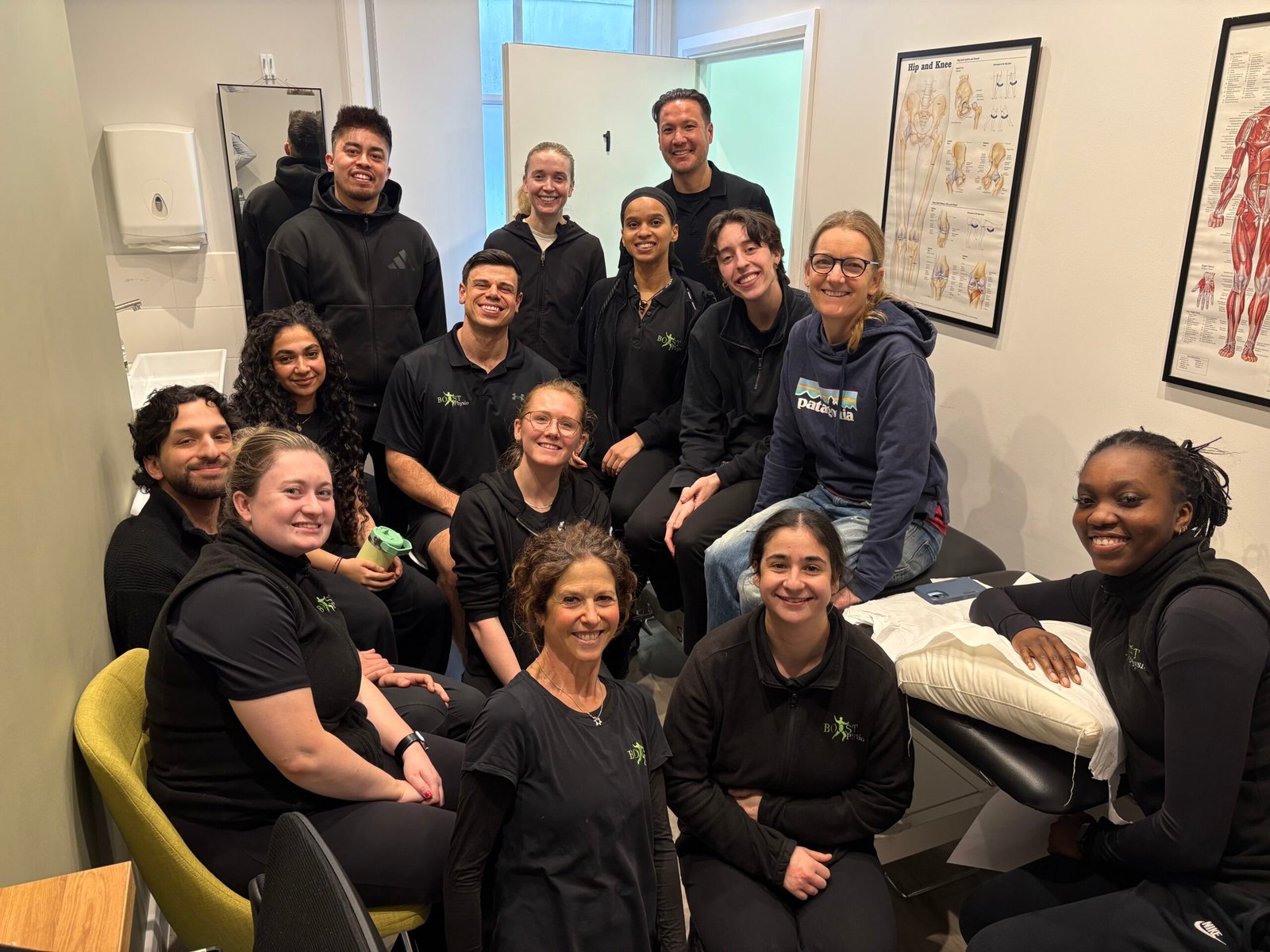
At BOOST PHYSIO, we believe your best recovery comes from having every tool available, not relying on just one. Our physiotherapists combine hands-on treatment with exercise rehabilitation built around you, then adjust it as you progress.
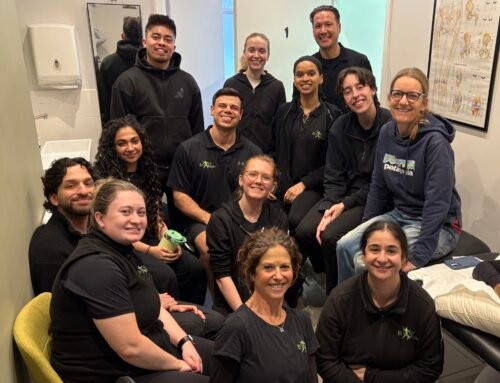
Something our patients don’t always realise is how much support sits behind each physio. Our team trains together twice a month and every physio has a dedicated mentor who reviews cases with them, so whichever clinic you visit you get the experience of the whole team.
- Same day appointments, seven days a week
- No GP referral needed to book
- Treatment recognised by Bupa, AXA Health, Vitality, WPA and Aviva
Find your nearest BOOST PHYSIO clinic: Borehamwood, Crouch End, East Finchley, Elstree, Hampstead, Hampstead Garden Suburb, Hendon, Kensington, Kentish Town, Mill Hill, Muswell Hill, Swiss Cottage Leisure Centre and West Hampstead. Same day appointments, 7 days a week, 8am to 9pm.
Hands-on care, built around you
Same day appointments, 7 days a week. No GP referral needed.
Related reading
 Slipped disc and sciatica
 Shockwave therapy
 Tennis elbow physio
 How stiff is your shoulder?
 Knee pain physio
 Achilles tendon physio
Your questions answered
Why didn’t my NHS physio do any hands-on treatment?
Usually a mix of capacity and approach. Many NHS services use phone, video and app based care to see more patients and there has been a strong shift towards exercise based treatment.
Does hands-on physio actually work?
It can help, particularly for easing pain and stiffness so you can move and exercise better. NICE recommends manual therapy for low back pain only as part of a package that includes exercise, which is how we use it.
Is exercise better than massage for pain?
Exercise is the foundation of most recovery. Massage and other hands-on techniques can ease symptoms in the short term and make exercise easier. The combination is usually better than either alone.
What hands-on treatments does BOOST PHYSIO offer?
Joint mobilisation, soft tissue techniques, acupuncture, taping and shockwave therapy at selected clinics, always combined with an exercise programme built around you.
Should a physio examine me physically?
In most cases a hands-on examination gives valuable information about joints, muscles and nerves that is hard to get remotely. If you’re unsure about your diagnosis, ask for an in person assessment.
Can I ask for hands-on treatment?
Yes. A good physio will explain whether it is likely to help you and how it fits with your exercise programme.
This article is general information and not a substitute for an individual assessment. Sources: NICE guideline NG59 Low back pain and sciatica in over 16s: assessment and management. Healthwatch England, NHS physiotherapy: what people are telling us (May 2026). Written by the BOOST PHYSIO team, reviewed by Steven Berkman, Chartered Physiotherapist, MCSP, HCPC registered.