
Shoulder hurting when you reach, lift or sleep?
Pain reaching for a high shelf, putting on a coat or lying on that side at night. Shoulder pain is one of the most common reasons people come to our East Finchley clinic, and most of it responds well to the right plan.
★★★★★ 5.0 on Google from 165 reviews of our East Finchley clinic
Quick answer: Most shoulder pain in adults comes from the rotator cuff tendons and the muscles around the shoulder blade, and usually improves with a progressive exercise programme over 6 to 12 weeks. A stiff, painful shoulder that will not move in any direction may be a frozen shoulder. Our East Finchley clinic at 200 High Road, N2 9AY can assess yours, often the same day.
The most common causes of shoulder pain
Rotator cuff related pain
Often called impingement or tendinopathy
A deep ache on the outside of the upper arm, worse lifting the arm out to the side or overhead and lying on it at night.
Frozen shoulder
Adhesive capsulitis
Gradual pain then marked stiffness in every direction, most common between 40 and 60 and in people with diabetes.
Rotator cuff tear
After a fall or with age
Weakness lifting the arm, sometimes after a fall. Many tears do well with rehab; some need a surgeon’s opinion.
Pain from the neck
Referred pain
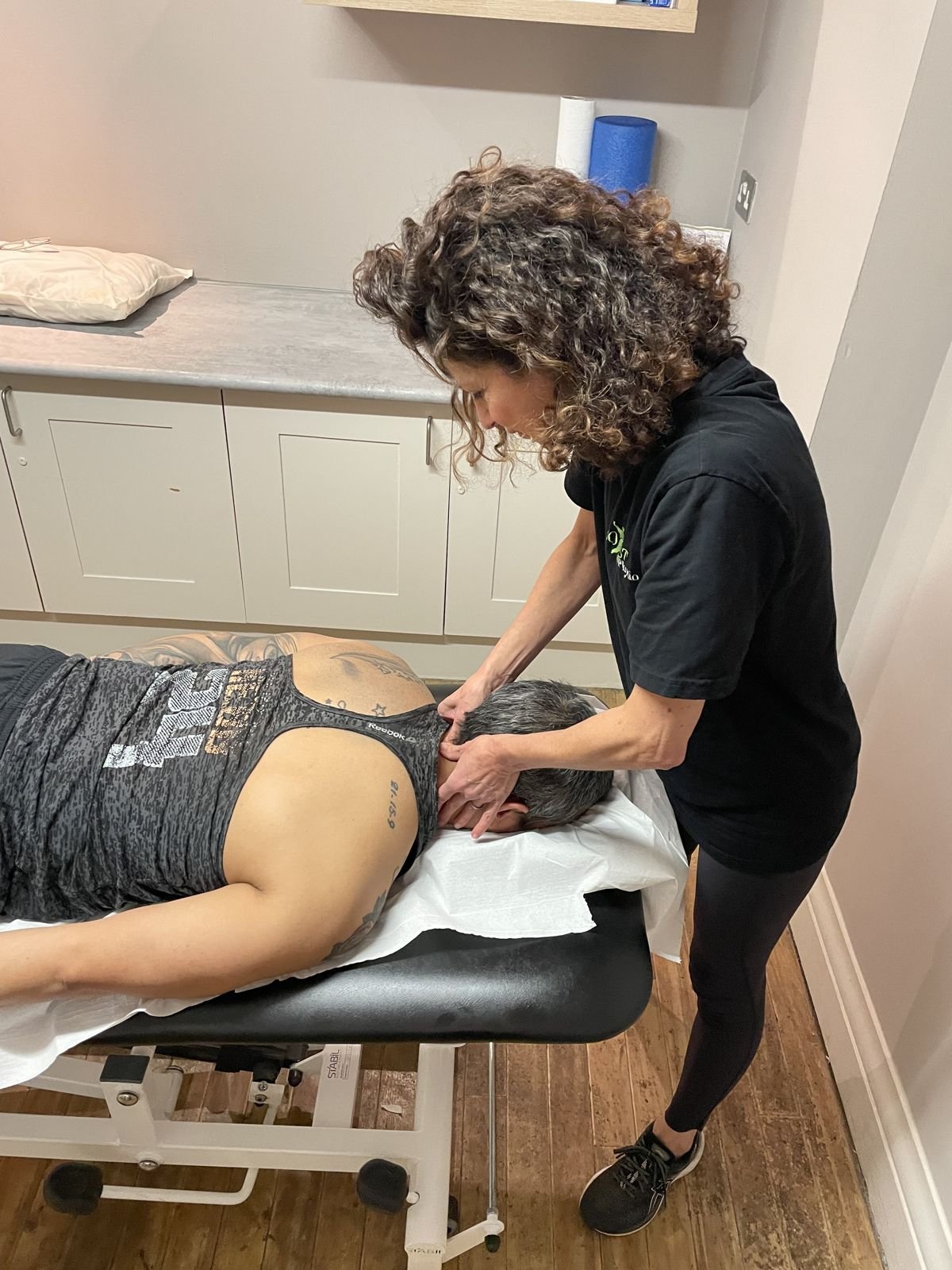
Pain around the shoulder blade or down the arm can come from the neck, so we always check it.
Shoulder pain often builds slowly. A new gym routine, a weekend of decorating, a lot of driving or simply getting older can all tip the tendons over the edge. The shoulder is a very mobile joint and relies on the rotator cuff and the muscles around the shoulder blade for control, so when these are weak or tired, pain tends to follow.
That is why our treatment focuses on restoring strength and control, not just easing the pain for a few days.

Shoulder pain might be coming from weakness around the shoulder blade
Quick self-checks (and what they mean)
- Pain lifting your arm out to the side between shoulder and head height, easing above that, often points to the rotator cuff
- Pain and stiffness in every direction, including turning the arm outwards with the elbow tucked in, can suggest frozen shoulder
- Pain that travels below the elbow, with pins and needles, may be coming from the neck
- Sudden weakness after a fall, where you cannot lift the arm, should be checked promptly
These are clues, not a diagnosis. At your appointment we test movement, strength and the neck, and explain what we find in plain English.
Book a shoulder assessment in East Finchley
No GP referral needed. Book online, call us or send a WhatsApp.
What helps rotator cuff pain
- Keep the shoulder moving within comfort; complete rest tends to make it stiffer and weaker
- A progressive strengthening programme for the rotator cuff and shoulder blade, usually 2 to 3 times a week
- Adjusting the activities that flare it for a few weeks, rather than stopping everything
- Hands-on treatment to ease pain and stiffness so you can do the exercise
- Sleeping with a pillow under the arm can ease night pain
In a large UK trial, decompression surgery offered little benefit over placebo surgery for many people with this kind of pain, which is why a well-designed exercise programme is the recommended first treatment.

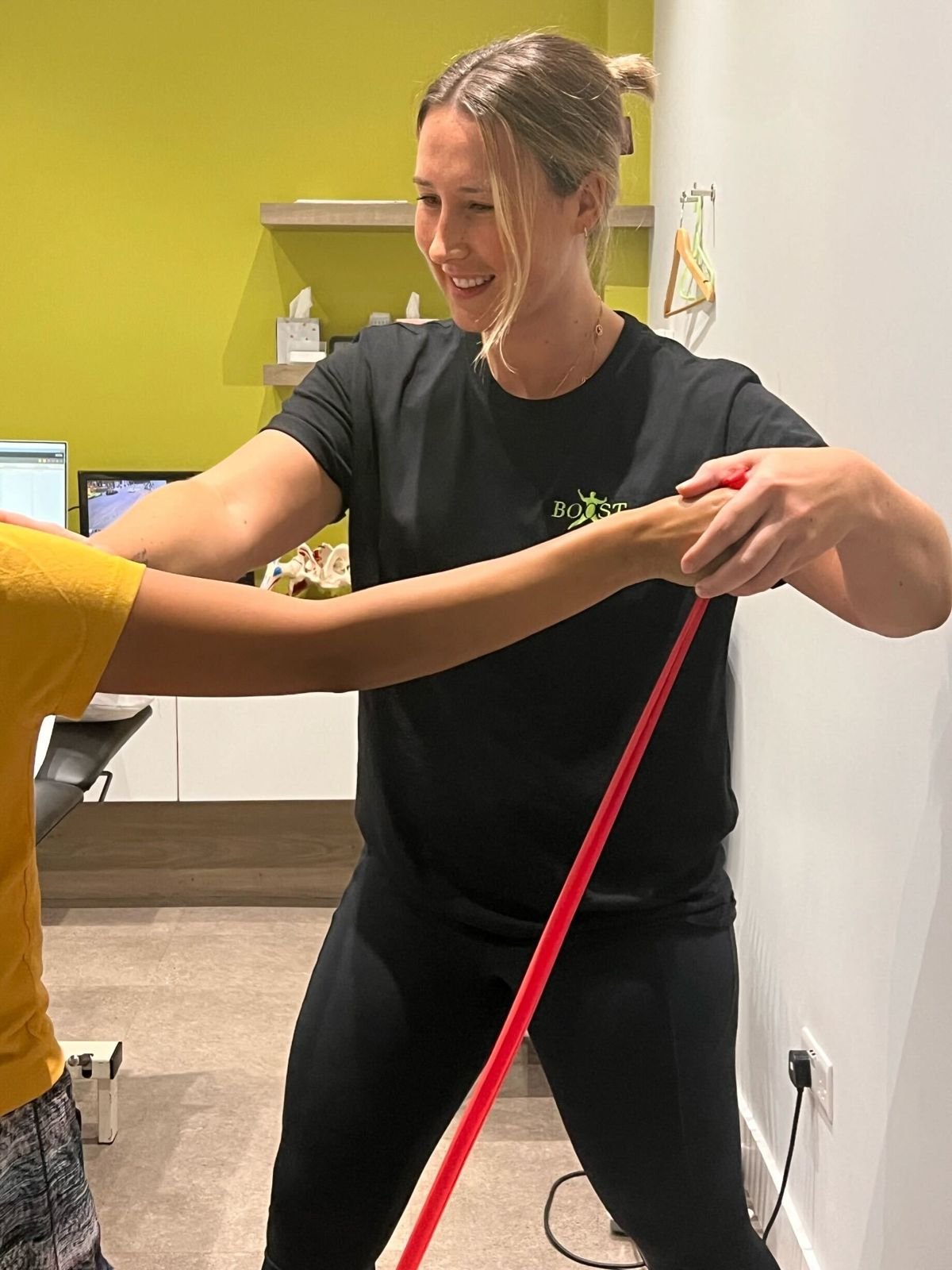
Resistance band rotator cuff exercises our physios use
6-12 weeks
is a typical time frame for a strengthening programme to make a clear difference
Lewis, Br J Sports Med 2016
No better
than placebo surgery: shoulder decompression surgery for subacromial pain in a large UK trial
Beard et al, Lancet 2018 (CSAW)
Up to 1 in 4
adults have shoulder pain at any one time in some population studies
Luime et al, Scand J Rheumatol 2004
Most shoulders get better with the right exercise, done consistently and progressed at the right speed. Our job is to get that balance right for you.
When to seek medical advice
- Shoulder pain with chest pain, breathlessness or sweating: call 999
- A hot, swollen, very painful shoulder with fever
- Shoulder pain after a fall with deformity or sudden inability to lift the arm
- Unexplained weight loss or a history of cancer with new constant pain
Meet your East Finchley physios
Tosin has a particular interest in neck and shoulder pain, and the whole East Finchley team treats shoulder problems every week.

Simran Parti
Senior Physiotherapist
Simran helps East Finchley patients recover from pain, injury and surgery, explaining clearly what is going on and building a plan around what you want to get back to.
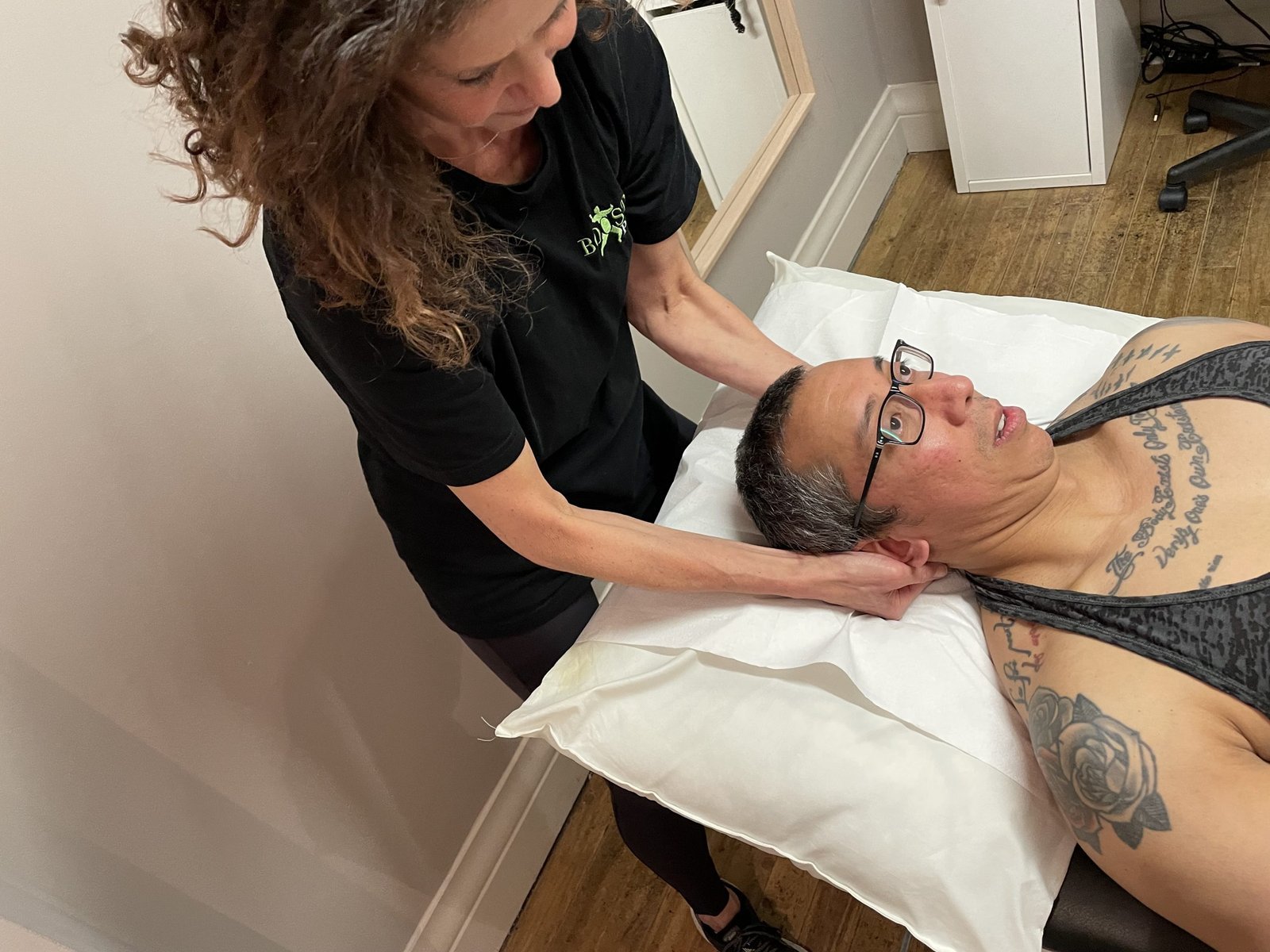
Katy Abrahams
Senior Physiotherapist
Katy works across East Finchley and Muswell Hill, treating sports injuries, spinal pain and pain in pregnancy with a mix of hands-on care and progressive exercise.

Tosin Eyitayo
Specialist Physiotherapist
Tosin treats neck, back and shoulder pain and running injuries in East Finchley, combining hands-on treatment with exercise you can keep doing at home.

Nimal Selvarajah
Senior Physiotherapist
Nimal focuses on injury recovery and prevention, looking closely at how you move so the problem is less likely to come back.
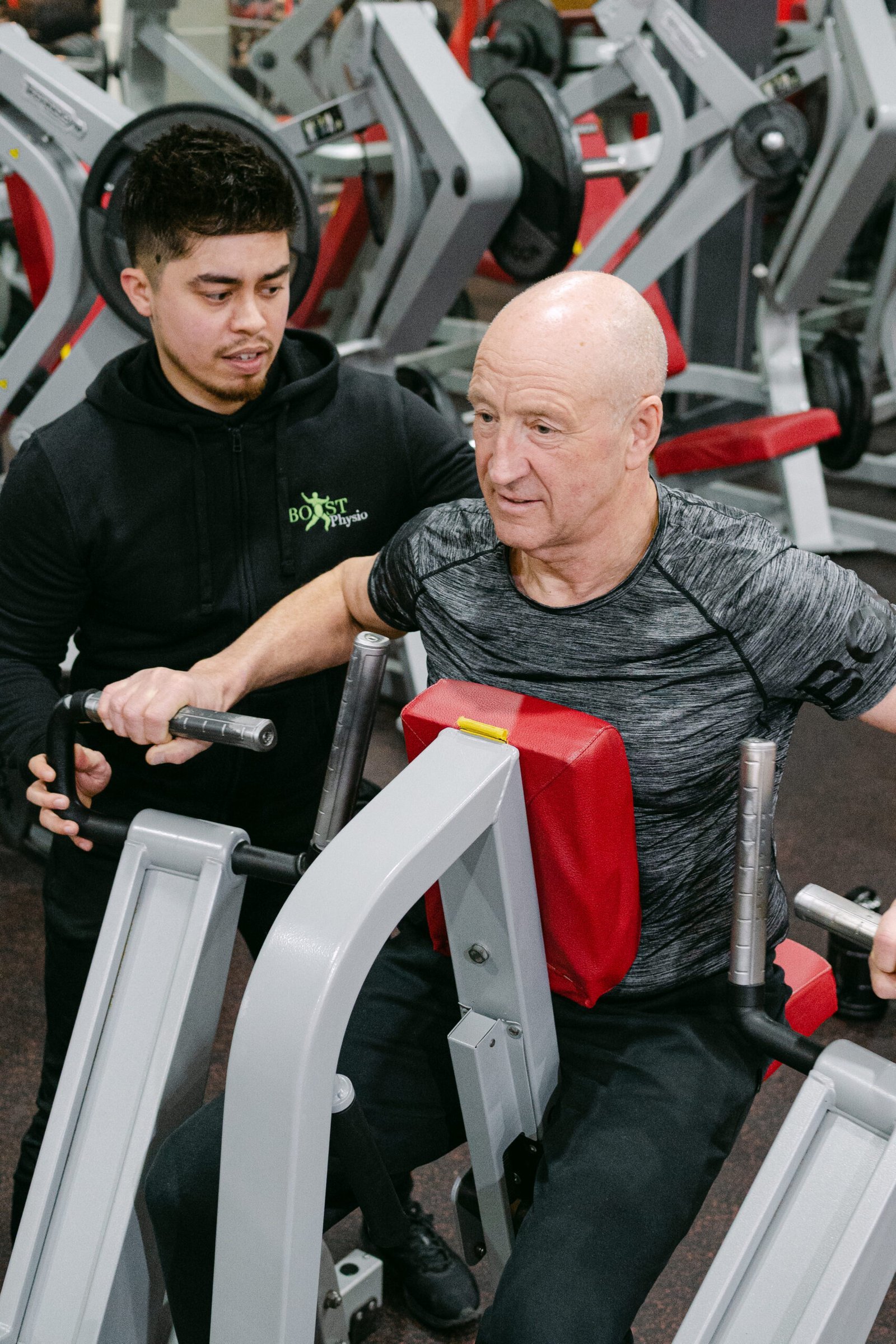
Dan Burgin
Sports Rehabilitation Therapist and Clinical Lead
Dan specialises in sports injuries and back pain, and in the strength work that gets you from pain-free to properly ready for sport.
What our East Finchley patients say
★★★★★
“Toisin is a fantastic physiotherapist and helped resolve a bad shoulder problem in a few months.”
★★★★★
“From day one, she was warm, professional, and clearly an expert in her field.”
★★★★★
“Katy really helped me with my pain by giving me specific exercises for my hip and shoulder.”
Watch: shoulder rehab from our physios
Short videos showing how we assess and rehab shoulders.

How physios examine what could be causing shoulder pain

Early to mid stage rotator cuff exercises

Katy on how she helps with pain and injury

One clinic, the experience of a whole team
Something our patients don’t always realise is how much support sits behind each physio. Our team trains together twice a month and every physio has a dedicated mentor who reviews cases with them, so when you see us in East Finchley you get the experience of the whole BOOST PHYSIO group.
- Same day appointments, seven days a week across our clinics
- No GP referral needed
- Recognised by Bupa, AXA Health, Vitality, WPA and Aviva
Prefer another clinic? Book at BOOST PHYSIO Muswell Hill, Hampstead Garden Suburb or Hendon, or read more about our East Finchley clinic.
Get your shoulder moving again
Book at our East Finchley clinic, close to Finchley Central, North Finchley and Fortis Green.
Related reading
 Shoulder pain physioFrozen shoulder or rotator cuff?Rehab after shoulder surgery
 Neck pain physioPhysio for Finchley Central and West FinchleyHow much does private physio cost?
Your questions answered
What is the most common cause of shoulder pain?
In adults, the most common cause is rotator cuff related shoulder pain, where the tendons that control the shoulder become irritated and less tolerant of load.
Will I need a scan for shoulder pain?
Most people do not. A scan is useful if we suspect a significant tear after an injury, or if you are not improving as expected with rehab.
How do I know if I have a frozen shoulder?
Frozen shoulder causes pain and stiffness in every direction, including when someone else moves your arm for you. It is most common between 40 and 60. We can assess it properly at your first visit.
How long does shoulder pain take to get better?
Many people notice a difference within a few weeks, but rotator cuff problems often need 6 to 12 weeks of consistent exercise. Frozen shoulder can take longer.
Do I need a GP referral?
No. You can book directly online, by phone or on WhatsApp. If you are claiming on health insurance, check whether your insurer needs a GP referral first.
Can I use my health insurance?
Yes. We are recognised by Bupa, AXA Health, Vitality, WPA and Aviva. Bring your authorisation code to your first appointment.

Written and clinically reviewed by Steven Berkman, BSc Physiotherapy (University of Cape Town), HCPC-registered chartered physiotherapist, MCSP, founder of BOOST PHYSIO in 2008, with Simran Parti, Katy Abrahams, Tosin Eyitayo, Nimal Selvarajah and Dan Burgin at BOOST PHYSIO East Finchley. Last reviewed 12 November 2026.
References
- Lewis J. Rotator cuff related shoulder pain: assessment, management and uncertainties. Man Ther 2016;23:57-68.
- Beard DJ et al. Arthroscopic subacromial decompression for subacromial shoulder pain (CSAW). Lancet 2018;391:329-338.
- NICE Clinical Knowledge Summaries. Shoulder pain. cks.nice.org.uk.
- Luime JJ et al. Prevalence and incidence of shoulder pain in the general population; a systematic review. Scand J Rheumatol 2004;33:73-81.
This article is general information, not a diagnosis. If you are unsure what is causing your symptoms, book an assessment or speak to your GP. If you have severe or rapidly worsening symptoms, call 111 or 999.