

Hip replacement rehab
How to choose the right physio for your hip replacement recovery
A new hip can transform your life, but how well you recover depends a lot on the rehab that follows. Here are the questions worth asking before you choose who will help you walk, climb stairs and get back to the things you love.

Quick answer: most people start outpatient physio around a week after a total hip replacement, following their surgeon’s guidance, then have sessions once or twice a week until they can manage stairs and walk without a stick. Many are getting back to hobbies such as walking, golf and cycling at around 6 to 12 weeks, with strength and confidence improving for months after that. Choose a clinic that treats hip replacements every week, works with orthopaedic surgeons and follows your surgeon’s precautions, has a gym, a team for cover and appointments close to home that fit your week.
Watch: back to cycling and golf after a hip replacement
One of our patients, 3 months after his total hip replacement, back to cycling 40 miles and his other hobbies.
Why your choice of physio matters
The operation gives you a new joint. Physio helps you use it well: walking without a limp, building the strength around the hip, getting up and down stairs and back into the car and feeling confident again.
In the early weeks you may not be able to drive, you may be anxious about doing too much or too little and you’ll have lots of questions. The right physio makes those weeks far easier and helps you avoid the stiffness, weakness and limp that can linger without good rehab.
When we typically start physio after a hip replacement, following your surgeon’s guidance, to check your walking, wound and exercises and spot any complications early.
BOOST PHYSIO approach, following your surgeon’s protocol
10 questions to ask before you choose your physio
Put these questions to any clinic you’re considering. A good hip replacement rehab service should be able to say yes to every one.
1. Do your physios treat hip replacement patients every week?
Experience
Physios who see hip replacement patients all the time know what normal progress looks like and spot problems early, such as a limp that isn’t improving, swelling or weakness around the hip.
2. Do you work closely with orthopaedic surgeons?
Surgeon links
Ask whether surgeons regularly refer their patients to the clinic. Physios who work with surgeons every week understand their approach, can speak to your surgeon’s team if something isn’t right and can help you get reviewed quickly.
3. Will you have my surgical notes and follow my surgeon’s protocol?
Protocol awareness
Precautions after hip replacement depend on the surgical approach and your surgeon’s preferences, for example how far you can bend or cross your legs. Bring your operation notes and protocol and your physio should follow them exactly.
4. How soon can you see me after surgery?
Rapid access
Starting physio around a week after surgery means your walking, wound and exercises are checked early. Look for a clinic that can usually see you within days and close to home while you can’t drive.
5. Do you have a gym for the later stages of rehab?
Gym-based rehab
Once the early weeks are over, rebuilding strength around the hip makes the biggest difference to your walking and stamina. A gym with weights and equipment, plus guidance for your own gym or pool, helps you keep improving.
6. Is there a team behind my physio?
Team expertise
If something unexpected happens, such as stiffness, more pain than expected or slow progress, can your physio ask an experienced colleague? Regular team training and case reviews mean you benefit from the whole team, not just one person.
7. What happens if my physio is ill or on holiday?
Uninterrupted rehab
Over months of rehab, your physio will have time off. Ask whether another physio can step in with your full notes and plan, so your recovery doesn’t stall.
8. Will I have to tell my whole story again at each session?
Shared records
Your history, operation details and progress should be recorded once and shared across the team, so every session starts where the last one finished, whoever you see.
9. Can I come before or after work, or at weekends?
Convenient times
Rehab only works if you can get to it. Early morning, evening and weekend appointments make it much easier to keep going alongside work, family or caring for others.
10. Is there a clinic near me? Does my insurer recognise you?
Location and insurance
A clinic close to home matters most in the early weeks, when you may not be able to drive. Check that your insurer recognises the clinic and how many sessions your policy covers.
Hip replacement recovery: what to expect
| First physio appointment | Usually around a week after surgery, following your surgeon’s guidance. |
|---|---|
| Early weeks | Walking with crutches or sticks, gentle exercises, swelling control and following any hip precautions. |
| Physio sessions | Often once or twice a week until you can manage stairs and walk without a stick, then spaced out as you progress. |
| Driving | Many people drive again around 6 weeks after surgery. Always check with your surgeon and your insurer first. |
| Back to hobbies | Often around 6 to 12 weeks, such as longer walks, cycling, swimming or golf, depending on your surgeon’s advice. |
| Full recovery | Strength, stamina and confidence often keep improving for up to a year. |
Your surgeon’s protocol comes first
Hip replacements are done through different surgical approaches and every surgeon has their own guidance, for example on bending, crossing your legs, kneeling or sleeping position. Some surgeons have few restrictions. Others ask for more caution in the early weeks.
Your physio should read your operation notes, follow your surgeon’s guidance exactly and keep them informed if anything isn’t going to plan. Clinics that work with surgeons every week know these protocols well and can get you seen quickly if needed.
A team, not just one physio
Recovery after hip replacement doesn’t always go in a straight line. A limp that won’t settle, pain in the groin or outer hip, a stiff lower back or a knee that starts to ache all need experience to sort out.
Every physio has a mentor who reviews their cases and the team trains together twice a month. Your notes and plan are shared, so if your physio is away another physio can carry on without you having to explain everything again.
A lunch and learn with consultant orthopaedic hip and knee surgeon Mr Tim Waters
The stages of good hip replacement rehab
Good rehab moves you on when you’re ready, rather than on fixed dates. A typical journey includes:
- Before surgery: exercises and advice to get you as strong and prepared as possible
- First weeks: walking with aids, gentle exercises, swelling control and hip precautions
- Walking well: reducing walking aids, improving your walking pattern and getting up and down stairs
- Strength: progressive strengthening of the hip, thigh and core, at home and in the gym
- Getting back to life: driving, work, longer walks and the hobbies you love
1
Safe at home
Moving safely, walking with aids and managing stairs and daily tasks.
2
Independent
Walking without a stick, driving and getting back to work and social life.
3
Back to hobbies
Golf, tennis, cycling, long walks, travel and playing with grandchildren.

Eases pain and stiffness
Hands-on treatment
Gentle hands-on treatment to ease pain and stiffness, so your exercises work better.

Builds strength
Gym-based rehab
Progressive strength training, from simple exercises at home to equipment in the gym when you’re ready.

Gets you back to life
Back to what you love
Practising the things that matter to you, from stairs and walking to golf, tennis or your grandchildren.
Fitting 3 to 12 months of rehab around your life
Most hip replacement rehab is fitted around work, family or caring for others and in the early weeks you may be relying on lifts or taxis. When appointments are hard to get to, sessions get missed and progress slows. Look for:
- Early starts: appointments from 7am at some clinics, so you can come before work
- After work: appointments until 9pm on weekdays
- Weekends: Saturday and Sunday appointments at a number of clinics
- Close to home: a choice of clinics, which matters most when you can’t drive yet
- Shared notes: every physio in the team can see your history, protocol and progress
- Cover when your physio is away: another experienced physio picks up where you left off
Why your rehab exercises need to get harder over time
Watch: advice from our physios
Short, practical videos from the BOOST PHYSIO team. Always check with your physio which exercises suit your stage of recovery and your surgeon’s protocol.
Exercises to improve walking endurance
Improving hip flexibility
Advanced hip strengthening
Progressive exercises for the lower limb
When to contact your surgeon or get urgent help
Contact your surgical team or seek urgent medical help if you have:
- a painful, swollen, hot or red calf, or sudden breathlessness or chest pain
- a fever, or a wound that is red, hot, weeping or smells
- severe pain or swelling that is getting worse rather than better
- a sudden change in the shape or length of your leg, or a clunk with severe pain and difficulty standing
Tell your physio and surgeon if your pain or limp is getting worse rather than better, or you feel unsteady or at risk of falling.
Hip replacement rehab near you
See a BOOST PHYSIO physiotherapist at our clinics in Hendon NW4, Hampstead NW3, Swiss Cottage, West Hampstead NW6, Kentish Town NW5, Hampstead Garden Suburb NW11, East Finchley N2, Muswell Hill N10, Crouch End N8, Mill Hill NW7, Kensington W8, Borehamwood WD6 and Elstree WD6.
Ask us all 10 questions
Call or WhatsApp us before you book and put every question on this page to us. We’ll be happy to answer. Your Best Recovery, Guaranteed.
Related reading
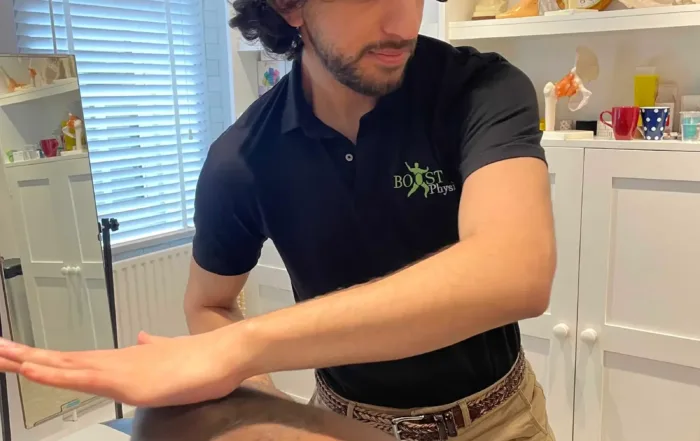 Physio after hip replacement: when to start and how often
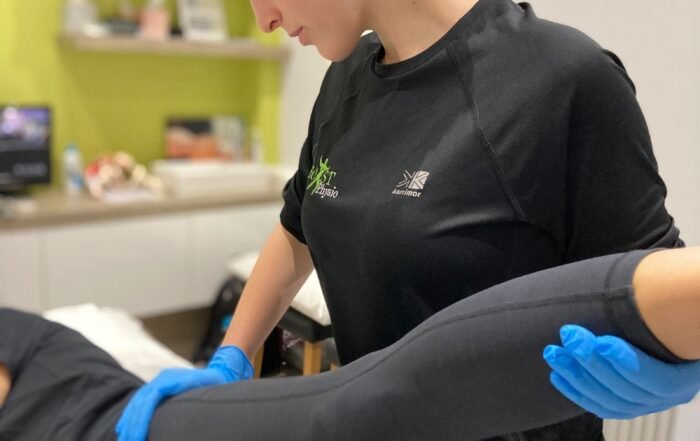 Hip pain and hip replacement rehab in Hendon
 Private or NHS physio: when to go private
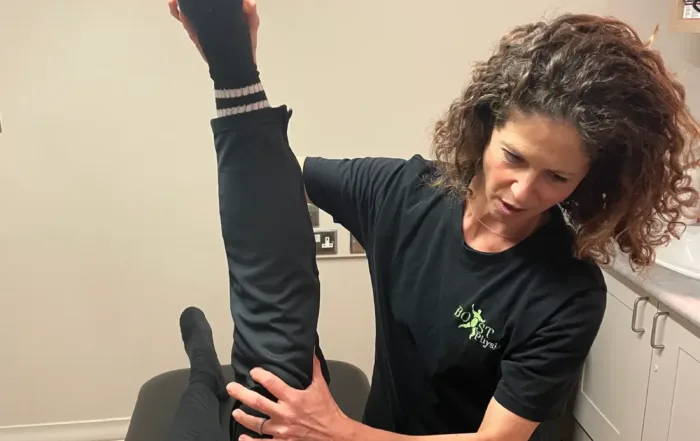 Long gaps between NHS physio appointments?
 Pain on the outside of your hip
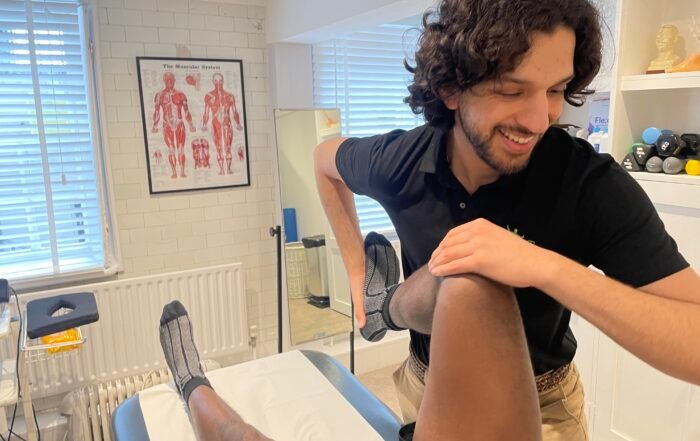 Knee pain physio
Written by Steven Berkman, Chartered Physiotherapist and founder of BOOST PHYSIO, with the BOOST PHYSIO team. This article is general guidance and is not a substitute for an individual physiotherapy or medical assessment. Always follow your surgeon’s advice.
Frequently asked questions about hip replacement rehab
When should I start physio after a hip replacement?
Usually around a week after surgery, following your surgeon’s guidance. Early sessions check your walking, wound and exercises and look out for complications such as a blood clot or wound infection.
How often will I need physio after a hip replacement?
Often once or twice a week until you can manage stairs and walk without a stick, then less often as you build strength and get back to your hobbies.
When can I drive after a hip replacement?
Many people drive again around 6 weeks after surgery, once they can sit comfortably, get in and out of the car and do an emergency stop. Check with your surgeon and your car insurer first.
When can I get back to golf, tennis or the gym?
Often around 6 to 12 weeks after surgery for lower impact activities, depending on your surgeon’s advice and how your strength and walking are progressing. Your physio will help you build up safely.
How do I choose the best physio clinic for my hip replacement rehab?
Look for physios who treat hip replacement patients every week, work closely with orthopaedic surgeons, follow your surgeon’s protocol, have a gym for the later stages, have a team behind them for second opinions and holiday cover and offer appointment times that fit your life.
Do you work with my surgeon?
We work with many orthopaedic surgeons across London and Hertfordshire who refer their patients to us. Whoever your surgeon is, we’ll follow their protocol and keep them updated on your progress if needed.
Will you have my surgical notes?
Bring your operation notes, discharge letter and any rehab protocol to your first appointment. If you don’t have them, we’ll help you get them from your surgeon’s team. They’re added to your record so every physio who sees you can read them.
Will the other physios know what has already been done?
Yes. Your notes, protocol, exercises and progress are kept on one shared record that every physio in the team can see, so whoever you see knows exactly what stage you’re at and what was done last time.
Will I have to tell my whole story again at each session?
No. Your history and operation details are recorded at your first appointment, so each session starts where the last one finished, even if you see a different physio or visit a different clinic.
Can I come after work?
Yes. Appointments run until 9pm on weekdays, with early starts from 7am at some clinics.
Are you open at weekends?
Yes. A number of our clinics offer Saturday and Sunday appointments. Book online to see what’s available near you, or call us and we’ll find the best time.
Does private health insurance cover my rehab?
Usually yes. Our treatment is recognised by Bupa, AXA Health, Vitality, Aviva and WPA. Check how many sessions your policy covers and whether you need an authorisation number. You can also self-pay.
Where can I find a physio near me?
BOOST PHYSIO has a network of clinics across North London and Hertfordshire, including Hendon, Hampstead, Swiss Cottage, West Hampstead, Kentish Town, Hampstead Garden Suburb, East Finchley, Muswell Hill, Crouch End, Mill Hill, Kensington, Borehamwood and Elstree. Book online, call 020 8201 7788 or WhatsApp us.
References
- National Institute for Health and Care Excellence. Joint replacement (primary): hip, knee and shoulder. NICE guideline NG157, 2020.
