

ACL reconstruction rehab
How to choose the right physio for your ACL reconstruction rehab
Your surgery takes an hour or two. Your rehab takes the best part of a year. Here are the questions worth asking before you choose who will guide you back to running, sport and full confidence in your knee.

Quick answer: rehab after ACL reconstruction usually lasts 9 to 12 months, with regular physio for at least the first 6 and often much longer. Choose a clinic whose physios treat ACL reconstructions every week, work closely with knee surgeons and follow your surgeon’s protocol, have a proper gym for strength and return-to-sport training, test your strength and hopping before you go back to sport and have a team behind your physio. Because you’ll be attending for months, early morning, evening and weekend appointments close to home, work or school matter just as much.
Why your choice of physio matters so much
A successful ACL reconstruction gives you a new ligament. It doesn’t give you back the strength, control and confidence you need to run, jump, twist and land safely. That comes from rehab. Rehab after ACL reconstruction is long, demanding and easy to get wrong.
The research is clear that rushing back is risky and that strength matters. The physio you choose will shape when you start, how hard you train, when you’re tested and when you’re told you’re ready. It’s worth choosing carefully.
In one study, the risk of another knee injury fell by 51% for each month return to sport was delayed, up to 9 months after ACL reconstruction. Stronger, more symmetrical quads before returning also lowered the risk.
Grindem et al, British Journal of Sports Medicine 2016 (Delaware-Oslo ACL cohort)
10 questions to ask before you choose your ACL physio
Put these questions to any clinic you’re considering. A good ACL rehab service should be able to say yes to every one.
1. Do your physios treat ACL reconstructions every week?
Experience
ACL rehab has a lot of moving parts: graft type, meniscus repairs, swelling, a stiff or locking knee, quad weakness that won’t switch on. A physio who sees ACL patients all the time spots problems early and knows what normal progress looks like.
2. Do you work closely with knee surgeons?
Surgeon links
Ask whether orthopaedic knee surgeons regularly refer to the clinic. Physios who work with surgeons every week can speak to your consultant if something isn’t right and get you reviewed quickly.
3. Will you follow my surgeon’s protocol?
Protocol awareness
Protocols differ between surgeons and change with the graft used or if your meniscus was repaired, for example how much weight you can take or how far you can bend. Your physio should know the common protocols and follow yours exactly.
4. How soon can you see me after surgery?
Rapid access
The first two weeks matter: controlling swelling, getting your knee straight and switching your quads back on. Look for a clinic that can usually see you within days of surgery. Ideally, start with prehab before it.
5. Do you have a proper gym for rehab?
Gym-based rehab
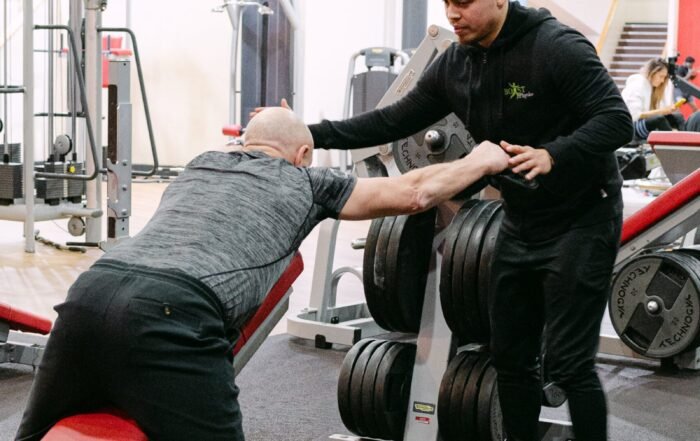
You can’t rebuild an ACL knee with resistance bands alone. Ask about leg press, squat racks, weights and space to run, jump and change direction, plus help to carry on in your own gym.
6. Do you test strength and hopping before return to sport?
Criteria, not dates
Return to sport should be based on tests of strength, hopping, movement quality and confidence, not just the number of weeks since surgery. Ask how the clinic decides you’re ready.
7. Is there a team behind my physio?
Team expertise
If a problem comes up, such as a stiff knee, a painful kneecap or slow progress, can your physio draw on colleagues for a second opinion? Regular team training and case reviews mean you get more than one person’s experience.
8. What happens if my physio is ill or on holiday?
Uninterrupted rehab
Over 9 to 12 months, your physio will have time off. Ask whether another physio who knows ACL rehab can step in with your notes, so your progress doesn’t stall for weeks.
9. Can I come before work or school, in the evening or at weekends?
Convenient times
Most people fit ACL rehab around work, school, university or family. Early morning, evening and weekend appointments make it far easier to keep going for the months it takes.
10. Is there a clinic near home, work or school? Does my insurer recognise you?
Location and insurance
Several clinics give you options if your routine changes. Check that your health insurer recognises the clinic and how many sessions your policy covers, because ACL rehab often needs more than a standard allowance.
ACL reconstruction rehab: what to expect
| How long rehab lasts | Usually 9 to 12 months. Clinical guidelines recommend continuing rehab for at least 9 months after surgery. |
|---|---|
| Before surgery | Prehab to settle swelling, get your knee fully straight and build quad strength. A stiff, weak knee going into surgery tends to be a stiff, weak knee afterwards. |
| First 2 weeks | Swelling control, getting the knee straight, switching the quads back on and walking well, following your surgeon’s protocol. |
| Physio sessions | Typically weekly to begin with, then spaced out as you progress, with a home or gym programme in between. Most of our patients need 15-20 physio sessions or more sessions over 6 to 9 months to return to sports training. |
| Running | In a straight line usually around 3 to 4 months after surgery, once you meet strength, swelling and movement criteria. |
| Return to pivoting sport | Usually 9 months or later and only once you pass strength, hop and confidence tests. |
Your surgeon’s protocol comes first
Every knee surgeon has their own rehab protocol. It also changes with the graft used and anything else repaired during the operation. A meniscus repair, for example, often means limits on weight bearing or bending for several weeks.
Your physio should ask for your operation notes and protocol, follow them exactly and keep your surgeon informed if anything isn’t going to plan. Clinics that work with surgeons every week know these protocols well and can get you reviewed quickly if needed.
A team, not just one physio
ACL rehab rarely goes perfectly in a straight line. A knee that won’t straighten, a sore kneecap, a quad that won’t switch on or a setback at the running stage all need experience to solve.
With a team behind your physio, colleagues can review your progress, share what has worked for other patients and cover your appointments when your physio is away, so your rehab never stalls.
The first two weeks after ACL reconstruction: what matters most
The stages of good ACL rehab
Good ACL rehab moves you through clear stages, with tests to pass before each step up, rather than fixed dates. A typical journey includes:
- Prehab: a calm, straight, strong knee going into surgery
- Early recovery: swelling down, full straightening, quads switched on and normal walking
- Strength building: progressive gym work for quads, hamstrings, hips and calves
- Running and jumping: a graded return to running, hopping and landing
- Sport-specific training: sprinting, cutting, twisting and the movements your sport needs
- Return to sport testing: strength and hop tests compared with your other leg, plus movement quality and confidence
1
Return to participation
Back to modified training, such as non-contact drills, while you keep building strength and confidence.
2
Return to sport
Back to full training and matches once you pass return-to-sport testing.
3
Return to performance
Playing at or above your level before the injury. This is the real finish line.
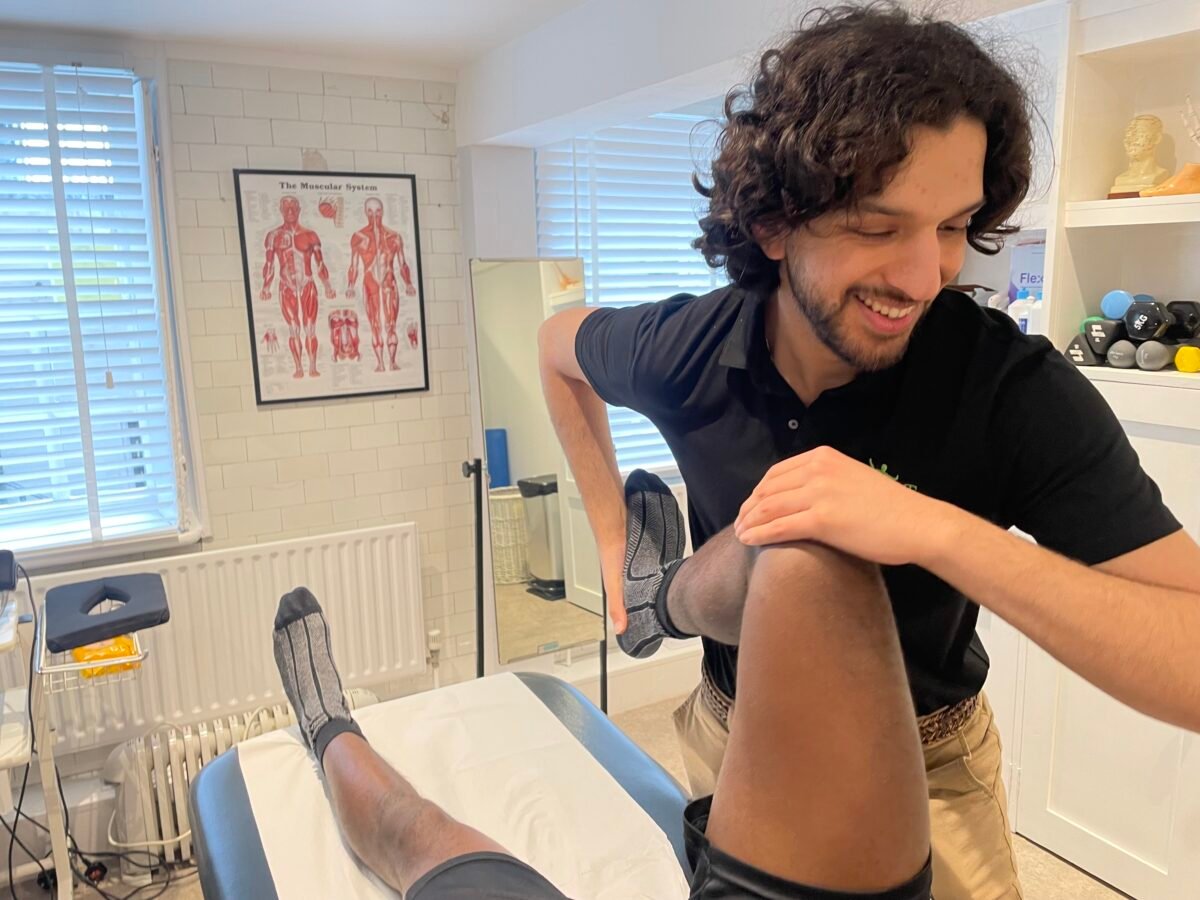
Tracks your progress
Regular assessment
Swelling, range of movement, strength and how your knee is coping, checked at every stage so problems are caught early.

Builds strength
Gym-based rehab
Progressive strength and power training, from leg press and split squats to jumping, landing and sprinting.

Prepares you for sport
Return-to-sport training
Sport-specific drills and testing so you go back with a knee that is ready, not just a date on the calendar.
Professional footballers who returned to sport without passing a set of six discharge tests had a four times greater risk of rupturing their new ACL graft than those who passed them all.
Kyritsis et al, British Journal of Sports Medicine 2016
Fitting 9 to 12 months of rehab around your life
ACL rehab is a marathon, not a sprint. Most people are juggling work, school, university or family at the same time. When appointments are hard to get to, sessions get missed and progress slows. Look for:
- Early starts: appointments from 7am at some clinics, so you can come before work or school
- Evenings: appointments until 9pm on weekdays
- Weekends: Saturday and Sunday appointments at a number of clinics
- Several locations: a clinic near home and another near work or school, with your notes shared between them
- Clinics inside gyms: so your rehab can move onto the gym floor when you’re ready
- Cover when your physio is away: another physio who knows ACL rehab can pick up where you left off
Rebecca, one of our physios, demonstrates ACL rehab exercises
Watch: ACL and knee rehab advice from our physios
Short, practical videos from the BOOST PHYSIO team. Always check with your physio which exercises suit your stage of rehab and your surgeon’s protocol.
Reducing knee swelling after surgery
Gym-based exercises after knee surgery
Landing stability to prevent re-injury
Preparing to return to sport
When to contact your surgeon or get urgent help
Contact your surgical team or seek urgent medical help if you have:
- a painful, swollen, hot or red calf, or sudden breathlessness or chest pain
- a fever, or a wound that is red, hot, weeping or smells
- severe pain or swelling that is getting worse rather than better
- numbness, pins and needles or a cold, pale foot
Tell your physio and surgeon if your knee gives way, suddenly swells after a twist, locks or you can’t get it fully straight.
ACL rehab physio near you
See a BOOST PHYSIO physiotherapist for ACL rehab at our clinics in Hendon NW4, Hampstead NW3, Swiss Cottage, West Hampstead NW6, Kentish Town NW5, Hampstead Garden Suburb NW11, East Finchley N2, Muswell Hill N10, Crouch End N8, Mill Hill NW7, Kensington W8, Borehamwood WD6 and Elstree WD6.
Ask us all 10 questions
Call or WhatsApp us before you book and put every question on this page to us. We’ll be happy to answer. Your Best Recovery, Guaranteed.
Related reading
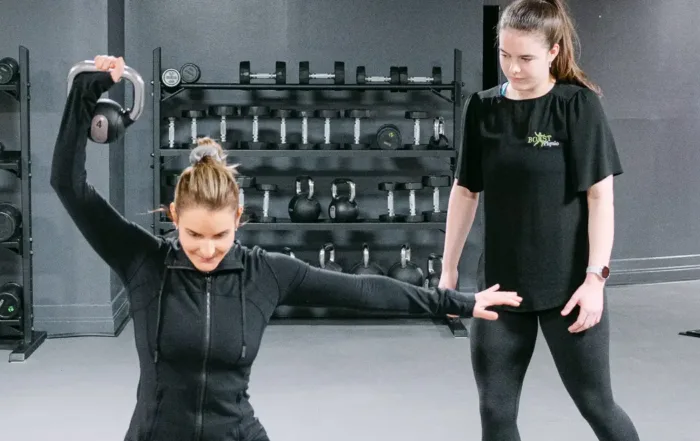 ACL injury: surgery, prehab and rehab questions answered
 Weekend sport knee injury: scan, surgery or rehab?
 Knee pain physio
 Back to the gym, pool and court after injury
 What are plyometrics and why they help recovery
 Why feeling better isn’t the same as fully recovered
Written by Steven Berkman, Chartered Physiotherapist and founder of BOOST PHYSIO, with the BOOST PHYSIO team. This article is general guidance and is not a substitute for an individual physiotherapy or medical assessment. Always follow your surgeon’s advice.
Frequently asked questions about ACL reconstruction rehab
How long does physio take after ACL reconstruction?
Usually 9 to 12 months before a full return to pivoting sports, with regular physio for at least the first 6 months. Sessions are often weekly at first, then spaced out as you take on more of your programme in the gym. Many people need 15 to 25 sessions over 6 to 9 months.
When should I start physio after ACL surgery?
Ideally within the first week or two after surgery, following your surgeon’s protocol. Prehab before surgery helps too, if you have time. Early physio focuses on reducing swelling, getting your knee fully straight, switching your quads back on and walking well.
Is prehab worth doing before ACL surgery?
Yes, if you have time before your operation. Going into surgery with a calm, fully straight knee and good quad strength makes the early weeks after surgery easier and helps you recover faster.
Will my physio follow my surgeon’s protocol?
They should. Protocols vary between surgeons and change with the graft used and anything else repaired, such as a meniscus. Bring your operation notes and protocol to your first appointment so your physio can follow them exactly and keep your surgeon updated if needed.
What should I look for in an ACL rehab physio?
Experience of treating ACL reconstructions every week, close links with knee surgeons, a gym for strength and return-to-sport training, objective strength and hop testing, a team behind your physio and appointment times that fit around work or school for the months your rehab takes.
What happens if my physio is off sick or on holiday?
At a clinic with a larger team, another physio experienced in ACL rehab can see you with full access to your notes and plan, so your rehab carries on without a gap.
Will the next physio know what has already been done?
Yes. Your notes, surgeon’s protocol and exercise programme are kept on one shared record that every physio in the team can see, so whoever you see knows exactly what stage you’re at and what was done last time.
Will I have to tell my whole story again at each session?
No. Your history, operation details and progress are recorded from your first appointment, so each session starts where the last one finished, even if you see a different physio or go to a different clinic.
Can I have physio before work or school, in the evening or at weekends?
Yes. Appointments run from 8am to 9pm on weekdays, with 7am starts at some clinics and weekend appointments at a number of clinics, so you can fit rehab around work, school or university.
When can I start running after ACL reconstruction?
Often around 3 to 4 months after surgery, once your knee has no significant swelling, has full movement and you have enough strength and control. Your physio will test this rather than going by the date alone.
When can I go back to football, rugby, netball or skiing?
Usually 9 months or later after surgery and only once you pass strength, hop, movement and confidence tests. Research shows that returning before 9 months, or without good quad strength, increases the risk of injuring the knee again.
Does private health insurance cover ACL rehab?
Usually yes. Our treatment is recognised by Bupa, AXA Health, Vitality, Aviva and WPA. Check how many sessions your policy covers and whether you need an authorisation number, because ACL rehab often needs more sessions than a standard allowance. You can also self-pay.
Where can I get ACL rehab near me?
BOOST PHYSIO has a network of clinics across North London and Hertfordshire, including Hendon, Hampstead, Swiss Cottage, West Hampstead, Kentish Town, Hampstead Garden Suburb, East Finchley, Muswell Hill, Crouch End, Mill Hill, Kensington, Borehamwood and Elstree. Book online, call 020 8201 7788 or WhatsApp us.
References
- Grindem H, Snyder-Mackler L, Moksnes H et al. Simple decision rules can reduce reinjury risk by 84% after ACL reconstruction: the Delaware-Oslo ACL cohort study. British Journal of Sports Medicine 2016;50:804-808.
- Kyritsis P, Bahr R, Landreau P et al. Likelihood of ACL graft rupture: not meeting six clinical discharge criteria before return to sport is associated with a four times greater risk of rupture. British Journal of Sports Medicine 2016;50:946-951.
- Ardern CL, Taylor NF, Feller JA, Webster KE. Fifty-five per cent return to competitive sport following anterior cruciate ligament reconstruction surgery: an updated systematic review and meta-analysis. British Journal of Sports Medicine 2014;48:1543-1552.
- van Melick N, van Cingel RE, Brooijmans F et al. Evidence-based clinical practice update: practice guidelines for anterior cruciate ligament rehabilitation based on a systematic review and multidisciplinary consensus. British Journal of Sports Medicine 2016;50:1506-1515.
- Ardern CL, Glasgow P, Schneiders A et al. 2016 Consensus statement on return to sport from the First World Congress in Sports Physical Therapy, Bern. British Journal of Sports Medicine 2016;50:853-864.
