

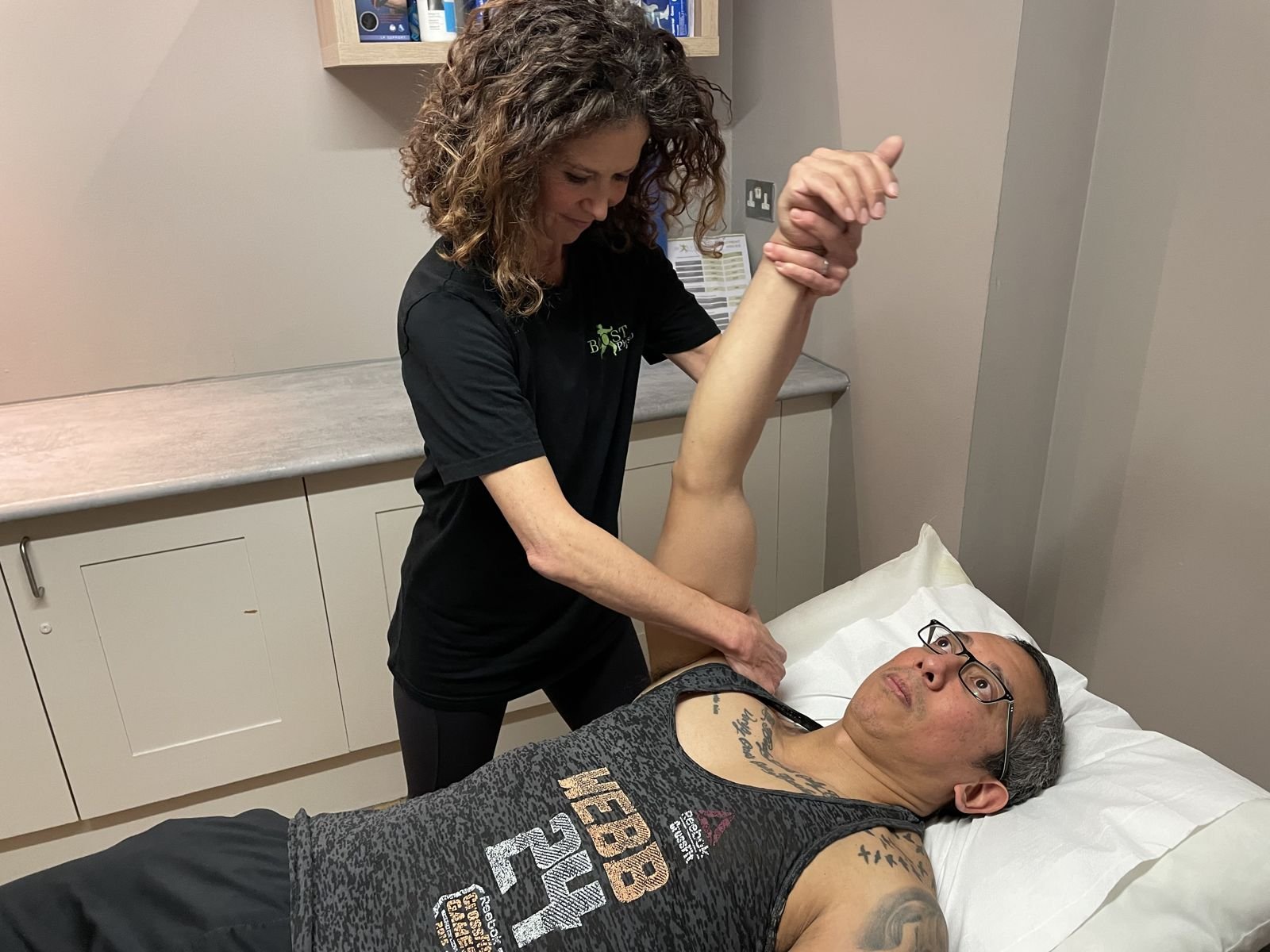
Shoulder pain physio
Lift, reach and sleep without shoulder pain again
Frozen shoulder, rotator cuff pain or a shoulder that just won’t settle? Get a clear diagnosis and a plan that works, from physios who treat shoulders every day.
★★★★★ Over 1,000 five-star Google reviews · 38,000+ people helped
Quick answer: most shoulder pain comes from the rotator cuff tendons, a frozen shoulder or the joint at the top of the shoulder. The large majority gets better without surgery. The best results come from an accurate diagnosis, hands-on treatment to ease pain and restore movement, then progressive strengthening so the shoulder copes with everything you ask of it. Many people feel a real difference within a few sessions, although a frozen shoulder takes longer.
In this guide · 5 min read
01 · We understand
When your shoulder hurts, everything is harder
Shoulder pain has a way of creeping into every part of your day. Reaching for a shelf, putting on a coat, doing up a bra, lifting your child or turning over in bed at 3am. It’s exhausting and it’s worrying, especially when it doesn’t settle on its own.
You’re far from alone. At any one time somewhere between 7% and 26% of adults have shoulder pain, which is why it’s one of the problems we help people with most often across our clinics.
The good news is that shoulders respond really well to the right treatment. Our job is to find out exactly what’s going on, calm the pain down and then rebuild strength so it doesn’t keep coming back.
02 · What could it be?
The most common causes of shoulder pain
Shoulder pain has lots of possible causes and they need different treatment. That’s why a proper assessment matters more than any exercise sheet from the internet.
Rotator cuff pain
Tendinopathy, impingement, bursitis
The most common cause. Pain on the outside of the upper arm, worse lifting your arm out to the side or overhead and often at night.
Frozen shoulder
Adhesive capsulitis
The joint capsule tightens and the shoulder gets very stiff and painful. Most common between 40 and 60 and in people with diabetes or thyroid problems.
Rotator cuff tear
After a fall or wear over time
Weakness lifting the arm can be a tear. Many tears do well with rehab, others need a surgeon’s opinion. We’ll guide you either way.
Shoulder instability
Dislocation, subluxation, hypermobility
A shoulder that feels loose or slips, often after a sports injury. Targeted strength and control work is the foundation of recovery.
Arthritis and AC joint pain
Wear in the joint
Stiffness and aching in older shoulders or pain at the top of the shoulder in gym-goers and contact sport players.
Pain coming from your neck
Referred pain
Sometimes the shoulder is just where you feel it. We always check your neck so we treat the right thing.
Up to 1 in 4 adults has shoulder pain at any one time. And in the CSAW trial published in The Lancet, keyhole decompression surgery for this kind of shoulder pain did no better than a placebo operation. It’s why we start with expert rehab rather than rushing to the operating theatre.
Luime et al, Scandinavian Journal of Rheumatology 2004; Beard et al, The Lancet 2018
03 · How we help
How our physios treat shoulder pain
Every shoulder plan is built around you: your job, your sport, your goals and how irritable the shoulder is right now. Here’s what that usually includes.
- A thorough assessment of your shoulder, neck and upper back, so you leave knowing what’s wrong and why
- Hands-on treatment such as joint mobilisation and soft tissue release to ease pain and get the shoulder moving
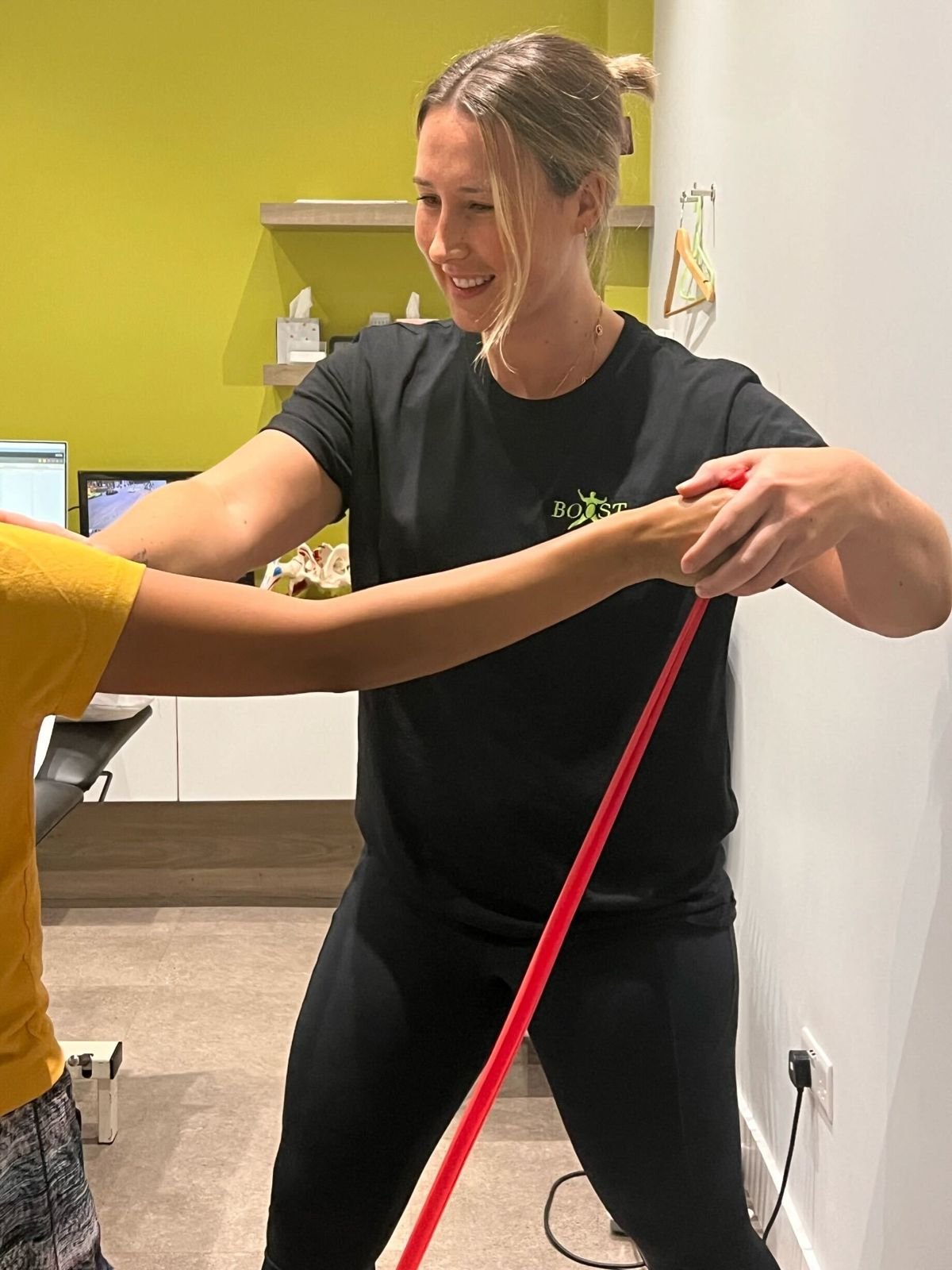
- Progressive strengthening for the rotator cuff and shoulder blade muscles, from gentle starts to the gym
- Pain relief options such as acupuncture, taping and shockwave therapy for stubborn tendon pain at some clinics
- Advice that fits your life on sleeping, desk set-up, lifting and training while you recover
- Fast referral to a shoulder surgeon or for a scan when it’s genuinely needed
★★★★★
“I’m seeing Jason who has worked miracles on my rotator cuff tendonitis. He uses lots of manual techniques including acupuncture (which I never believed in before but now I do!) and I feel a million times better.”
Lara B, Swiss Cottage, Google review
★★★★★
“I’ve seen quite a few physiotherapists over the last 20 years after a broken fibula, ACL surgery, and now a rotator cuff tear, and I can honestly say Michael is the best I’ve ever had.”
Manal S, Borehamwood, Google review

Jason Hui
Senior Physiotherapist, Swiss Cottage NW3
Jason has worked in hospitals and private practice in Hong Kong and London. He combines hands-on joint, soft tissue and nerve mobilisation with tailored exercise, acupuncture and shockwave therapy, which makes him a great fit for stubborn rotator cuff pain.
Most shoulders I see aren’t damaged beyond repair. They’ve lost strength and confidence. Once we calm the pain and rebuild that strength step by step, people are often amazed how much they can do again.
Jason Hui
04 · Frozen shoulder
Frozen shoulder: what to expect
A frozen shoulder can be one of the most painful and frustrating problems we see. It often starts with a deep ache and night pain, then the shoulder gradually stiffens until even simple movements feel impossible.
Left alone it can take one to three years to settle. With the right care most people get relief sooner and keep more movement along the way. In the UK FROST trial, structured physiotherapy, a steroid injection and surgery all improved pain and function a great deal, so for many people rehab, sometimes alongside an injection, is a sensible first step.
| Freezing stage | Pain is the main problem. We focus on easing pain and night pain, keeping what movement you have and protecting your sleep. |
|---|---|
| Frozen stage | Less pain but very stiff. Hands-on treatment and stretching help you win back movement bit by bit. |
| Thawing stage | Movement returns. Strengthening gets you back to lifting, reaching and sport. |
| Could an injection help? | Sometimes, especially when pain is high. We’ll talk it through honestly and refer you to a trusted consultant if it’s right for you. |

Exercises our physios use for frozen shoulder

Shoulder exercises for over 50s from our Swiss Cottage physio

How we rehab shoulder injuries, step by step

Over 60? Try this simple shoulder test
05 · Your recovery
What your recovery looks like
Understand it
Your first session gives you a clear diagnosis, a plan and treatment that usually starts the same day.
Settle it
Hands-on care, pain relief and the right exercises calm the shoulder and protect your sleep.
Strengthen it
We build strength and control so you can lift, reach, train and play with confidence again.
How long does it take? Simple strains often settle in a few weeks. Rotator cuff tendon pain usually needs 6 to 12 weeks of steady strengthening. A frozen shoulder takes longer. Across all our patients, people reach their goals in around 5 sessions on average, with plenty of work done at home in between.
When to get your shoulder checked urgently
Call 999 or go to A&E if shoulder or arm pain comes with chest pain, breathlessness or sweating, if you can’t move your arm after a fall or the shoulder looks deformed.
See a doctor promptly if your shoulder is hot, red and swollen with a fever, or if you have unexplained weight loss or a history of cancer.
Book an assessment if pain is stopping you sleeping, you’ve lost strength lifting your arm or it isn’t improving after two weeks.
Why BOOST PHYSIO
Every tool for your best recovery
We believe your best recovery comes from having every tool available, not relying on just one. So you’ll get hands-on treatment to ease pain and get you moving, exercise rehab that’s built around your life and a clear plan that changes as you improve.
Here’s something our patients don’t always realise. Behind every BOOST physio is the whole team. We train together twice a month and every physio has a dedicated mentor who reviews cases with them. If your problem is unusual or stubborn, it gets talked through by people who have seen it many times before.
- Same day appointments, 8am to 9pm, seven days a week at most clinics
- No GP referral needed
- On average our patients reach their goals in around 5 sessions
- Close links with leading orthopaedic surgeons and sports doctors if you need a scan or an opinion
- Recognised by Bupa, AXA Health, Vitality, Aviva and WPA, or simply self-pay
06 · Near you
Shoulder physio near you
See a BOOST PHYSIO shoulder physio at any of our clinics across North London and Hertfordshire. Shockwave therapy for stubborn tendon pain is available at Hendon, Hampstead, Swiss Cottage and Borehamwood.
Ready to get your shoulder back?
See an experienced physio today and leave with a clear plan. Your Best Recovery, Guaranteed.
Related reading
Keep reading
Your questions
Your questions answered
Can a physio help shoulder pain?
Yes. Physiotherapy is the first choice treatment for most shoulder pain, including rotator cuff problems, impingement and frozen shoulder. It combines hands-on treatment to ease pain with exercise to rebuild strength and movement. Most people improve without needing surgery.
How do I know if it is a frozen shoulder or a rotator cuff problem?
With rotator cuff pain you can usually still move the arm fully if someone lifts it for you, it just hurts. With a frozen shoulder the joint itself is stiff, so the arm won’t go further even with help, especially turning it outwards. A physio can tell the difference in your first session.
How many physio sessions will I need for shoulder pain?
It depends on the cause and how long you’ve had it. Many people need 4 to 6 sessions spread over several weeks, with exercises at home in between. Across all our patients the average is around 5 sessions. Frozen shoulder usually needs support over a longer period.
How long does shoulder pain take to heal?
Mild strains often settle in a few weeks. Rotator cuff tendon pain usually needs 6 to 12 weeks of progressive strengthening. A frozen shoulder can take one to three years to fully settle on its own, although treatment can ease pain and restore movement sooner.
Should I rest my painful shoulder?
Short-term relative rest from the things that really aggravate it helps, but complete rest usually makes shoulders weaker and stiffer. Gentle movement and the right strengthening are what get it better.
Why is my shoulder pain worse at night?
Lying on the shoulder squashes the painful tendons and inflamed tissue and there are fewer distractions at night. Sleeping with a pillow hugged in front of you or under the painful arm often helps. Night pain usually eases as treatment takes effect.
Do I need a scan for my shoulder?
Most people don’t. A careful assessment gives us the diagnosis in the majority of cases. If you’ve had a significant injury, have lost strength or aren’t improving as expected, we can arrange an ultrasound or MRI or a consultant opinion quickly.
Will I need shoulder surgery?
Most shoulder pain gets better without surgery. Surgery is sometimes needed for large tears, repeated dislocations or severe arthritis. If that’s the case we’ll refer you to a trusted shoulder surgeon and help you prepare and recover.
Do you offer shockwave therapy for shoulder tendon pain?
Yes, at our Hendon, Hampstead, Swiss Cottage and Borehamwood clinics. We use it alongside exercise for stubborn tendon pain, including calcific tendinopathy, rather than as a stand-alone cure.
Do I need a GP referral to see a physio for my shoulder?
No. You can book directly online or by phone. If you’re using health insurance, check with your insurer and bring your authorisation number.
Can I use my health insurance?
Yes. Our physios are recognised by Bupa, AXA Health, Vitality, Aviva and WPA. You can also self-pay with discounted packages.
Where can I see a shoulder physio near me?
We have clinics in Hendon, Hampstead, Swiss Cottage, West Hampstead, Kentish Town, Hampstead Garden Suburb, East Finchley, Muswell Hill, Crouch End, Mill Hill, Kensington, Borehamwood and Elstree, with same day appointments at most clinics.
Written by Steven Berkman, Chartered Physiotherapist and founder of BOOST PHYSIO, with the BOOST PHYSIO clinical team. Reviewed October 2026. This guide is general information and not a substitute for an individual assessment by a physiotherapist or doctor.
References
- Luime JJ, Koes BW, Hendriksen IJ et al. Prevalence and incidence of shoulder pain in the general population: a systematic review. Scandinavian Journal of Rheumatology 2004;33:73-81.
- Beard DJ, Rees JL, Cook JA et al. Arthroscopic subacromial decompression for subacromial shoulder pain (CSAW): a multicentre, pragmatic, parallel group, placebo-controlled, three-group, randomised surgical trial. The Lancet 2018;391:329-338.
- Rangan A, Brealey SD, Keding A et al. Management of adults with primary frozen shoulder in secondary care (UK FROST): a multicentre, pragmatic, three-arm, superiority randomised clinical trial. The Lancet 2020;396:977-989.
