

Ankle surgery rehab
How to choose the right physio after ankle surgery
Whether your ankle has been fixed after a fracture or replaced, the weeks in a cast or boot are only the start. Here are the questions worth asking before you choose who will help you walk normally, balance and get back to the things you love.

Quick answer: after ankle fracture surgery or an ankle replacement, most people spend several weeks in a cast or boot, with weight bearing increased as their surgeon allows. Physio then restores ankle movement, calf strength, balance and a normal walking pattern. Recovery often continues for 6 to 12 months. Choose a clinic that treats ankle surgery every week, works with foot and ankle surgeons and follows their protocol, has a gym for strength and balance work, a team for cover and appointments that fit around your life.
Watch: real recoveries after ankle surgery
Two of our patients, filmed during their rehab with us: one after surgery for a complex ankle fracture and one after an ankle replacement.
Why your choice of physio matters
After weeks in a cast or boot, the ankle is usually stiff, the calf has wasted and balance is poor. Many people are also anxious about putting weight through the ankle again, especially after a fall or a complicated fracture.
Good rehab tackles all of this in the right order, at the pace your surgeon allows. Without it, a stiff ankle, a limp and poor balance can linger for months.
How long recovery of strength, balance and confidence often continues after ankle fracture surgery or ankle replacement.
General guidance; your surgeon will advise on your own timeline
Ankle operations we help people recover from
Each has its own protocol and timeline.
Ankle fracture fixation
Plates and screws
Weeks in a cast or boot, then rehab to restore movement, strength, balance and walking.
Ankle replacement
For ankle arthritis
A period of protection, then gradual rehab to regain movement and confidence in walking.
Other ankle surgery
Including ligament repair and arthroscopy
Structured rehab to restore stability, strength and balance and get you back to sport.
10 questions to ask before you choose your physio
Put these questions to any clinic you’re considering. A good ankle surgery rehab service should be able to say yes to every one.
1. Do your physios treat ankle surgery patients every week?
Experience
Physios who see ankle surgery patients all the time know how a fixed or replaced ankle should progress and spot stiffness, swelling or a persistent limp early.
2. Do you work closely with orthopaedic surgeons?
Surgeon links
Ask whether surgeons regularly refer their patients to the clinic. Physios who work with surgeons every week understand their approach, can speak to your surgeon’s team if something isn’t right and can help you get reviewed quickly.
3. Will you have my surgical notes and follow my surgeon’s protocol?
Protocol awareness
Ankle protocols set how long you’re in a cast or boot, when you can put weight through the foot and what exercises are allowed. Your physio should read your operation notes and follow your surgeon’s protocol exactly.
4. How soon can you see me after surgery?
Rapid access
Some surgeons want physio to start while you’re still in the boot, others once you’re out of it. Look for a clinic that can see you quickly at whichever point your surgeon advises.
5. Do you have a gym for the later stages of rehab?
Gym-based rehab
Calf strength, balance and confidence come back fastest with progressive gym-based rehab, from heel raises to hopping if you need it for sport.
6. Is there a team behind my physio?
Team expertise
If something unexpected happens, such as stiffness, more pain than expected or slow progress, can your physio ask an experienced colleague? Regular team training and case reviews mean you benefit from the whole team, not just one person.
7. What happens if my physio is ill or on holiday?
Uninterrupted rehab
Over months of rehab, your physio will have time off. Ask whether another physio can step in with your full notes and plan, so your recovery doesn’t stall.
8. Will I have to tell my whole story again at each session?
Shared records
Your history, operation details and progress should be recorded once and shared across the team, so every session starts where the last one finished, whoever you see.
9. Can I come before or after work, or at weekends?
Convenient times
Rehab only works if you can get to it. Early morning, evening and weekend appointments make it much easier to keep going alongside work, family or caring for others.
10. Is there a clinic near me? Does my insurer recognise you?
Location and insurance
A clinic close to home matters most in the early weeks, when you may not be able to drive. Check that your insurer recognises the clinic and how many sessions your policy covers.
Ankle surgery recovery: what to expect
| Cast or boot | Often around 6 weeks, sometimes longer. Your surgeon will tell you how much weight you can put through the foot. |
|---|---|
| Coming out of the boot | The ankle is usually stiff and swollen and walking feels strange. This is normal. |
| Restoring movement | Physio to restore ankle and foot movement and a normal walking pattern. |
| Strength and balance | Progressive calf strength and balance training, which are key to walking and running normally. |
| Driving | Depends on which ankle and your surgeon’s advice. Check with your surgeon and insurer. |
| Full recovery | Often 6 to 12 months for strength, balance and confidence. |
Your surgeon’s protocol comes first
Every foot and ankle surgeon has their own protocol. The type of fracture, the fixation used or the type of ankle replacement all change how quickly you can take weight and move the ankle.
Your physio should read your operation notes, follow your surgeon’s guidance exactly and keep them informed if anything isn’t going to plan. Clinics that work with surgeons every week know these protocols well.
A team, not just one physio
Ankle rehab can hit bumps: swelling that won’t settle, a very stiff ankle, pain around the plates and screws, or a knee or hip that starts to ache from limping. Experienced colleagues can help solve these quickly.
Every physio has a mentor who reviews their cases and the team trains together twice a month. Your notes and plan are shared, so if your physio is away another physio can carry on without you having to explain everything again.
Annie shows early stage exercises after ankle fracture
The stages of good ankle surgery rehab
Good rehab moves you on when your ankle is ready and your surgeon allows it. A typical journey includes:
- In the cast or boot: swelling control, exercises for the rest of the leg and safe use of crutches
- Out of the boot: restoring ankle movement and getting back to normal walking
- Strength: progressive calf and leg strengthening
- Balance: balance and control, which are often badly affected after ankle surgery
- Back to life: longer walks, work, sport and the things you love
1
Protect
Follow your surgeon’s weight-bearing plan while keeping the rest of you moving.
2
Restore
Get your ankle moving and your walking back to normal.
3
Strengthen
Rebuild calf strength, balance and confidence for everything you do.

Eases pain and stiffness
Hands-on treatment
Gentle hands-on treatment to ease pain and stiffness, so your exercises work better.

Builds strength
Gym-based rehab
Progressive strength training, from simple exercises at home to equipment in the gym when you’re ready.

Gets you back to life
Back to what you love
Practising the things that matter to you, from stairs and walking to golf, tennis or your grandchildren.
Fitting 6 to 12 months of rehab around your life
Most people are juggling work and family during ankle rehab and in the early weeks you may not be able to drive. When appointments are hard to get to, sessions get missed and progress slows. Look for:
- Early starts: appointments from 7am at some clinics, so you can come before work
- After work: appointments until 9pm on weekdays
- Weekends: Saturday and Sunday appointments at a number of clinics
- Close to home: a choice of clinics, which matters most when you can’t drive yet
- Shared notes: every physio in the team can see your history, protocol and progress
- Cover when your physio is away: another experienced physio picks up where you left off
How to help a stiff ankle
Watch: advice from our physios
Short, practical videos from the BOOST PHYSIO team. Always check with your physio which exercises suit your stage of recovery and your surgeon’s protocol.
A quick test for ankle stiffness
Ankle balance and strengthening exercises
Landing stability to prevent re-injury
Why rehab needs to get harder over time
When to contact your surgeon or get urgent help
Contact your surgical team or seek urgent medical help if you have:
- a painful, swollen, hot or red calf, or sudden breathlessness or chest pain
- a fever, or a wound that is red, hot, weeping or smells
- severe pain or swelling that is getting worse rather than better
- new numbness, pins and needles or a cold, pale foot
Tell your physio and surgeon if your pain or swelling is increasing, your cast or boot feels too tight, or you have pain over the plates or screws that is getting worse.
Ankle surgery rehab near you
See a BOOST PHYSIO physiotherapist at our clinics in Hendon NW4, Hampstead NW3, Swiss Cottage, West Hampstead NW6, Kentish Town NW5, Hampstead Garden Suburb NW11, East Finchley N2, Muswell Hill N10, Crouch End N8, Mill Hill NW7, Kensington W8, Borehamwood WD6 and Elstree WD6.
Ask us all 10 questions
Call or WhatsApp us before you book and put every question on this page to us. We’ll be happy to answer. Your Best Recovery, Guaranteed.
Related reading
 Physio after an ankle fracture
 Anxious about recovery after ankle surgery?
 How to help ankle stiffness
 How to test your ankle and calf strength
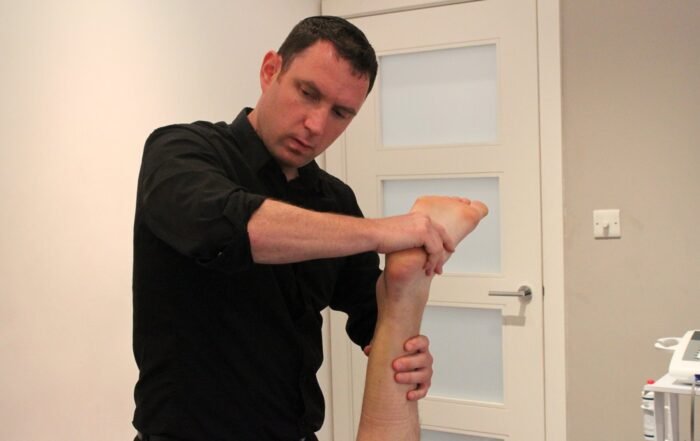 Ankle sprain physio
 Private or NHS physio: when to go private
Written by Steven Berkman, Chartered Physiotherapist and founder of BOOST PHYSIO, with the BOOST PHYSIO team. This article is general guidance and is not a substitute for an individual physiotherapy or medical assessment. Always follow your surgeon’s advice.
Frequently asked questions about ankle surgery rehab
When should I start physio after ankle surgery?
When your surgeon advises. Some want you to start gentle exercises while you’re still in the boot, others once you’re out of it. Either way, starting promptly helps stop the ankle getting stiffer and the calf weaker.
Why is my ankle so stiff after coming out of the boot?
After weeks in a cast or boot, the joint and the tissues around it tighten and the calf weakens. This is normal and usually improves well with physio, exercise and gradually walking more.
How long until I can walk normally after ankle surgery?
It varies, but many people take several weeks to walk without a limp after coming out of the boot. Strength, balance and confidence often keep improving for 6 to 12 months.
Will the metalwork in my ankle cause problems?
Usually not. Some people feel the plates or screws, especially when the ankle is cold or under pressure from footwear. If it bothers you, discuss it with your surgeon.
How do I choose the best physio clinic for my ankle surgery rehab?
Look for physios who treat ankle surgery patients every week, work closely with orthopaedic surgeons, follow your surgeon’s protocol, have a gym for the later stages, have a team behind them for second opinions and holiday cover and offer appointment times that fit your life.
Do you work with my surgeon?
We work with many orthopaedic surgeons across London and Hertfordshire who refer their patients to us. Whoever your surgeon is, we’ll follow their protocol and keep them updated on your progress if needed.
Will you have my surgical notes?
Bring your operation notes, discharge letter and any rehab protocol to your first appointment. If you don’t have them, we’ll help you get them from your surgeon’s team. They’re added to your record so every physio who sees you can read them.
Will the other physios know what has already been done?
Yes. Your notes, protocol, exercises and progress are kept on one shared record that every physio in the team can see, so whoever you see knows exactly what stage you’re at and what was done last time.
Will I have to tell my whole story again at each session?
No. Your history and operation details are recorded at your first appointment, so each session starts where the last one finished, even if you see a different physio or visit a different clinic.
Can I come after work?
Yes. Appointments run until 9pm on weekdays, with early starts from 7am at some clinics.
Are you open at weekends?
Yes. A number of our clinics offer Saturday and Sunday appointments. Book online to see what’s available near you, or call us and we’ll find the best time.
Does private health insurance cover my rehab?
Usually yes. Our treatment is recognised by Bupa, AXA Health, Vitality, Aviva and WPA. Check how many sessions your policy covers and whether you need an authorisation number. You can also self-pay.
Where can I find a physio near me?
BOOST PHYSIO has a network of clinics across North London and Hertfordshire, including Hendon, Hampstead, Swiss Cottage, West Hampstead, Kentish Town, Hampstead Garden Suburb, East Finchley, Muswell Hill, Crouch End, Mill Hill, Kensington, Borehamwood and Elstree. Book online, call 020 8201 7788 or WhatsApp us.
