
Knee replacement rehab
Your new knee: when to start physio and how often
Why the first few weeks matter so much for bend, strength and walking. Plus how we get you back to stairs, driving and your hobbies.
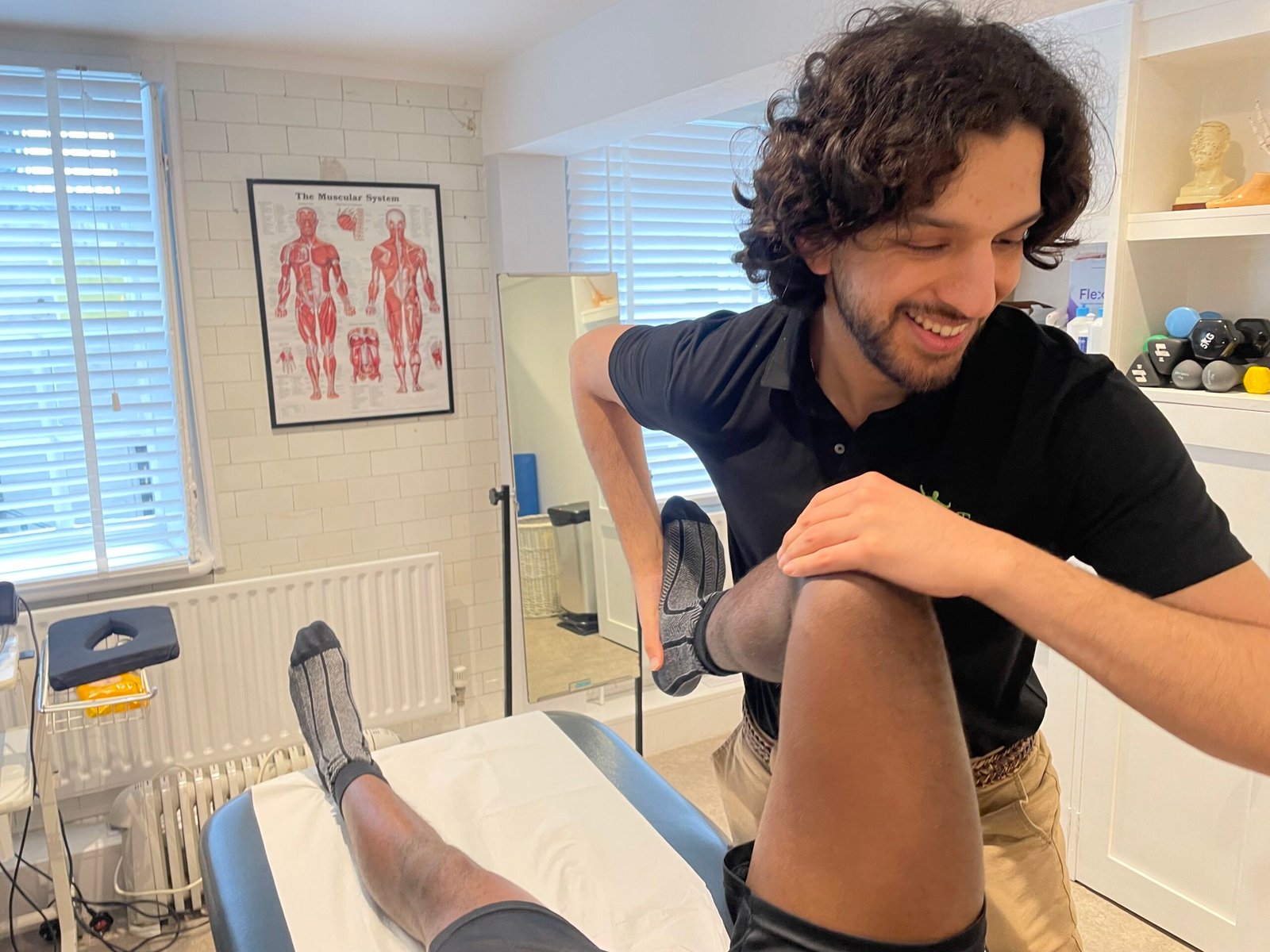
Quick answer: Always follow your surgeon’s instructions first. Where they don’t say otherwise, we recommend your first outpatient physio session around 7 days after a total knee replacement. We check you’re walking and using your aids safely, correct your walking pattern, check your knee bend and straightening, make sure your exercises are right and look for complications such as a blood clot or wound infection. Then 1 to 2 sessions a week until you can manage stairs and walk without a stick and are cleared to drive, before focusing on your hobbies, usually between 6 and 12 weeks.
When should I start physio after a knee replacement?
Rehab starts in hospital. NICE recommends that people having a knee replacement start rehabilitation on the same day as surgery or within 24 hours.
Once you’re home, the clock is ticking on one thing in particular: your knee bend. Patients often tell us nobody warned them how stiff and swollen the knee would feel in the first couple of weeks, or how hard it would be to tell whether they were pushing too much or too little.
So unless your surgeon advises otherwise, we recommend your first outpatient session around 7 days after surgery. Early enough to keep your movement on track, late enough that most people can comfortably get to the clinic.
The first 2 weeks after a total knee replacement: essential exercises
What we check at your first session
Bend and straighten
We measure how far your knee bends and whether it straightens fully. Both matter for walking, stairs and getting in and out of a car.
Safe walking
Are your crutches or stick set at the right height and are you using them safely, including on stairs and kerbs?
Your walking pattern
Many people walk stiff legged to protect the knee. We get your heel striking and knee bending properly early, before habits set in.
The right exercises
We check you’re doing the right exercises, correctly and at the right dose, then progress them as you improve.
Blood clots
We check for signs of a deep vein thrombosis (DVT), such as throbbing pain, swelling and redness or darkened skin in one calf or thigh.
Your wound
We look for signs of infection: spreading redness, heat, increasing swelling, oozing or pus, or feeling feverish.
Why the first 12 weeks matter for knee stiffness
Stiffness is one of the most common frustrations after a knee replacement. Published estimates suggest around 5 to 7% of patients develop significant stiffness after surgery (Mamarelis and colleagues, 2015).
When bend isn’t progressing, surgeons sometimes recommend a manipulation under anaesthetic. Studies differ, but some have found better results when this is done within the first 12 weeks rather than later. That’s one reason we like to see you early and regularly: if your bend is stalling, we want to spot it while there is still time to act and let your surgical team know.
With knees, the work you put in during the first six weeks pays you back for years.
How often should I have physio after a knee replacement?
We usually see people once or twice a week after the first session, progressing your exercises and hands-on work to keep the bend and strength coming. We continue at that rhythm until you reach these milestones:
- Stairs independently: up and down one foot per step, without a stick
- Walking without a stick: the NHS suggests trying without an aid after about 6 weeks if you feel ready
- Driving: the NHS advises waiting at least 6 weeks after a total knee replacement (3 weeks after a partial) and your doctor must agree you are fit to drive
Then we space sessions out and focus on what you want to get back to.
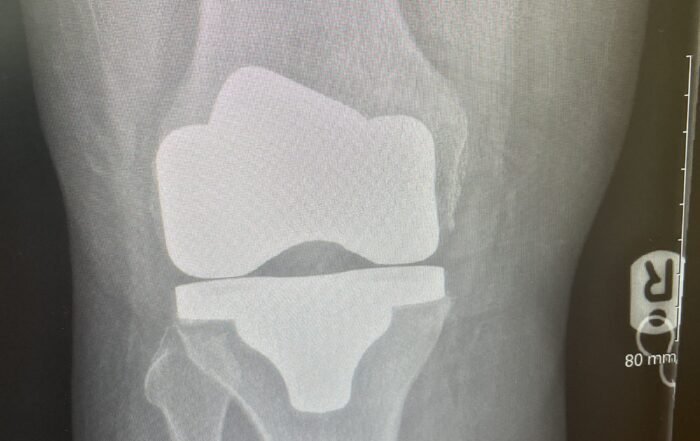
Weeks 6 to 12: back to the things you love
By now walking usually feels much more normal, but thigh strength often takes longer to return. This is where we build you up for your goals: long walks, cycling, golf, swimming, gardening, kneeling to play with grandchildren or a holiday with lots of sightseeing. The NHS suggests avoiding heavy household tasks for the first 3 months and says most people return to work after about 6 to 12 weeks, depending on their job.
Had your knee replaced?
Book your first session for around a week after surgery, or sooner if you are worried about your bend.
Warning signs after a knee replacement
Get urgent advice from your GP, your surgical team or NHS 111 if you notice:
- Throbbing pain, swelling and redness or darkened skin in one calf or thigh
- A high temperature, or feeling hot, cold or shivery
- Oozing or pus from your wound, or spreading redness and heat around it
- Pain or swelling that keeps getting worse rather than better
Call 999 or go to A&E if you have leg pain or swelling together with shortness of breath or chest pain.
Knee replacement recovery timeline at a glance
| Day 0 to 1 | Rehab starts in hospital (NICE recommends within 24 hours) |
|---|---|
| Around day 7 | First outpatient physio: bend, straightening, walking and complication checks |
| Around day 10 | Stitches or clips usually removed (NHS) |
| Weeks 1 to 6 | Physio 1 to 2 times a week. Most people wear compression stockings for at least 6 weeks (NHS) |
| Around 6 weeks | Earliest driving after a total knee replacement and trying without a walking aid (NHS) |
| Weeks 6 to 12 | Strength and returning to hobbies. Many return to work (NHS: about 6 to 12 weeks) |
Watch: knee replacement rehab from our physios
Exercises and advice we use with our knee replacement patients.
Exercises for the first weeks after a total knee replacement
An essential exercise after 2 weeks
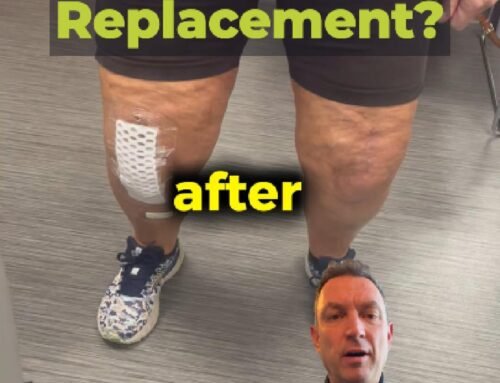
How will I be 3 months after a total knee replacement?
When can I squat after a knee replacement?
Had a hip replaced? Read our guide to physio after hip replacement. Still waiting for surgery? Getting stronger beforehand can help, see what to do while you wait.
Every tool for your best recovery
At BOOST PHYSIO, we believe your best recovery comes from having every tool available, not relying on just one. Our physiotherapists combine hands-on treatment with exercise rehabilitation built around you, then adjust it as you progress.
Something our patients don’t always realise is how much support sits behind each physio. Our team trains together twice a month and every physio has a dedicated mentor who reviews cases with them, so whichever clinic you visit you get the experience of the whole team.
- Same day appointments, seven days a week
- No GP referral needed to book
- Treatment recognised by Bupa, AXA Health, Vitality, WPA and Aviva
Find your nearest BOOST PHYSIO clinic: Borehamwood, Crouch End, East Finchley, Elstree, Hampstead, Hampstead Garden Suburb, Hendon, Kensington, Kentish Town, Mill Hill, Muswell Hill, Swiss Cottage Leisure Centre and West Hampstead. Same day appointments, 7 days a week, 8am to 9pm.
Get the most out of your new knee
Same day appointments, 7 days a week. Recognised by Bupa, AXA Health, Vitality, WPA and Aviva.
Related reading
Total knee replacement rehab The exercise you must do after a knee replacement
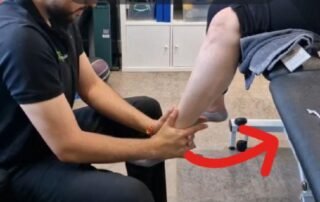 Stiff knee after knee replacement?
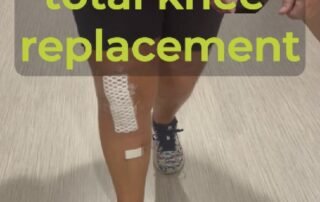 Walking 2 weeks after knee replacement
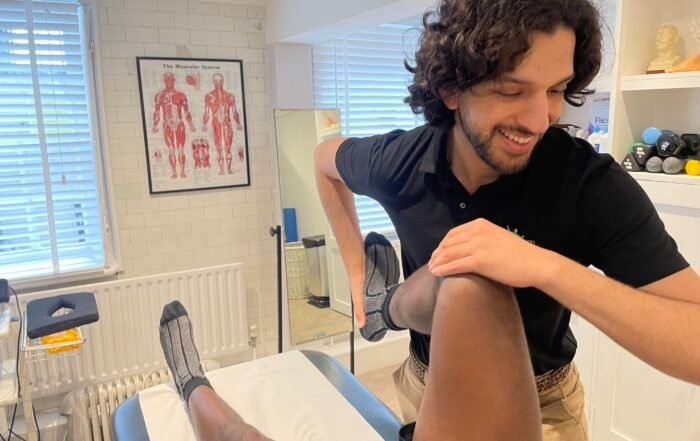 Knee pain physio
 How to make getting out of the car easier
Your questions answered
When should I start physio after a knee replacement?
Rehab starts in hospital, usually on the day of surgery or the next day. Unless your surgeon advises otherwise, we recommend your first outpatient physio session around 7 days after your operation.
How often should I have physio after a knee replacement?
Most people do well with 1 to 2 sessions a week until they can manage stairs and walk without a stick and are cleared to drive, then less often while working towards their hobbies, usually between 6 and 12 weeks.
When can I drive after a knee replacement?
The NHS advises waiting at least 6 weeks after a total knee replacement and 3 weeks after a partial. Your doctor must agree you are fit to drive and you need to be able to do an emergency stop.
How far should my knee bend after a knee replacement?
It varies between people and your surgeon will tell you what to aim for. What matters most is steady progress in the first few weeks. If your bend stalls, tell your physio and surgical team early.
Is it normal for my knee to be stiff and swollen after surgery?
Yes, some stiffness and swelling is normal and can last for months. Stiffness that isn’t improving, or swelling that is getting worse, should be checked.
When can I walk without a stick after a knee replacement?
The NHS suggests trying to walk without an aid after about 6 weeks if you feel ready. We help you progress safely and without a limp.
Always follow your surgeon’s specific instructions. This article is general information and not a substitute for an individual assessment. Sources: NICE guideline NG157 Joint replacement (primary): hip, knee and shoulder. NHS: Recovering from a knee replacement; Deep vein thrombosis (nhs.uk). Mamarelis G, Sunil-Kumar KH, Khanduja V. Timing of manipulation under anaesthesia for stiffness after total knee arthroplasty. Ann Transl Med 2015;3(20):316. Written by the BOOST PHYSIO team, reviewed by Steven Berkman, Chartered Physiotherapist, MCSP, HCPC registered.