
Hip replacement rehab
Your new hip: when to start physio and how often
Our week by week approach to getting you walking without a stick, climbing stairs, driving and back to the things you love.

Quick answer: Always follow your surgeon’s instructions first. Where they don’t say otherwise, we recommend your first outpatient physio session around 7 days after your hip replacement. We check you’re walking and using your aids safely, correct your walking pattern, make sure you’re doing the right exercises and check for complications such as a blood clot or wound infection. After that, most people do well with 1 to 2 sessions a week until they can manage stairs and walk without a stick and are cleared to drive, then we focus on getting you back to your hobbies, usually between 6 and 12 weeks.
When should I start physio after a hip replacement?
Your rehab actually starts in hospital. NICE recommends that people having a hip replacement start rehabilitation on the same day as surgery or within 24 hours, so you’ll usually be up and walking with the ward physios very quickly.
The gap comes after you get home. Patients often tell us they left hospital with a sheet of exercises and a follow-up date weeks away. They then spent the first fortnight unsure whether they were doing things right.
That’s why, unless your surgeon advises otherwise, we recommend your first outpatient session around 7 days after your operation. It’s early enough to catch problems and bad habits. By then most people are comfortable enough to travel to the clinic.
Difficulty getting out of the car after hip surgery? Try this
What we check at your first session after surgery
Safe walking
Are you using your crutches or stick correctly and safely, including on kerbs and at home? Small adjustments make a big difference to confidence.
Your walking pattern
Many people develop a limp or shortened stride to protect the new hip. We correct it early before it becomes a habit that causes back or knee pain later.
The right exercises
We check you’re doing your exercises correctly, at the right dose and within any precautions your surgeon has given you.
Blood clots
We check your calves and legs for signs of a deep vein thrombosis (DVT), such as throbbing pain, swelling and redness in one leg.
Your wound
We look for signs of infection: increasing redness, heat, swelling, oozing or pus, or feeling feverish and shivery.
Swelling and sleep
Swelling is normal and can last for months, but we make sure it is settling and help you find comfortable positions to rest and sleep.
The first two weeks set the tone. Get the walking pattern right early and everything else is easier.
How often should I have physio after a hip replacement?
After the first session, we usually see people once or twice a week. That’s enough to keep progressing your exercises and spot problems without overloading a healing hip. We keep going at that rhythm until you reach three milestones:
- Stairs independently: up and down one foot per step, without a stick or rail
- Walking without a stick: steady and without a limp, indoors and out
- Driving: the NHS advises waiting at least 6 weeks and your surgeon must agree you are fit to drive. You need to be able to do an emergency stop safely
Once you’re there, sessions can be spaced out as you work on strength and stamina for the things that matter to you.

Weeks 6 to 12: getting back to your life
This is the stage many people miss out on and it’s where we see the biggest gains. By now your hip is healing well, but strength, balance and stamina usually lag behind. We build a programme around your goals, whether that’s walking the dog on Hampstead Heath, getting back on the golf course, gardening, a walking holiday or playing with grandchildren on the floor.
The NHS advises avoiding activities involving jumping, sudden turns or a high risk of falling until your hip has fully recovered. We’ll guide you on when and how to return to each activity, in line with your surgeon’s advice.
Had your hip replaced?
Book your first session for around a week after surgery, or sooner if you are struggling.
Warning signs after a hip replacement
Get urgent advice from your GP or NHS 111 if you have (NHS guidance):
- Throbbing or cramping pain in your hip or leg
- A high temperature, or you feel hot, cold or shivery
- Oozing or pus from your wound
- Redness, tenderness, swelling or pain in your hip or leg that is not getting better or is getting worse
Call 999 or go to A&E if you have pain and swelling in your leg together with difficulty breathing or chest pain, as this can be a sign of a blood clot in the lungs. Contact your surgical team if your hip suddenly becomes very painful, you hear a clunk or pop, or your leg looks shorter or turned in or out.
Hip replacement recovery timeline at a glance
| Day 0 to 1 | Rehab starts in hospital, usually walking with the ward physios (NICE recommends within 24 hours) |
|---|---|
| Around day 7 | First outpatient physio: walking, gait, exercises and complication checks |
| Weeks 1 to 6 | Physio 1 to 2 times a week, building to stairs and walking without a stick |
| Around 6 weeks | Earliest driving for most people (NHS), once your surgeon agrees. Return to many desk based jobs |
| Weeks 6 to 12 | Strength, balance and preparing for your hobbies and sport |
| Several months | Full recovery can take several months and varies with age and general health (NHS) |
Watch: hip and surgery rehab tips
Short videos from our physios on getting moving after surgery.
Making getting out of the car easier
Why rehab after surgery needs progressive loading
Expert physio treatment in Hendon
Recovering from a knee replacement instead? Read our guide to physio after knee replacement. Still waiting for your operation? See what to do while you wait.

Every tool for your best recovery
At BOOST PHYSIO, we believe your best recovery comes from having every tool available, not relying on just one. Our physiotherapists combine hands-on treatment with exercise rehabilitation built around you, then adjust it as you progress.
Something our patients don’t always realise is how much support sits behind each physio. Our team trains together twice a month and every physio has a dedicated mentor who reviews cases with them, so whichever clinic you visit you get the experience of the whole team.
- Same day appointments, seven days a week
- No GP referral needed to book
- Treatment recognised by Bupa, AXA Health, Vitality, WPA and Aviva
Find your nearest BOOST PHYSIO clinic: Borehamwood, Crouch End, East Finchley, Elstree, Hampstead, Hampstead Garden Suburb, Hendon, Kensington, Kentish Town, Mill Hill, Muswell Hill, Swiss Cottage Leisure Centre and West Hampstead. Same day appointments, 7 days a week, 8am to 9pm.
Get your new hip working for you
Same day appointments, 7 days a week. Recognised by Bupa, AXA Health, Vitality, WPA and Aviva.
Related reading
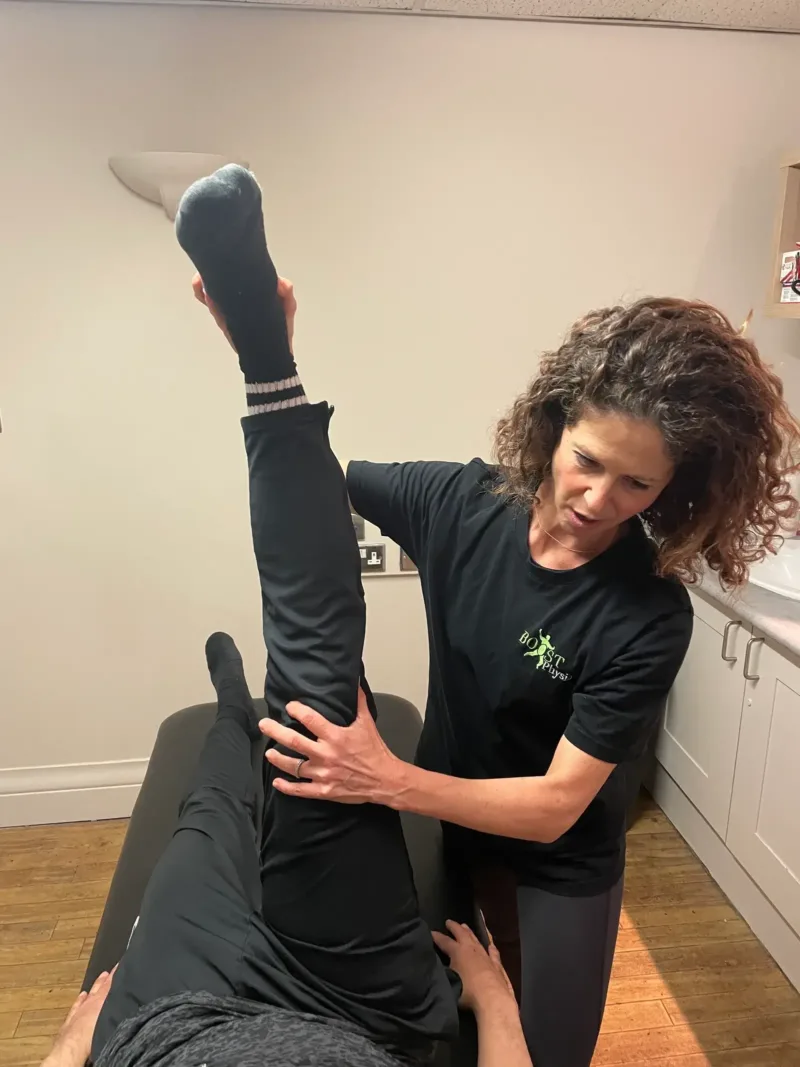 Recovering from a hip replacementHip replacement rehab and recoveryHip pain and hip replacement rehab in Hendon
 How to make getting out of the car easier
 Outer hip pain: gluteal tendinopathy
 Physio after joint replacement surgery
Your questions answered
When should I start physio after a hip replacement?
Rehab starts in hospital, usually on the day of surgery or the next day. Unless your surgeon advises otherwise, we recommend your first outpatient physio session around 7 days after your operation.
How often should I have physio after a hip replacement?
Most people do well with 1 to 2 sessions a week until they can manage stairs and walk without a stick and are cleared to drive. Sessions can then be spaced out while you work towards your hobbies, usually between 6 and 12 weeks.
When can I drive after a hip replacement?
The NHS advises waiting at least 6 weeks. Your surgeon must agree you are fit to drive and you need to be able to do an emergency stop safely. Check with your insurer too.
When can I stop using a walking stick after a hip replacement?
It varies from person to person. We help you progress from crutches to a stick to walking unaided once your walking pattern is steady and you are not limping. Many people are walking without an aid by around six weeks, though some need longer.
How long does it take to recover from a hip replacement?
Most people return to everyday activities within a few months, but the NHS says full recovery can take several months and depends on your age and general health.
What are the warning signs after hip replacement surgery?
Seek urgent advice for throbbing or cramping leg pain, a high temperature or shivering, oozing or pus from the wound, or worsening redness and swelling. Call 999 for leg pain and swelling with chest pain or breathlessness.
Always follow your surgeon’s specific instructions, including any hip precautions. This article is general information and not a substitute for an individual assessment. Sources: NICE guideline NG157 Joint replacement (primary): hip, knee and shoulder. NHS: Recovering from a hip replacement; Complications of a hip replacement; Deep vein thrombosis (nhs.uk). Written by the BOOST PHYSIO team, reviewed by Steven Berkman, Chartered Physiotherapist, MCSP, HCPC registered.