

Ankle sprain physio
Recover from a sprained ankle and stop it happening again
Rolled your ankle at sport, on a kerb or on the stairs? Expert assessment, early rehab and balance training to get you back on your feet with confidence, at clinics across North London and Hertfordshire.

Quick answer: an ankle sprain is a stretch or tear of the ligaments on the outside of the ankle, usually from rolling the foot inwards. Most sprains don’t need an X-ray unless you couldn’t take 4 steps or you’re tender on specific ankle or foot bones. The best recovery comes from early, gentle movement followed by strength and balance training. Without good rehab, about 4 in 10 people still have an unstable ankle a year later, while balance training has been shown to cut repeat sprains by about a third.
Why a sprained ankle needs proper rehab
Most people go over on their ankle at some point: stepping off a kerb, on uneven ground, at five-a-side or on the padel court. The ligaments on the outside of the ankle get stretched or torn, the ankle swells and walking becomes painful.
Because sprains are so common, many people just wait for the swelling to go down and carry on. The problem is that the ankle often stays weaker and less stable than it feels, which is why so many people sprain the same ankle again. Good rehab gets you back sooner and helps stop that cycle.
About 4 in 10 people still had an unstable, giving-way ankle a year after their first ankle sprain.
Doherty et al, Archives of Physical Medicine and Rehabilitation 2018 (40% chronic ankle instability at 12 months)
How bad is your ankle sprain?
Sprains range from a mild stretch to a complete tear and some injuries that look like a sprain are something else. Your physio will check which it is.
Mild sprain
Grade 1
Some swelling and tenderness, but you can walk with mild discomfort. Usually back to normal in a few weeks with the right exercises.
Moderate to severe sprain
Grade 2 or 3, ligament tear
Marked swelling and bruising, difficulty walking and the ankle may feel loose. Recovery takes longer and rehab matters even more.
High ankle sprain
Syndesmosis injury
Pain higher up, between the shin bones, often after a twisting injury in contact sport. Slower to recover and needs careful assessment.
Possible fracture
Broken ankle or foot
Can’t take 4 steps or tender on the ankle bones or outer foot. You’ll need an X-ray. Physio after ankle fracture
Repeated sprains
Chronic ankle instability
An ankle that keeps going over or feels like it might give way. Very treatable with balance and strength work.
Stiff ankle after a sprain
Loss of ankle movement
An ankle that never quite got its movement back, affecting squats, stairs and running. Help for a stiff ankle
Ankle sprain: the key facts
| Most common injury | Rolling the ankle inwards, which stretches or tears the ligaments on the outside of the ankle. |
|---|---|
| Do I need an X-ray? | Only if you couldn’t take 4 steps straight after the injury and when you’re seen, or you’re tender on specific points of the ankle or foot bones (the Ottawa ankle rules). |
| First few days | Protect it, gentle movement, compression and elevation. Get walking as soon as you comfortably can. |
| Main treatment | Early movement, then strength and balance training, with support or strapping for sport where needed. |
| How long it takes | Mild sprains often settle in 2 to 6 weeks. More severe sprains can take 6 to 12 weeks or more to return fully to sport. |
Should I rest a sprained ankle?
Only for a short time. Protecting the ankle for the first few days helps, but long periods of rest or immobilisation slow recovery for most sprains. Clinical guidelines recommend getting moving early and starting exercise therapy, with a brace or tape for support if needed.
Ice can help ease pain in the first few days, but it isn’t a treatment on its own. Early, gentle movement does more to bring the swelling down and get you walking normally.
Will it keep happening?
It doesn’t have to. Many repeat sprains come from reduced balance and slower muscle reactions after the first injury, not just stretched ligaments.
In a large trial, an 8-week home balance training programme after an ankle sprain cut the risk of spraining it again by 35%. That’s why balance work is a core part of our ankle rehab, not an optional extra.
Gentle exercises for the first few days after an ankle sprain
How physiotherapy treats a sprained ankle
The aim is to calm pain and swelling, get you walking normally, then rebuild the strength, balance and confidence to get back to everything you do. Treatment may include:
- A thorough assessment – checks for fracture signs, ligament tests and the severity of the sprain
- Early management – swelling control, support or a brace if needed and a plan to get walking normally
- Hands-on treatment – soft tissue release and joint mobilisation to restore ankle movement
- Strength and balance training – calf, ankle and hip strength plus progressive balance work
- Strapping for sport – to protect the ankle as you return to running, dancing or sport
- Return to sport – hopping, cutting and landing drills, so you know the ankle is ready

Restores movement
Hands-on treatment
Gentle mobilisation of the ankle joint and release of tight calf muscles to ease stiffness and help you walk normally again.

Understand your injury
Clear explanation
We’ll show you which ligament is injured, how bad it is and exactly what your recovery will look like.
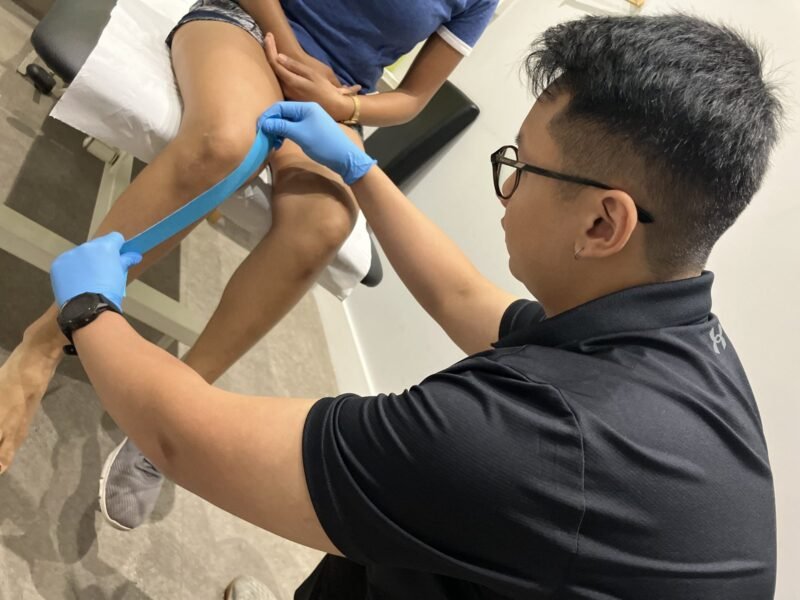
Protects and supports
Taping and strapping
Strapping can stabilise and protect the ankle so you can get back to sport, or dance at that wedding, without going over on it again.
Balance and strength stop it happening again
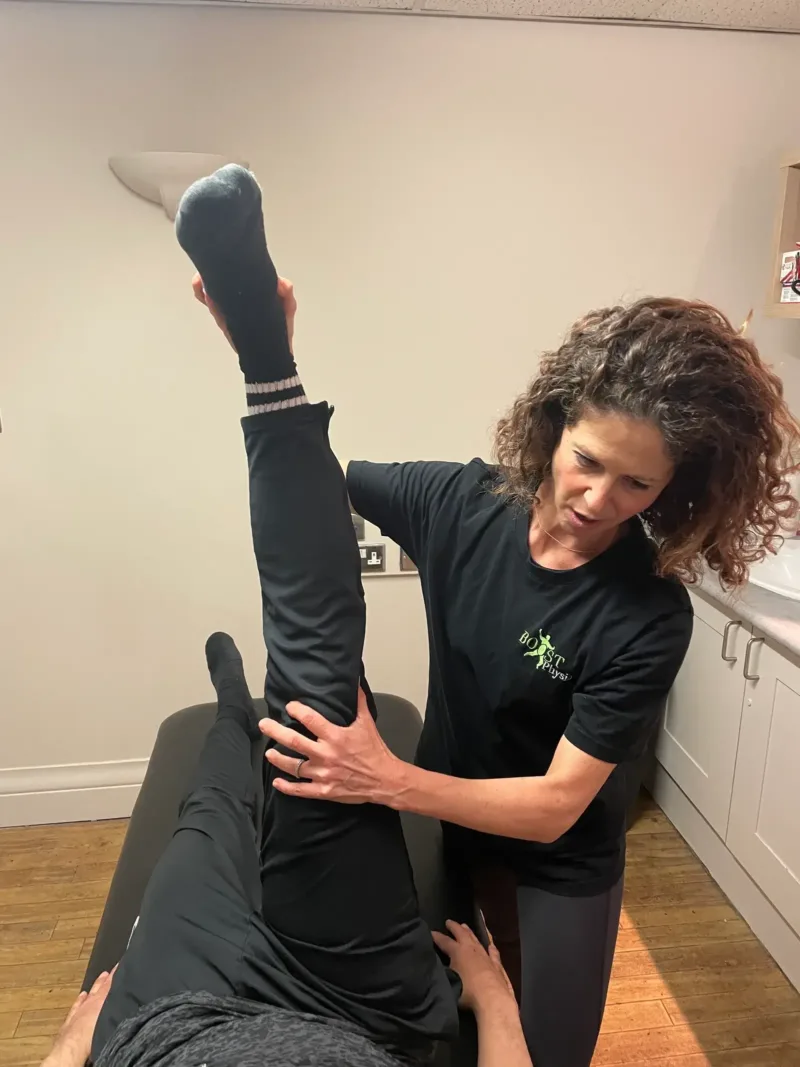
Once you’re walking comfortably, we build calf and ankle strength, then balance: single-leg standing, eyes closed, unstable surfaces and eventually hopping and landing. These are the things that make an ankle feel solid again.
We’ll test your balance and strength against your other side before you go back to sport, so you return with confidence rather than crossing your fingers.
How strapping can protect your ankle as you return to sport
Watch: ankle advice from our physios
Short, practical videos from the BOOST PHYSIO team. If an exercise makes your ankle pain worse, stop and ask your physio for the right version for you.
3 exercises to avoid repeat ankle sprains
Landing stability to prevent re-injury
How to help a stiff ankle
Ice or heat for an injury?
When to get your ankle checked urgently
See a doctor urgently or go to A&E if you have:
- an ankle you couldn’t take 4 steps on straight after the injury
- tenderness on the bony points of the ankle or the outer edge of the foot
- a deformed-looking ankle or foot, or severe pain that isn’t easing
- numbness, pins and needles or a cold, pale foot
- a painful, swollen or warm calf, particularly after time in a boot
Book an assessment if your ankle is still swollen or painful after a week or two, keeps going over or you want to get back to sport safely.
Why choose BOOST PHYSIO for ankle sprains?
We believe your best recovery comes from having every tool available, not relying on just one. Our physiotherapists combine hands-on treatment with exercise rehabilitation, tailored to you and adjusted as you improve. Every physio trains with the team twice a month and has a dedicated mentor who reviews their cases, so you benefit from the experience of the whole group.
If your ankle needs an X-ray, a scan or a specialist opinion, we’ll arrange it, then guide your rehab all the way back to sport.
- Same day physiotherapy appointments, 8am to 9pm
- A network of clinics across North London and Hertfordshire
- Male and female chartered physiotherapists
- Shockwave therapy, acupuncture and gym-based rehab when you need them
- Close links with leading orthopaedic surgeons and sports physicians
- Treatment recognised by Bupa, AXA Health, Vitality, Aviva and WPA
Ankle sprain physio near you
See a BOOST PHYSIO physiotherapist at our clinics in Hendon NW4, Hampstead NW3, Swiss Cottage, West Hampstead NW6, Kentish Town NW5, Hampstead Garden Suburb NW11, East Finchley N2, Muswell Hill N10, Crouch End N8, Mill Hill NW7, Kensington W8, Borehamwood WD6 and Elstree WD6.
Ready to get back on your feet?
See a chartered physiotherapist today and leave with a clear plan. Your Best Recovery, Guaranteed.
Related reading
 How to help ankle stiffness
 Physio after an ankle fracture
 How to test your ankle and calf strength
 Achilles tendon physio
 Anxious about recovery after ankle surgery?
 Our sports injury clinic
Written by Steven Berkman, Chartered Physiotherapist and founder of BOOST PHYSIO, with the BOOST PHYSIO team. This article is general guidance and is not a substitute for an individual physiotherapy or medical assessment.
Frequently asked questions about ankle sprains
How long does a sprained ankle take to heal?
Mild sprains often settle in 2 to 6 weeks. Moderate or severe sprains can take 6 to 12 weeks or more before you’re fully back to sport. Ligaments keep remodelling for months, which is why finishing your rehab matters even when the pain has gone.
Do I need an X-ray for a sprained ankle?
Usually not. An X-ray is recommended if you couldn’t take 4 steps straight after the injury and when you’re assessed, or if you’re tender on specific points of the ankle bones, the base of the little toe bone or the bone on the inner midfoot. These are the Ottawa ankle rules.
Should I rest a sprained ankle or walk on it?
Protect it for the first few days, then start walking and moving it as soon as you comfortably can. Early movement and exercise lead to a quicker recovery than long periods of rest for most sprains.
Should I use ice or heat on a sprained ankle?
Ice can ease pain in the first few days. Heat is better saved for later, when the swelling has gone and the ankle feels stiff. Neither replaces gentle movement and exercise, which do the most to help recovery.
Why do I keep spraining the same ankle?
After a sprain, balance and the speed of the muscles that protect the ankle are often reduced, even once the pain has gone. In a large trial, an 8-week balance training programme cut the risk of another sprain by 35%.
When can I return to sport after an ankle sprain?
When you can hop, land, change direction and balance on the injured leg as well as the other one, without pain. Your physio will test this and may use strapping or a brace for support as you return.
Can I use my private health insurance?
Yes. Our treatment is recognised by Bupa, AXA Health, Vitality, Aviva and WPA. Some insurers ask for a GP referral or authorisation code before your first appointment, so it’s worth checking your policy. You can also self-refer and pay directly, with no referral needed.
Where can I find an ankle physio near me?
BOOST PHYSIO has a network of clinics across North London and Hertfordshire, including Hendon, Hampstead, Swiss Cottage, West Hampstead, Kentish Town, Muswell Hill, Crouch End, East Finchley, Mill Hill, Kensington, Borehamwood and Elstree. Same day appointments are available from 8am to 9pm. Book online, call 020 8201 7788 or WhatsApp us.
References
- Vuurberg G, Hoorntje A, Wink LM et al. Diagnosis, treatment and prevention of ankle sprains: update of an evidence-based clinical guideline. British Journal of Sports Medicine 2018;52:956.
- Doherty C, Bleakley C, Hertel J et al. Recovery from a first-time lateral ankle sprain and the predictors of chronic ankle instability: a prospective cohort analysis. American Journal of Sports Medicine 2016;44:995-1003.
- Doherty C, Bleakley C, Hertel J et al. Clinical tests have limited predictive value for chronic ankle instability when conducted in the acute phase of a first-time lateral ankle sprain injury. Archives of Physical Medicine and Rehabilitation 2018;99:720-725.
- Hupperets MDW, Verhagen EALM, van Mechelen W. Effect of unsupervised home based proprioceptive training on recurrences of ankle sprain: randomised controlled trial. BMJ 2009;339:b2684.
- Bachmann LM, Kolb E, Koller MT et al. Accuracy of Ottawa ankle rules to exclude fractures of the ankle and mid-foot: systematic review. BMJ 2003;326:417.
