

Tennis elbow physio
Get rid of tennis elbow pain and grip with confidence again
Pain on the outside of the elbow when you grip, lift, type or play? Expert assessment, a clear strengthening plan and shockwave for stubborn cases, at clinics across North London and Hertfordshire.

Quick answer: tennis elbow (lateral epicondylalgia) is an overload problem of the forearm tendon on the outside of the elbow, usually caused by repetitive gripping and lifting rather than tennis. It’s diagnosed with a physiotherapy assessment, usually without a scan. The main treatment is load advice and a progressive strengthening programme, with hands-on treatment and taping to ease pain. For pain lasting more than 3 months, shockwave therapy can be added. Steroid injections ease pain short term but are linked to more relapses.
What is tennis elbow?
Tennis elbow is an overload problem of the tendon that attaches your wrist and finger extensor muscles to the bony point on the outside of your elbow. Despite the name, most people who get it don’t play tennis. It’s far more common from repetitive gripping and lifting: decorating, gardening, carrying children, hours on a mouse and keyboard, or a sudden jump in padel, golf or gym work.
It usually starts as an ache on the outside of the elbow that becomes sharp when you grip, lift a kettle, turn a door handle or shake hands. Left alone it often lingers for months, which is why getting the right plan early makes such a difference.
Tennis elbow affects about 1 in 100 adults at any one time and is most common between the ages of 45 and 54.
Shiri et al, American Journal of Epidemiology 2006 (prevalence 1.3%)
Is it tennis elbow or something else?
Several problems cause pain around the elbow and they need different treatment. These are the ones our physios see most often.
Tennis elbow
Lateral epicondylalgia, lateral epicondylitis
Pain on the outside of the elbow, worse with gripping, lifting with your palm down and wrist movements.
Golfer’s elbow
Medial epicondylalgia
The same kind of tendon problem on the inside of the elbow, worse with gripping and bending the wrist.
Pain from the neck
Referred pain, trapped nerve
Elbow pain that comes with neck stiffness, pins and needles or pain spreading down the arm.
Nerve irritation
Radial tunnel, ulnar nerve
Deep forearm ache, tingling or weakness that doesn’t behave like a tendon problem.
Elbow joint problems
Arthritis, after a fracture or dislocation
Stiffness, clicking or loss of movement, often after an old injury.
Stubborn tennis elbow
Lasting more than 3 months
When exercise alone hasn’t settled it, we may add shockwave therapy to your plan.
Tennis elbow: the key facts
| What it is | An overload problem of the forearm tendon on the outside of the elbow, not true inflammation in most cases. |
|---|---|
| Typical signs | Pain on the outside of the elbow with gripping, lifting, turning handles or shaking hands, often with a tender spot on the bone. |
| Do I need a scan? | Usually not. A physiotherapy assessment can diagnose it and rule out the neck, nerves or the joint. |
| Main treatment | Advice on load, progressive strengthening of the forearm and shoulder, hands-on treatment and, for stubborn cases, shockwave. |
| How long it takes | Many people improve within 6 to 12 weeks with the right plan. Long-standing cases can take a few months. |
Should I rest tennis elbow?
Complete rest rarely fixes it. The tendon needs the right amount of load to get stronger, so the aim is to reduce what aggravates it (for now) while you build strength. Your physio will help you adapt work, sport and lifting so you can keep going.
A forearm strap or brace can ease pain in the short term for some people, but it works best as a support while you strengthen, not as the treatment itself.
Should I have a steroid injection?
Steroid injections can bring quick relief, but a large trial found that a year later people who’d had an injection were less likely to have recovered and more likely to have their pain come back (54% compared with 12%).
That’s why we usually suggest a physiotherapy plan first. If you’re not improving, we can discuss shockwave or arrange a specialist opinion.
How our physios assess tennis elbow and where shockwave fits in
How physiotherapy treats tennis elbow
Your physio will start by confirming it really is tennis elbow and checking your neck, shoulder and grip. Then we’ll build a plan around your work, sport and goals. Treatment may include:
- A thorough assessment – grip strength, tendon tests and checks of the neck, nerves and shoulder
- Load advice – how to adapt gripping, lifting, desk set-up and sport so the tendon can settle
- Progressive strengthening – starting with gentle static holds, building to slow heavy work for the forearm and shoulder
- Hands-on treatment – soft tissue release, elbow mobilisation with movement and taping to ease pain
- Shockwave and acupuncture – for some patients with long-standing pain
- Return to sport – racket, golf, gym and climbing, reintroduced step by step
For stubborn cases
Shockwave therapy
Pulses of acoustic energy over the sore tendon. We use it for tennis elbow that hasn’t settled with exercise, always alongside strengthening.
Offloads the tendon
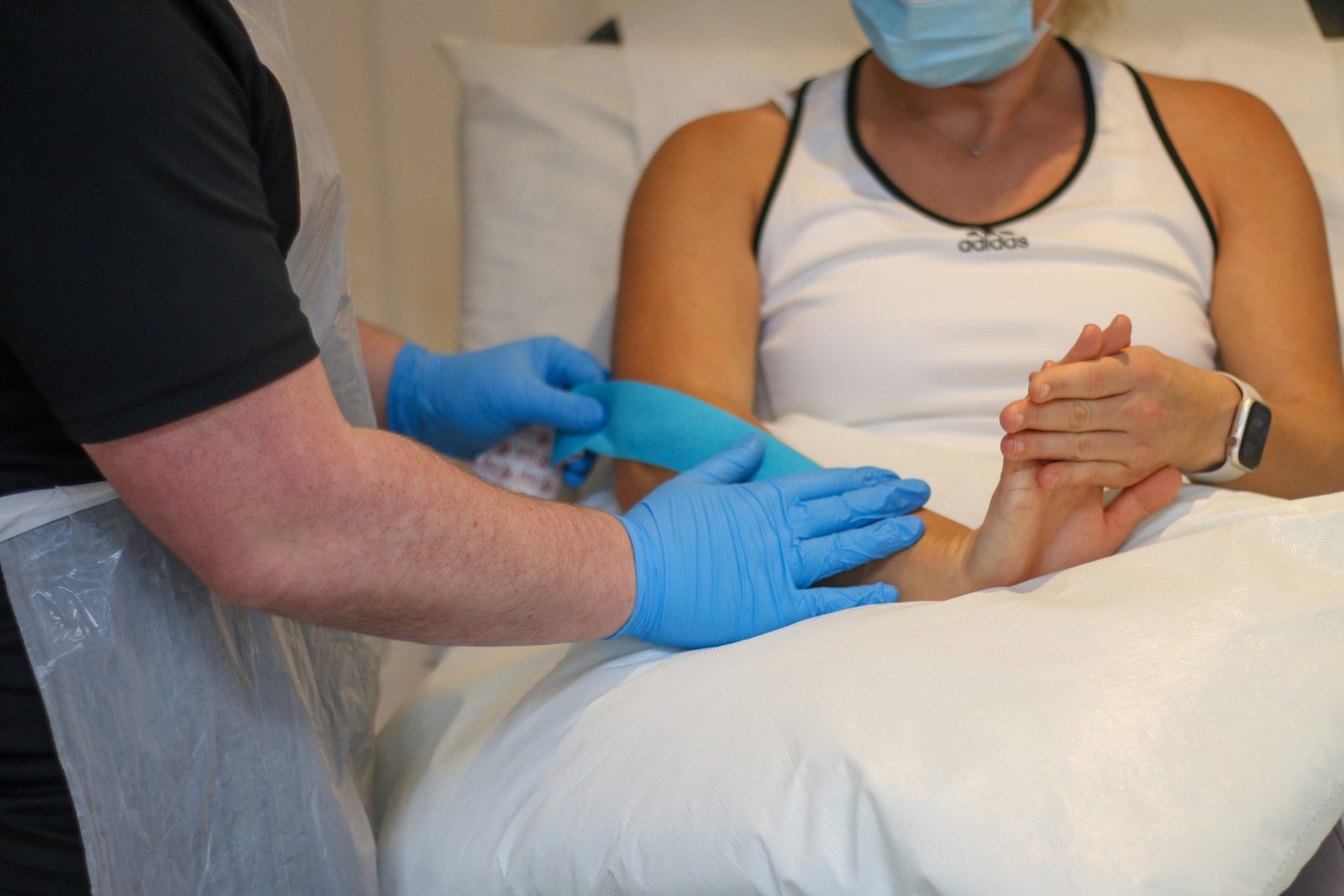
Taping and bracing
Tape or a forearm strap can take pressure off the tendon, so gripping is less painful while you strengthen.
Eases pain
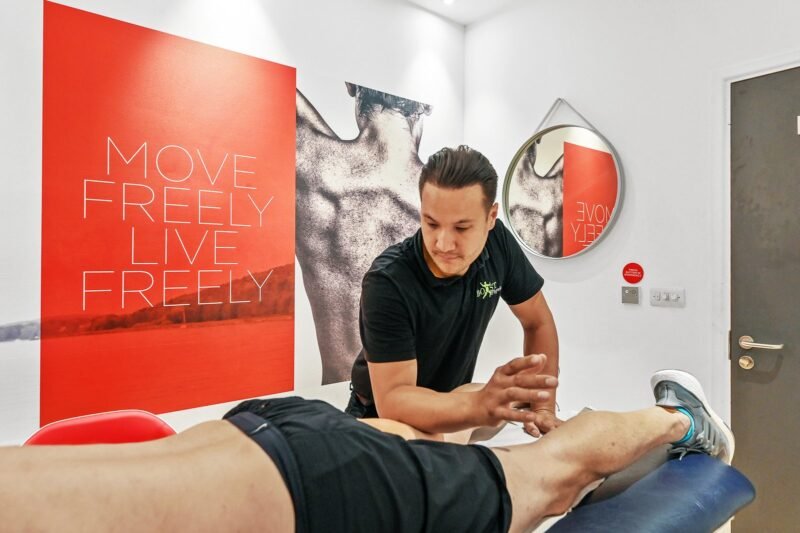
Hands-on treatment
Soft tissue release for tight forearm muscles and mobilisation with movement techniques that can ease pain straight away.
Strength is what fixes tennis elbow
Hands-on treatment and shockwave can ease pain, but strength is what lets the tendon cope again. We start with gentle holds that are comfortable, then build to slower, heavier exercises for your wrist, forearm and shoulder, plus grip work that matches your job or sport.
Most people do a few minutes of exercises a day at home. We’ll check your technique, progress the load at each visit and help you get back to the gym, the court or the garden without the pain coming back.
Tennis elbow rehab exercises our physios use
Watch: elbow and grip advice from our physios
Short, practical videos from the BOOST PHYSIO team. If an exercise makes your elbow pain worse, stop and ask your physio for the right version for you.
Pain on the inside of the elbow? It could be golfer’s elbow
How we test grip strength
Simple ways to improve grip strength
Why finding the true source of pain matters
When to get your elbow checked urgently
See a doctor urgently or go to A&E if you have:
- a hot, red, swollen elbow, especially with a fever or feeling unwell
- an elbow you can’t move or that looks deformed after a fall
- numbness or weakness in the hand that is getting worse
- severe pain after an injury where you felt a pop at the front of the elbow
Book an assessment if your elbow pain hasn’t settled within a couple of weeks, keeps coming back or is affecting your work, sport or sleep.
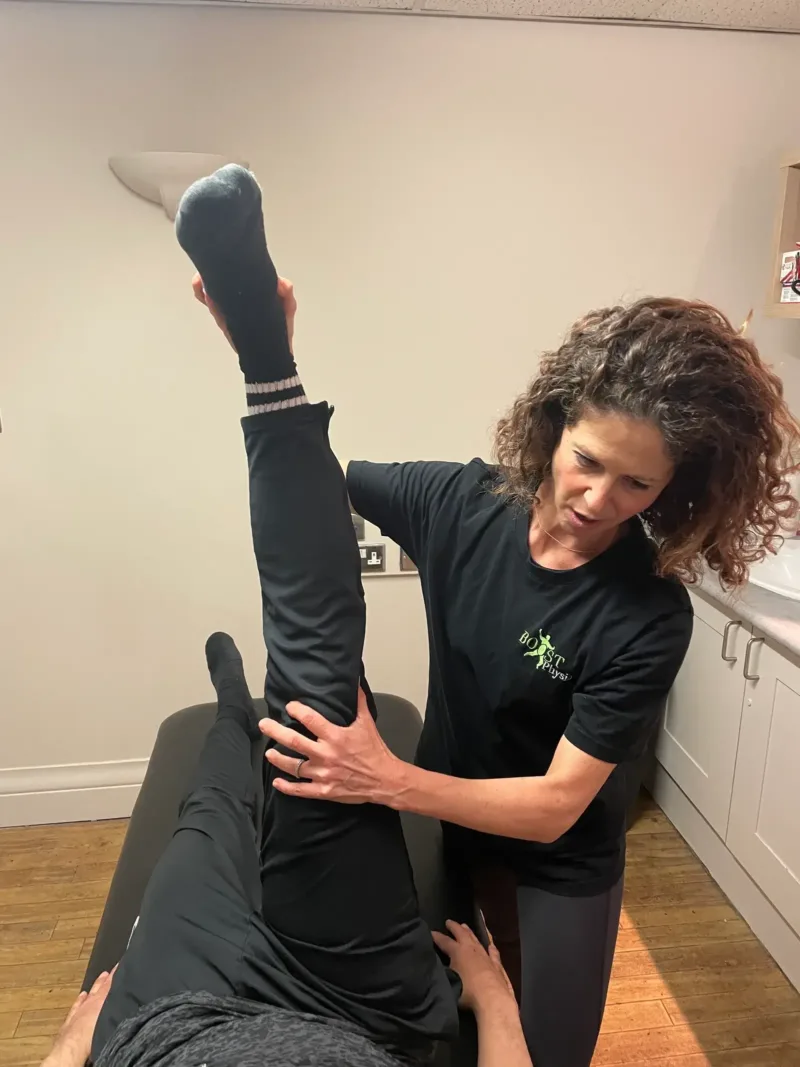
Why choose BOOST PHYSIO for tennis elbow?
We believe your best recovery comes from having every tool available, not relying on just one. Our physiotherapists combine hands-on treatment with exercise rehabilitation, tailored to you and adjusted as you improve. Every physio trains with the team twice a month and has a dedicated mentor who reviews their cases, so you benefit from the experience of the whole group.
If your elbow needs shockwave, a scan, an injection or a surgical opinion, we’ll arrange it, then guide your rehab all the way back to full strength.
- Same day physiotherapy appointments, 8am to 9pm
- A network of clinics across North London and Hertfordshire
- Male and female chartered physiotherapists
- Shockwave therapy, acupuncture and gym-based rehab when you need them
- Close links with leading orthopaedic surgeons and sports physicians
- Treatment recognised by Bupa, AXA Health, Vitality, Aviva and WPA
Tennis elbow physio near you
See a BOOST PHYSIO physiotherapist at our clinics in Hendon NW4, Hampstead NW3, Swiss Cottage, West Hampstead NW6, Kentish Town NW5, Hampstead Garden Suburb NW11, East Finchley N2, Muswell Hill N10, Crouch End N8, Mill Hill NW7, Kensington W8, Borehamwood WD6 and Elstree WD6.
Ready to get your grip back?
See a chartered physiotherapist today and leave with a clear plan. Your Best Recovery, Guaranteed.
Related reading
 Tennis elbow physio exercises to help
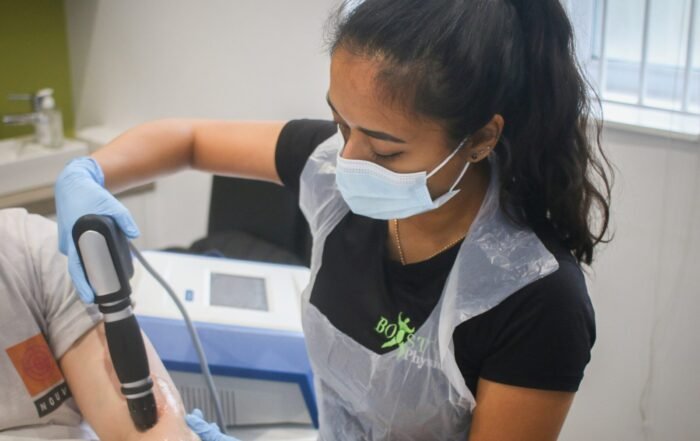 Shockwave therapy for stubborn tendon pain
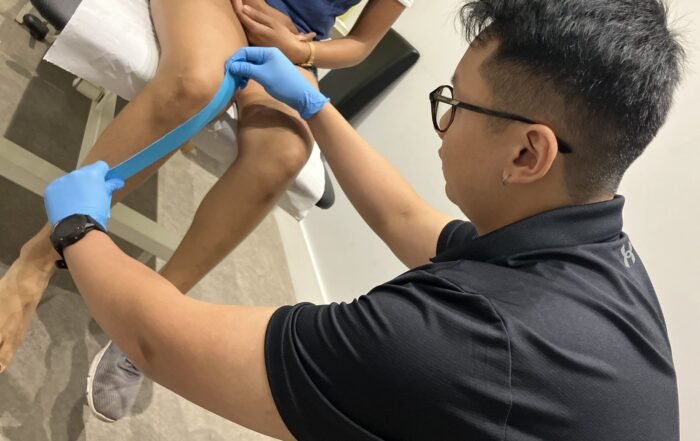 How to self diagnose tennis elbowHow does physio taping work?
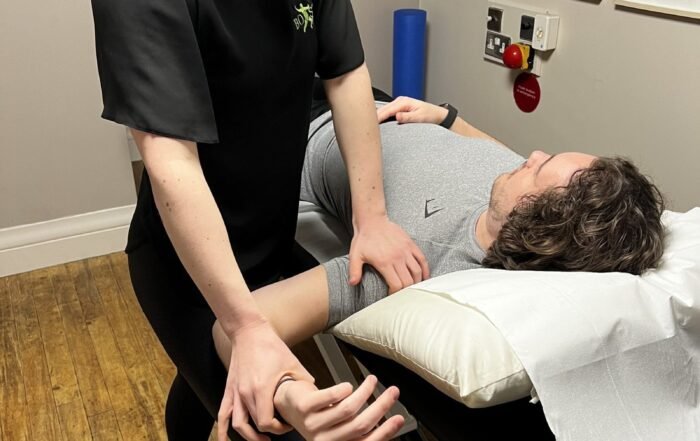 Frozen shoulder or rotator cuff problem?
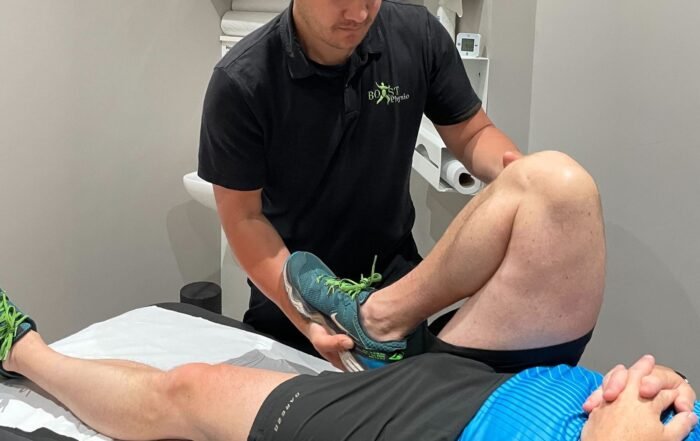 Our sports injury clinic
Written by Steven Berkman, Chartered Physiotherapist and founder of BOOST PHYSIO, with the BOOST PHYSIO team. This article is general guidance and is not a substitute for an individual physiotherapy or medical assessment.
Frequently asked questions about tennis elbow
What causes tennis elbow?
Tennis elbow is caused by overloading the tendon on the outside of the elbow, usually through repetitive gripping, lifting or wrist movements. Common triggers are DIY, gardening, computer work, carrying, gym work and racket sports such as tennis and padel. Most people who get it don’t play tennis.
How long does tennis elbow last?
Without the right treatment it can last many months. With a good physiotherapy plan many people improve within 6 to 12 weeks, although long-standing cases can take a few months to fully settle.
Should I rest tennis elbow completely?
No. Complete rest rarely fixes it because the tendon needs the right amount of load to get stronger. Reduce the activities that aggravate it for now and follow a progressive strengthening programme. Your physio will show you how.
Does a tennis elbow strap or brace help?
A forearm strap can ease pain when gripping for some people. It’s best used as a support while you strengthen the tendon, not as the treatment on its own.
Is a steroid injection good for tennis elbow?
It can ease pain quickly, but a large trial found people who had a steroid injection were less likely to have recovered at one year and more likely to have their pain return. We usually recommend physiotherapy first and can discuss shockwave if it isn’t settling.
Does shockwave therapy work for tennis elbow?
It helps some people with long-standing tennis elbow, but the research is mixed and NICE describes the evidence as inconsistent. We use it for stubborn cases that haven’t settled with exercise and always alongside a strengthening programme.
Can I use my private health insurance?
Yes. Our treatment is recognised by Bupa, AXA Health, Vitality, Aviva and WPA. Some insurers ask for a GP referral or authorisation code before your first appointment, so it’s worth checking your policy. You can also self-refer and pay directly, with no referral needed.
Where can I find a tennis elbow physio near me?
BOOST PHYSIO has a network of clinics across North London and Hertfordshire, including Hendon, Hampstead, Swiss Cottage, West Hampstead, Kentish Town, Muswell Hill, Crouch End, East Finchley, Mill Hill, Kensington, Borehamwood and Elstree. Same day appointments are available from 8am to 9pm. Book online, call 020 8201 7788 or WhatsApp us.
References
- Shiri R, Viikari-Juntura E, Varonen H, Heliövaara M. Prevalence and determinants of lateral and medial epicondylitis: a population study. American Journal of Epidemiology 2006;164:1065-1074.
- Coombes BK, Bisset L, Brooks P et al. Effect of corticosteroid injection, physiotherapy, or both on clinical outcomes in patients with unilateral lateral epicondylalgia: a randomized controlled trial. JAMA 2013;309:461-469.
- Bisset L, Beller E, Jull G et al. Mobilisation with movement and exercise, corticosteroid injection, or wait and see for tennis elbow: randomised trial. BMJ 2006;333:939.
- National Institute for Health and Care Excellence. Extracorporeal shockwave therapy for refractory tennis elbow (HTG201, previously IPG313). 2009.
