

Sarcopenia- Exercises to Prevent and Reverse
Our Physios have created these Sarcopenia exercises to prevent and reverse the impact of age related muscle loss that occurs with Sarcopenia. Start today to reverse the impact of Sarcopenia muscle wasting and muscle loss that occurs with older age and prevent sarcopenia occurring with our guide of exercises below.
What is Sarcopenia?
Sarcopenia is a condition where people lose muscle mass and strength as they get older. This muscle loss can make everyday tasks, like lifting groceries, climbing stairs, getting out of chair or walking, more difficult. After the age of 30, one can lease 3-8% of muscle mass each decade, after the age of 60 this can increase to 15%.
Muscle loss is a normal part of aging, but it can happen faster if you don’t stay active or you don’t eat nutritious meals. Sarcopenia is the weakening and shrinking of muscles that comes with age, which can impact a person’s independence and quality of life.
Muscle Mass Preservation and Increase:
Resistance exercises are crucial in maintaining and increasing muscle mass, which directly combats the muscle wasting seen in sarcopenia. Studies have shown that adults can gain about 1-2% muscle mass per month through consistent resistance training.
Strength Improvement:
Regular resistance training enhances muscle strength, making daily activities easier and reducing the risk of falls and fractures in older adults. Strength improvements of up to 30-40% can be observed in older people after just a few months of resistance exercise. Doing our Sarcopenia exercises helps prevent and reverse sarcopenia.
Enhanced Physical Function and Mobility:
Resistance exercises improve overall physical function and mobility, which helps older adults maintain their independence. Data indicate that individuals engaging in resistance training are less likely to experience disability and functional decline.
Metabolic Health Benefits Of Muscle Strengthening:
Engaging in resistance training helps improve metabolic health by increasing muscle mass, which in turn enhances glucose metabolism and reduces the risk of insulin resistance and diabetes. Sarcopenia is associated with a higher risk of metabolic syndrome, but resistance training can mitigate these risks.
Reduction in Sarcopenia Prevalence:
Regular resistance exercise can significantly reduce the prevalence and progression of sarcopaenia. Approximately 10-20% of adults over 60 years old and more than 50% of those over 80 are affected by sarcopenia. However, those who engage in consistent resistance training have a markedly lower incidence of this condition.
Statistics About Sarcopenia
- Sarcopaenia affects 10-20% of individuals over the age of 60.
- The prevalence increases to over 50% in adults aged 80 and above.
- Resistance training can improve muscle strength by up to 30-40%.
- Muscle mass can increase by approximately 1-2% per month with consistent resistance exercise.
- Regular resistance training significantly reduces the risk of disability and functional decline in older adults.

Exercises To Prevent & Reverse Sarcopaenia
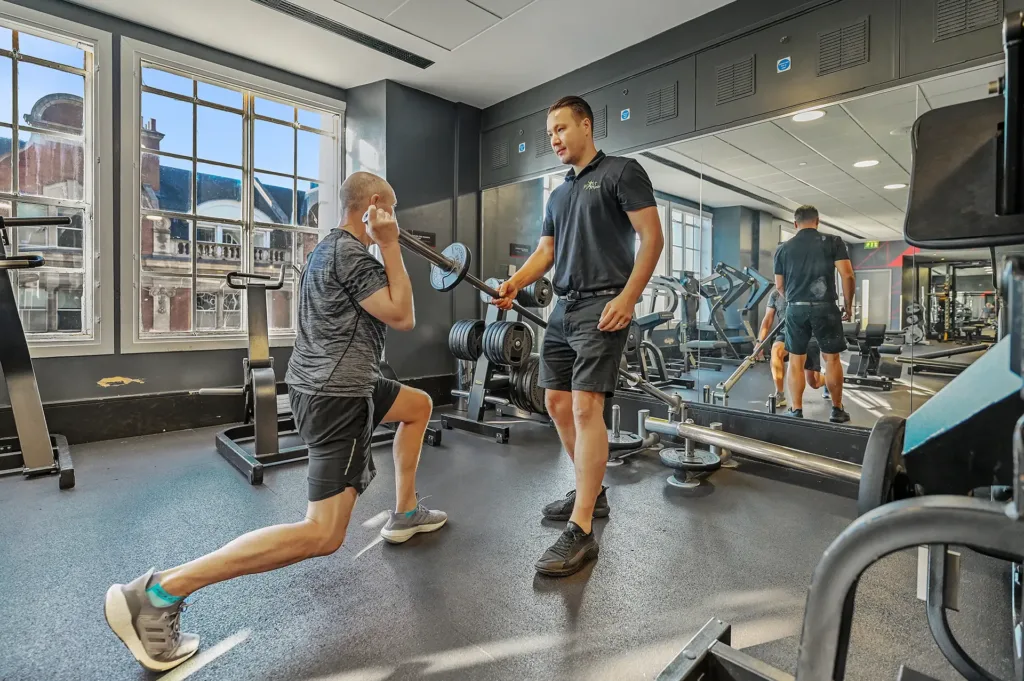
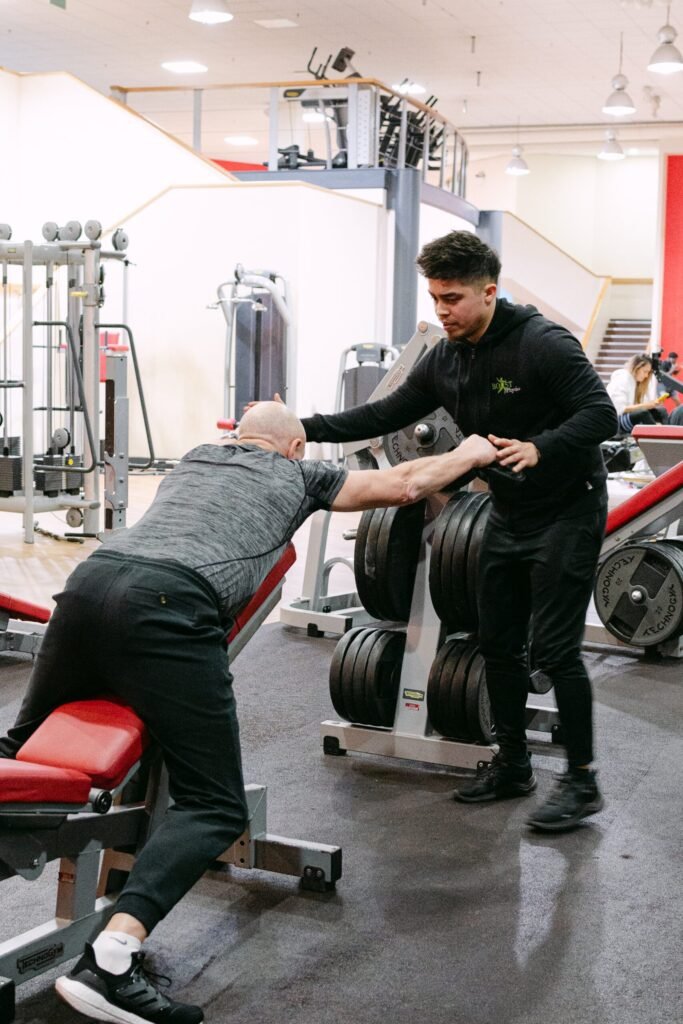
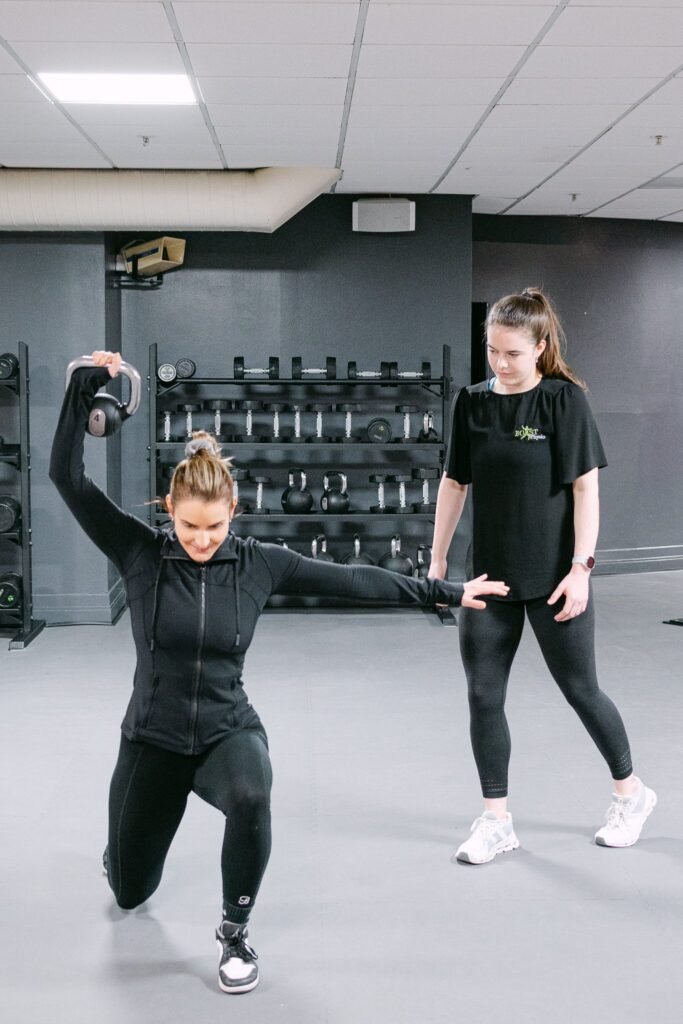
These exercises to prevent and reverse Sarcopenia are a guide only and might not be suitable for you. Please consult with one of our physiotherapists to create your specific sarcopaenia prevention programme.
Frequency: Perform the following exercises 3 times per week, with at least one day of rest between sessions.
Warm-Up: Start with a 5 minute warm-up of brisk walking or similar to get the blood flowing, heart rate gently increasing and muscles ready for exercise.
1. Sit to Stand Squats
Target Muscles: Quadriceps, Hamstrings, Glutes
Instructions:
Sit on the edge of a sturdy chair with feet flat on the floor, hip-width apart.
Cross your arms over your chest or extend them in front of you for balance.
Lean forward slightly from your hips and press through your heels to stand up.
Slowly sit back down, controlling the movement.
Perform 2-3 sets of 10-15 repetitions.
Modifications: Use a chair with armrests for additional support if needed.
2. Push-Ups (Modified)
Target Muscles: Chest, Shoulders, Triceps
Instructions:
Start in a plank position with your hands slightly wider than shoulder-width apart. For a modified version, place your knees on the ground.
Lower your body toward the ground by bending your elbows, keeping your body in a straight line from head to knees/toes.
Push through your palms to return to the starting position.
Perform 2-3 sets of 8-12 repetitions.
Modifications: Perform against a wall or with hands elevated on a bench for an easier version.
3. Dumbbell Rows
Target Muscles: Upper Back, Biceps
Instructions:
Stand with feet hip-width apart, holding a dumbbell in each hand, palms facing the body.
Bend at the hips slightly, keeping your back straight and core engaged.
Pull the dumbbells towards your hips, squeezing your shoulder blades together.
Slowly lower the dumbbells back to the starting position.
Perform 2-3 sets of 10-12 repetitions.
Modifications: Use lighter weights or perform the exercise seated with a resistance band.
4. Standing Calf Raises
Target Muscles: Calves
Instructions:
Stand with feet hip-width apart, using a chair or wall for balance if needed.
Slowly raise your heels off the ground as high as possible, feeling the contraction in your calves.
Hold for a second, then slowly lower your heels back to the ground.
Perform 2-3 sets of 12-15 repetitions.
Modifications: Perform with one leg at a time for an additional challenge.
5. Resistance Band Seated Row
Target Muscles: Upper Back (Rhomboids, Trapezius), Biceps, Rear Shoulders
Why this exercise matters: Upper back weakness is one of the earliest signs of sarcopenia and contributes directly to poor posture, rounded shoulders and reduced breathing capacity in older adults. This seated version removes balance demands entirely, making it accessible to those with hip, knee or ankle pain.
What you will need: A resistance band (light to medium resistance). Loop it around a fixed point at approximately chest height – a door handle, a heavy chair leg or a stair post works well.
Instructions:
• Sit upright in a sturdy chair, feet flat on the floor, hip-width apart.
• Hold one end of the resistance band in each hand with palms facing each other.
• Start with arms extended forward and a gentle tension in the band.
• Pull both hands back towards your sides, leading with your elbows and squeezing your shoulder blades together at the end of the movement.
• Hold the squeeze for two seconds, then slowly extend your arms back to the start.
• Perform 2-3 sets of 10-12 repetitions with a 60-second rest between sets.
Modifications: Use a lighter band or reduce the range of motion if you feel discomfort in your shoulders. As you grow stronger, progress to a medium or heavy resistance band.
Physio Tip: Focus on the squeeze at the back of the movement – this is where the muscle-building stimulus occurs. Many people pull too quickly and miss the most important part of the exercise.
6. Step-Ups
Target Muscles: Quadriceps, Glutes, Hamstrings, Hip Flexors
Why this exercise matters: The ability to step up onto a kerb, climb stairs or get in and out of a car without assistance is a key marker of functional independence. Step-ups are a highly practical, functional exercise that builds exactly the leg strength needed for everyday life. Research shows that single-leg strength – which step-ups directly train – is one of the strongest predictors of fall prevention in adults over 65.
What you will need: A sturdy step, stair or low platform (approximately 15-20cm in height). Use a wall or bannister for support until you are confident.
Instructions:
• Stand facing the step with feet together and one hand lightly touching a wall or rail for balance.
• Step up with your right foot, placing the whole foot flat on the step.
• Drive through your right heel to push your body up, bringing the left foot up to meet the right on the step.
• Step back down with the left foot first, controlling the movement slowly.
• Alternate the leading leg with each repetition.
• Perform 2-3 sets of 8-10 repetitions on each leg with a 60-second rest between sets.
Modifications: Use a lower step or the bottom stair of a staircase to begin. As your confidence and strength improve, increase the step height or remove the supporting hand.
Physio Tip: The downward phase (lowering yourself back to the floor) is equally important for building strength. Resist the urge to drop down quickly – control it slowly for maximum benefit.
7. Wall Press (Supported Chest Press)
Target Muscles: Chest (Pectorals), Shoulders (Anterior Deltoids), Triceps
Why this exercise matters: Upper body pushing strength is essential for daily tasks such as opening heavy doors, pushing yourself up from a chair or recovering balance after a stumble. This wall-based version is a safer, more accessible alternative to floor press-ups for those with wrist pain, reduced grip strength or difficulty getting up and down from the floor – all of which are common in older adults with sarcopenia.
What you will need: A clear wall space. No equipment required.
Instructions:
• Stand facing a wall, approximately an arm’s length away, feet shoulder-width apart.
• Place both palms flat on the wall at shoulder height and shoulder-width apart.
• Keeping your body in a straight line from head to heels, bend your elbows to lower your chest towards the wall.
• Push firmly through your palms to return to the starting position, fully extending the arms but without locking the elbows.
• Breathe in as you lower and breathe out as you push away.
• Perform 2-3 sets of 10-15 repetitions with a 60-second rest between sets.
Modifications: To increase the challenge, step further back from the wall, increasing the angle of your body. As you progress, you can advance to a kitchen worktop, then a low bench, bringing you progressively closer to a full floor press-up position over time.
Physio Tip: This exercise can be done anywhere with a wall – making it one of the easiest exercises to build into a daily routine. Many of our patients do a set every time they are waiting for the kettle to boil.
Cool-Down
End each session with a 5 minute cool-down of comfortable walking and stretching, focusing on the muscles worked during the exercises.
Notes:
Always listen to your body and avoid any exercises that cause pain or discomfort.
Gradually increase weights and repetitions as you become stronger.
Consider consulting with a fitness professional to ensure proper form and technique.
Nutrition for Sarcopenia Prevention and Reversal
Exercise alone is not enough to prevent or reverse sarcopenia. The clinical evidence is clear: resistance training and adequate nutrition must work together to build and maintain muscle mass. Without the right nutritional foundation, your body cannot carry out the muscle repair and growth that exercise stimulates.
Protein – the Most Important Nutrient for Muscle Health
Protein provides the building blocks (amino acids) your body needs to repair and build muscle tissue after exercise. Many older adults are not consuming enough protein – often because appetite reduces with age and habits formed in younger years no longer meet the body’s needs.
How much protein do you need?
International clinical guidelines recommend that adults over 60 who are at risk of, or living with, sarcopenia aim for 1.2 to 1.6 grams of protein per kilogram of body weight per day. For context, a 70kg adult would need between 84g and 112g of protein daily – significantly more than the standard UK recommended daily amount of 0.75g/kg, which was set for sedentary adults and is insufficient for muscle preservation in later life.
Good protein sources include:
- Lean meats: chicken, turkey, lean beef and lamb
- Fish and seafood: salmon, cod, tuna and mackerel are particularly good choices
- Eggs: one of the most complete protein sources, rich in leucine
- Dairy: Greek yoghurt, cottage cheese and milk
- Plant sources: lentils, chickpeas, edamame, tofu and tempeh
- Protein supplements: a high-quality whey or plant-based protein powder can be a practical way to top up intake, particularly after exercise
Leucine – the Muscle-Triggering Amino Acid
Leucine is a specific amino acid that acts as a direct trigger for muscle protein synthesis – the process by which your body builds new muscle. As we age, the muscle-building response to protein becomes less efficient, meaning older adults need more leucine per meal to activate the same response as a younger person.
Aim for 2.5 to 3 grams of leucine per meal to maximise muscle-building stimulus. This is found in approximately 30-40g of whey protein, three eggs, 150g of chicken breast or 200g of Greek yoghurt. This is one reason why spreading protein intake across three meals (rather than eating the majority in one evening meal) produces significantly better results for muscle building in older adults.
Vitamin D – Essential for Muscle Function
Vitamin D deficiency is extremely common in the UK – particularly in adults over 60 – and is directly linked to accelerated muscle loss, weakness and fall risk. Vitamin D is not just important for bones; it plays an active role in muscle contraction and the maintenance of muscle fibre quality.
UK government guidance recommends that all adults consider taking a daily vitamin D supplement of 10 micrograms (400 IU) throughout autumn and winter. Many clinicians working with older adults recommend higher doses of 1,000-2,000 IU daily, particularly for those who spend limited time outdoors.
Speak to your GP about having your vitamin D levels tested – a simple blood test can confirm whether you are deficient. Your physiotherapist can advise you on whether supplementation should be part of your sarcopenia prevention strategy.
Omega-3 Fatty Acids – Reducing Muscle Inflammation
Omega-3 fatty acids, found in oily fish such as salmon, sardines and mackerel, have been shown in clinical trials to improve muscle protein synthesis and reduce the low-grade inflammation that contributes to muscle wasting in older age. Aim to include oily fish in your diet two to three times per week. If you do not enjoy fish, a high-quality omega-3 supplement (fish oil or algae-based) is a practical alternative.
Practical Nutrition Tips
- Do not skip meals. Muscle protein synthesis responds better to three evenly spaced protein-containing meals than to one or two large meals.
- Eat protein within 30-60 minutes of completing your resistance exercise session when possible, to maximise the muscle-building window.
- Stay well hydrated. Muscle tissue is approximately 75% water and dehydration impairs both exercise performance and recovery.
- Reduce ultra-processed foods and added sugars, which promote the inflammatory processes associated with accelerated muscle loss.
Please note: the nutritional guidance above is general information only. Individual needs vary depending on your health history, medications and existing conditions. We strongly recommend discussing your nutritional strategy with your physiotherapist or GP, particularly if you have diabetes, kidney disease or are on medication that may affect your diet
Frequently Asked Questions About Sarcopenia
Can sarcopenia be reversed?
Yes – and this is one of the most encouraging facts about this condition. While sarcopenia is a natural consequence of ageing, it is not irreversible. Clinical research consistently shows that consistent resistance training, combined with adequate protein intake, can increase muscle mass by approximately 1-2% per month and improve strength by up to 30-40% within just a few months of starting. The earlier you begin, the better the outcomes – but it is never too late to start. We have helped patients in their 80s achieve meaningful improvements in strength and function.
How do I know if I have sarcopenia?
Common signs include feeling weaker than you used to, struggling with tasks that were previously straightforward (such as opening jars, carrying shopping or rising from a chair without using your arms), walking more slowly than in previous years, or experiencing unexplained weight loss. Two simple self-tests are widely used by clinicians:
- The Chair Rise Test: sit in a standard chair with arms folded across your chest. Time how long it takes to stand and sit 5 times. If this takes longer than 12 seconds, this may indicate reduced leg muscle strength associated with sarcopenia.
- Grip Strength: reduced grip strength is one of the earliest and most reliable indicators of sarcopenia. Your physiotherapist can measure this easily during an assessment using a hand dynamometer.
If you are concerned about muscle loss, the most effective step is to book a physiotherapy assessment. One of our experienced physios can screen you for sarcopenia using validated clinical tools and create a personalised prevention or rehabilitation programme for you.
What is the best exercise for sarcopenia in older adults?
Resistance exercise – also called strength or weight training – is the gold standard treatment for sarcopenia and is recommended by all major international clinical guidelines as the first-line intervention. This does not mean you need to join a gym or lift heavy weights. As the exercise programme on this page demonstrates, effective resistance training for sarcopenia can begin with bodyweight exercises, resistance bands and simple household objects. The key principles are progressive overload (gradually increasing the challenge over time), consistency (at least two to three sessions per week) and sufficient protein intake to support muscle repair. Balance exercises and aerobic activity are valuable additions but resistance training must form the foundation of any sarcopenia programme.
Can a physiotherapist help with sarcopenia?
Absolutely – and physiotherapy is widely recommended by geriatricians and GPs as one of the most effective routes to managing sarcopenia. A physiotherapist can assess your muscle strength and function using validated clinical tests, diagnose the severity of your muscle loss, design a personalised resistance exercise programme tailored to your current fitness level and any co-existing conditions, teach you correct technique to exercise safely and reduce injury risk, progress your programme over time as you grow stronger and coordinate with your GP or other healthcare providers if needed.
At Boost Physio, our physiotherapists regularly support patients with sarcopenia across all our North London and Hertfordshire clinics. We can also incorporate hydrotherapy into your programme if joint pain or mobility limitations make land-based exercise challenging – our heated hydrotherapy pool is particularly popular with older patients who find water-based exercise more comfortable and enjoyable.
How much protein do I need to prevent sarcopenia?
Clinical guidelines recommend 1.2 to 1.6 grams of protein per kilogram of body weight per day for adults over 60 who are at risk of sarcopenia. This is considerably higher than the standard UK recommendation of 0.75g/kg, which was set for sedentary younger adults and is insufficient for muscle preservation in later life. Distributing your protein intake evenly across three meals – rather than eating the majority at dinner – produces significantly better results because muscle protein synthesis is more effectively stimulated by consistent leucine exposure throughout the day. If you are unsure how to meet your protein needs through food alone, your physiotherapist or a registered dietitian can provide practical guidance.
Is it safe to start resistance exercise if I have never done it before?
Yes – resistance exercise is safe and beneficial for the vast majority of older adults, including those with common conditions such as arthritis, osteoporosis, high blood pressure and diabetes. In fact, for most of these conditions, resistance exercise is actively recommended as part of treatment rather than something to avoid. The key is to start gently, use correct technique from the outset and progress gradually. We strongly recommend beginning with a physiotherapy assessment if you are new to resistance exercise, have multiple health conditions or have had recent surgery. Your physiotherapist will identify any specific modifications needed to keep your programme safe and effective.
How long does it take to see results from a sarcopenia exercise programme?
Most people begin to notice improvements in strength and energy within four to six weeks of consistent training, even before significant changes in muscle size are visible. Measurable increases in muscle mass typically become apparent after eight to twelve weeks. The most important factor is consistency – three sessions per week, week after week, produces far better results than occasional intensive efforts. Many of our patients report that after two to three months they are doing things they had stopped attempting, such as carrying their own shopping, walking further or gardening without pain.
Need help creating your personalised sarcopenia prevention programme? Our physiotherapists at Boost Physio specialise in age-related muscle health and can assess, diagnose and treat sarcopenia across all our clinics in North London and Hertfordshire. Same-day appointments available – book online or call us on 020 8201 7788.