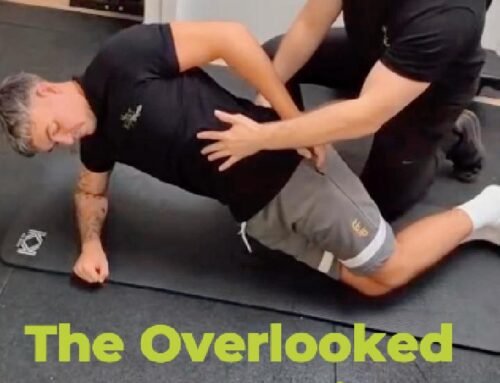

The Real Reason Shoulder Pain Might Not Improve

Could Shoulder Pain Be Coming From Your Shoulder Blade?
You’ve tried resting it. Maybe you’ve tried some exercises you found online. But your shoulder pain keeps coming back – or simply won’t shift.
Here’s something your physiotherapist may want to explore: the pain you feel in your shoulder might not be starting there at all. The real culprit could be your scapula – your shoulder blade.
Understanding this changes everything about how shoulder pain should be treated.
What Is the Scapula – and Why Does It Matter So Much?
Your shoulder blade (scapula) is a flat, triangular bone that sits on the back of your ribcage. It acts as the foundation for your entire shoulder joint.
Every time you lift your arm – to reach a shelf, swing a tennis racket, swim a length, or simply wave – your shoulder blade must move in precise coordination with your upper arm bone (humerus). This coordinated movement is called scapulohumeral rhythm.
Think of it like the foundation of a building. If the foundation shifts or is unstable, everything built on top of it is under stress. The same principle applies to your shoulder.
What Happens When the Shoulder Blade Moves Poorly?
When the muscles that control the scapula are weak, tight or poorly coordinated, the shoulder blade doesn’t move the way it should. Clinicians call this scapular dyskinesis – essentially, altered or abnormal scapular movement.
Research published in the Journal of Health and Allied Sciences (2025) confirms that scapular dyskinesis is found in a significant proportion of patients presenting with shoulder disorders – and that it frequently accompanies conditions like:
• Rotator cuff injuries and tears
• Subacromial impingement (pain when lifting the arm)
• Shoulder instability
• Frozen shoulder
• Shoulder pain in swimmers, tennis players and overhead athletes
When the scapula doesn’t tilt and rotate correctly, the space inside the shoulder joint narrows. Tendons become compressed. Muscles work harder than they should. Pain follows.
The Science: Scapulohumeral Rhythm Explained
For every 3 degrees your arm rises, your shoulder blade is meant to rotate approximately 1 degree upward. This ratio – known as scapulohumeral rhythm – keeps the shoulder joint aligned and moving efficiently throughout a full range of motion.
Recent research (Brazilian Journal of Physical Therapy, 2025) using advanced 3D motion analysis shows there is considerable natural variability in how different people’s shoulder blades move. This is an important clinical insight – it means there’s no single ‘perfect’ pattern, and treatment should always be individualised.
What is clear is that when scapular muscle control is poor, this coordinated rhythm breaks down. A 2025 study found that patients with scapular dyskinesis show reduced scapular range of motion and incoordination of the muscle groups that should be stabilising the blade – contributing directly to shoulder pain and dysfunction.
What Causes Poor Scapular Control?
Poor scapular control rarely has a single cause. Common contributing factors include:
• Desk posture and prolonged sitting – rounded shoulders shift the shoulder blade forward and downward, altering muscle activation
• Muscle weakness – particularly in the serratus anterior, lower and middle trapezius, and rhomboids
• Previous shoulder injury – which can inhibit normal muscle firing patterns
• Overuse in sport – repetitive overhead activity without adequate conditioning
• Previous surgery – post-operative patients often develop altered movement patterns as a protective response to pain
The result is that the shoulder blade becomes a weak, poorly-controlled platform – and the shoulder joint above it has to compensate, leading to pain, stiffness and sometimes structural damage over time.
What Good Physiotherapy Does About It
The good news is that scapular control problems respond very well to targeted physiotherapy. This is not just generic shoulder exercises – it requires a detailed assessment of how your shoulder blade moves, which muscles are underperforming and why.
A 2025 clinical study published in the Journal of Personalised Medicine followed patients with chronic shoulder pain through an 8-week personalised scapular rehabilitation programme. The programme incorporated:
• Neuromotor control exercises – retraining the brain-muscle connection for the shoulder blade
• Progressive strengthening of the scapular stabilising muscles
• Stretching of tight structures pulling the blade into poor position
• Functional movement tasks mirroring real-life activity
Participants showed meaningful improvements in both pain levels and shoulder function. Critically, the programme was personalised to each individual’s pattern of movement – because no two shoulder blades move identically.
At BOOST PHYSIO, every shoulder assessment includes a full evaluation of scapular control and movement quality.
✓ Video movement analysis to identify your individual pattern
✓ Hands-on treatment to release tight structures and improve joint mobility
✓ Personalised exercise programmes targeting your specific weakness
✓ Progressive rehabilitation through to full return to sport or activity
Whether you’re a runner, swimmer, office worker or post-operative patient, we get to the root cause of your shoulder pain – not just the symptom.
Could Your Shoulder Blade Be the Problem? Signs to Look For
You might benefit from a scapular assessment if you notice:
• Shoulder pain that keeps recurring despite rest or treatment elsewhere
• A feeling of your shoulder ‘clicking’, ‘catching’ or grinding on movement
• Visible asymmetry – one shoulder blade sitting higher or ‘winging’ away from the ribcage
• Pain specifically when lifting your arm above shoulder height
• Shoulder pain that started or worsened after a period of desk-based working
• Slow recovery after rotator cuff surgery or shoulder stabilisation
These are not definitive diagnoses – but they are important reasons to get a proper assessment rather than continuing to manage symptoms alone.
Same-Day Shoulder Assessments – 8am to 9pm, 7 Days a Week
If your shoulder pain isn’t getting better – or keeps coming back – the answer might not be more rest. It might be understanding exactly why it’s happening.
Our expert physiotherapists can assess your shoulder blade control, identify the root cause of your pain and build a targeted recovery plan around you.
Book your assessment today:
📞 020 8201 7788
🌐 boostphysio.com
Recognised by Bupa, AXA Health, Vitality and WPA. Self-pay appointments available.
10 clinics across North and North-West London and Hertfordshire – easy parking, same-day access.